Where This Job Goes Sideways
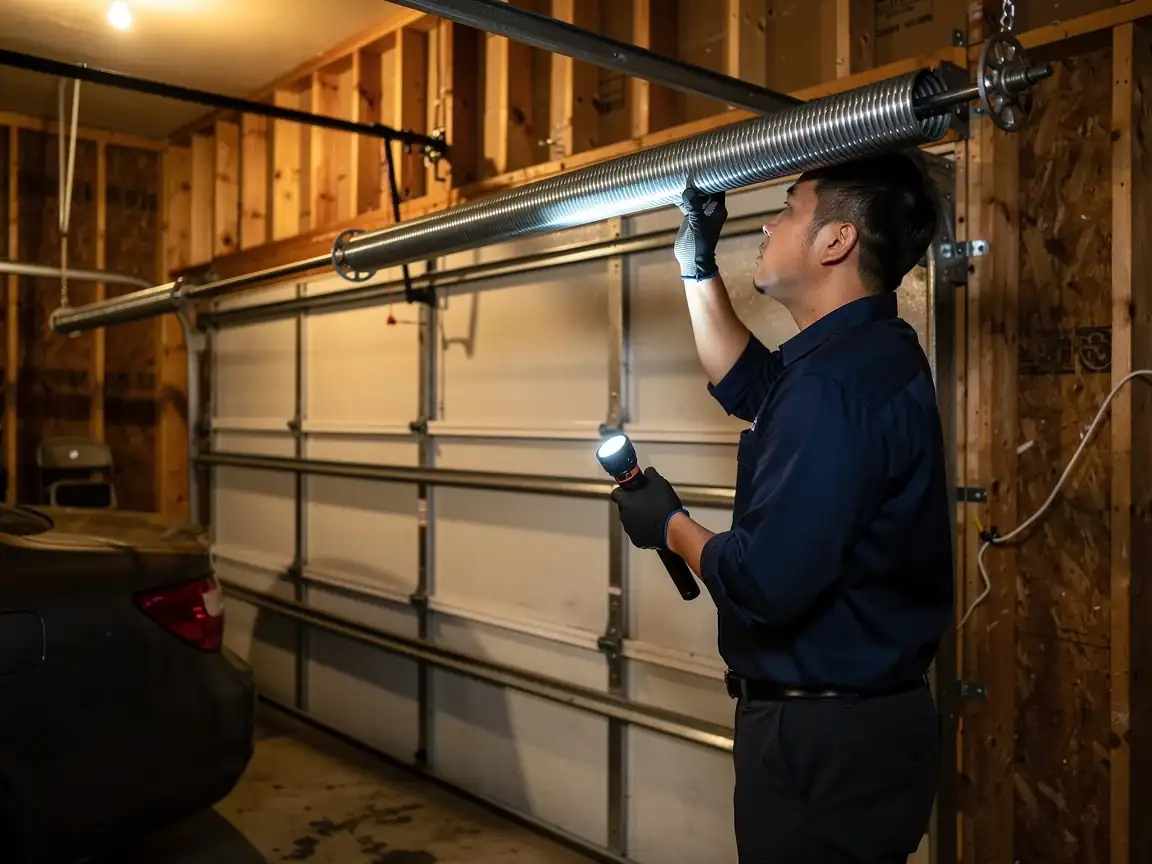
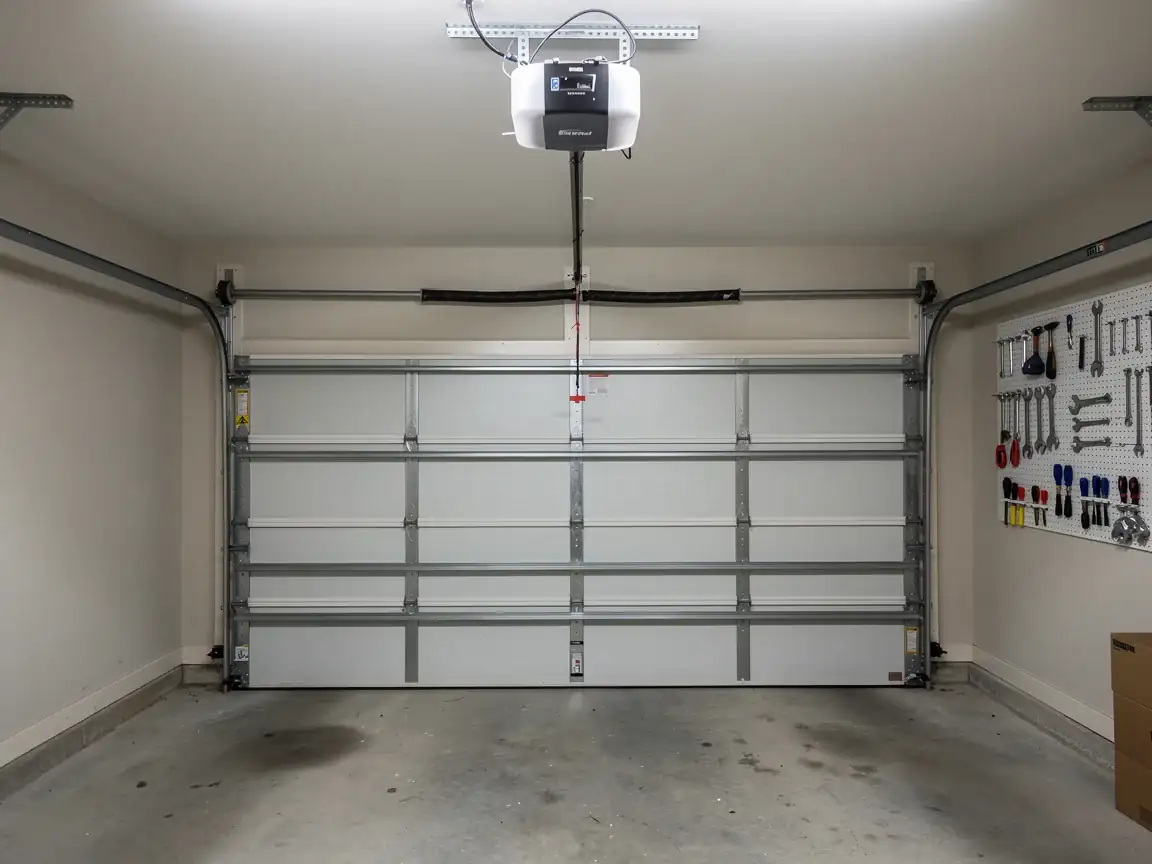
The median home in Pontiac went up around 1960, a full decade ahead of the 1973 median for the rest of our coverage area. That gap matters more than it sounds like it should. A house built in 1960 has had roughly 65 years to either get its garage door hardware replaced or not - and in a lot of Pontiac driveways, it's not. We still find original torsion springs, the factory-stamped track brackets, and steel rollers that have never been swapped once.
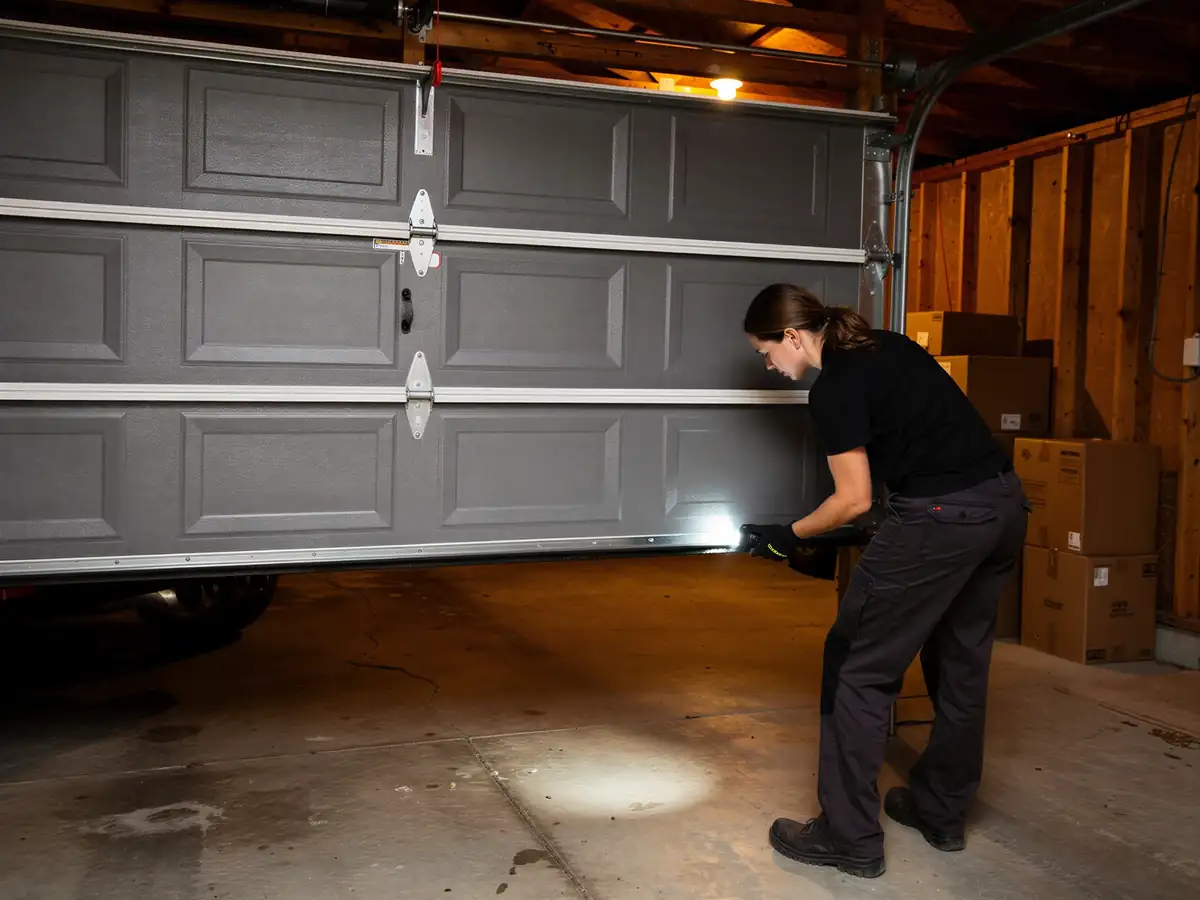
That's not a knock on the houses. It's just what happens when hardware from the Eisenhower era keeps working well enough that nobody thinks about it until the spring snaps on a Tuesday morning. The failure mode is predictable: a spring rated for a door that's since been re-skinned or had a heavier insulated panel bolted on, now carrying more weight than it was wound for. When that spring finally lets go, it usually takes a cable or a bottom bracket with it.
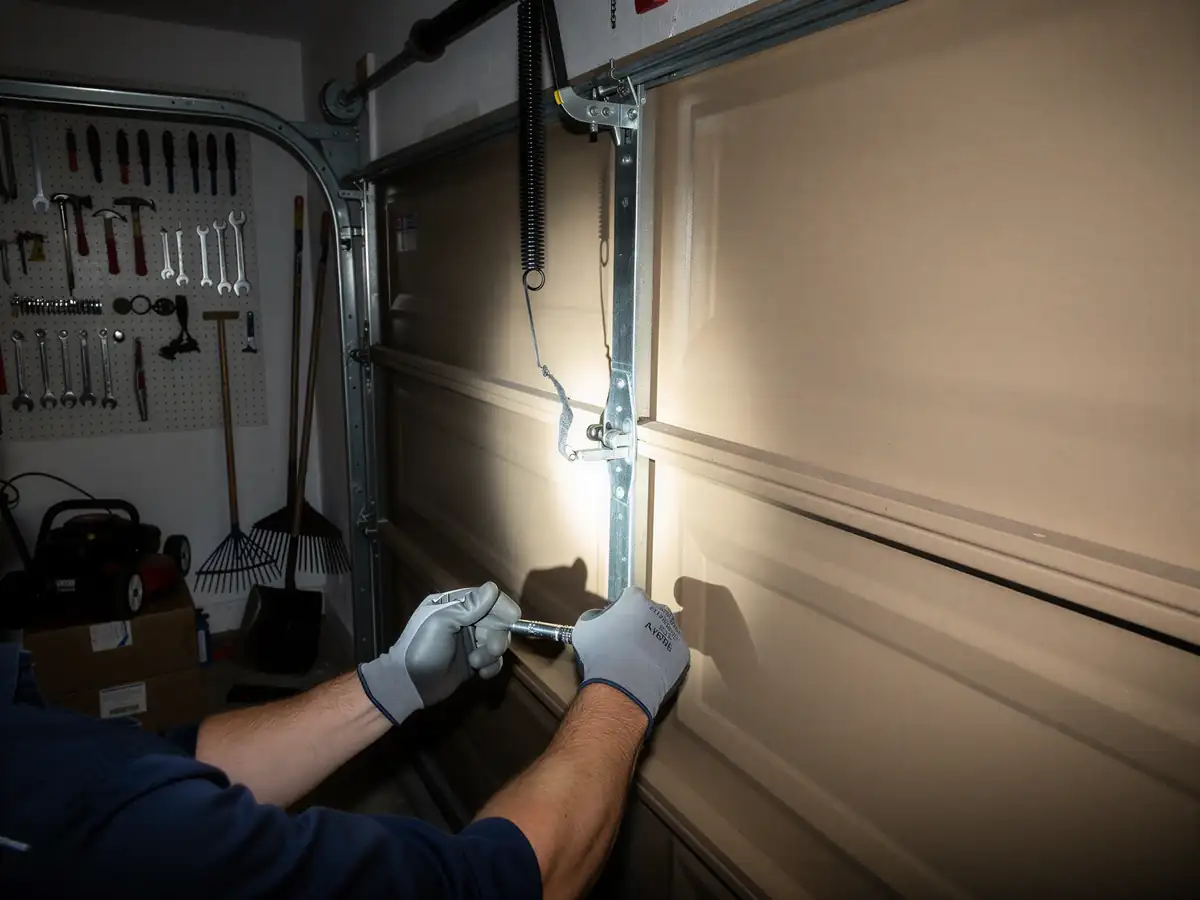
We can't tell you which exact hardware is in your garage without seeing it. But if your door predates 1970 and nothing's been touched since, assume the springs, the drum, and the track hangers are all original until proven otherwise.
What You Pay
We're not going to put a number here we can't back up - pricing depends on what's actually failed and whether the opener, track, or panel is involved, and we don't have a service-area price list to quote. What we can tell you is what drives the decision in a town like this.
Pontiac's median household income sits at $42,791, noticeably lower than other pockets of our coverage area. That's not a judgment, it's context: it means a lot of homeowners here are weighing a $300 spring-and-cable repair against a $1,200-plus full replacement a little more carefully than someone in a higher-income suburb might. On a door with original 1960s hardware, that calculation gets harder, because once you're replacing a drum or a bent track section, you're often one step from needing the whole assembly anyway.
The honest limitation: we don't stock parts for every obsolete 1960s torsion system on the truck. Some original hardware on doors this old uses sizing that newer springs don't match exactly, which can mean a short delay while the right part gets sourced rather than a same-visit fix.
Why It Happens Here
This area falls in a severe cold climate band
And that matters specifically because of what's still bolted to these doors. A steel torsion spring loses flexibility as it ages, and repeated winter freeze-thaw cycles work that brittleness faster than mild weather would. On a spring that's already 60-plus years old, a hard cold snap is often the thing that finally finishes the job a summer heat wave started.
It's not just Pontiac
Most of the towns we cover share this 1960s-70s housing stock, and the pattern repeats across them. But Pontiac's own numbers put it at the older edge of that range, which means the cold-and-age combination shows up here a little earlier and a little more often than in neighborhoods built closer to 1973 or later.
With 25,605 households in Pontiac, that's a lot of garages running on hardware nobody's inspected since the Johnson administration
We're not saying every door is a ticking clock. We're saying the odds of original parts under cold-weather stress are higher here than in a newer-built pocket of the service area.
- 25,605 households
Doing It Yourself
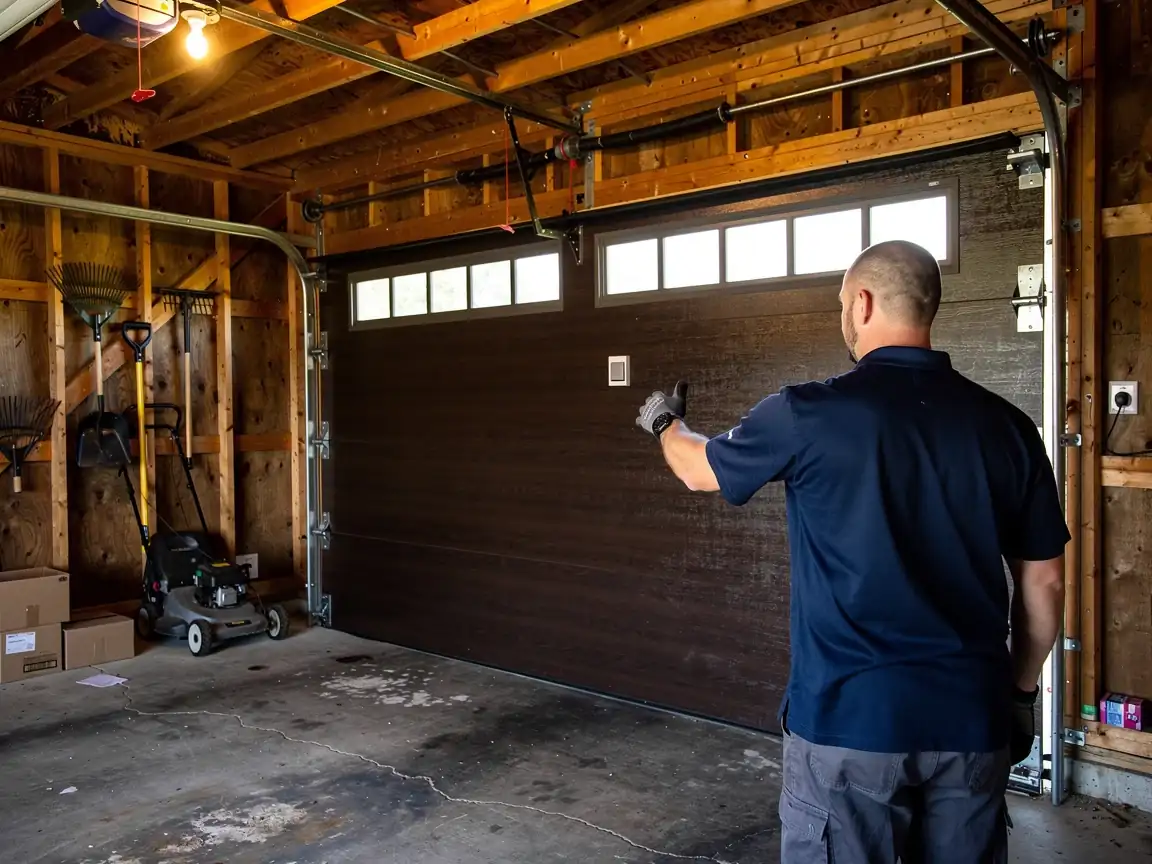
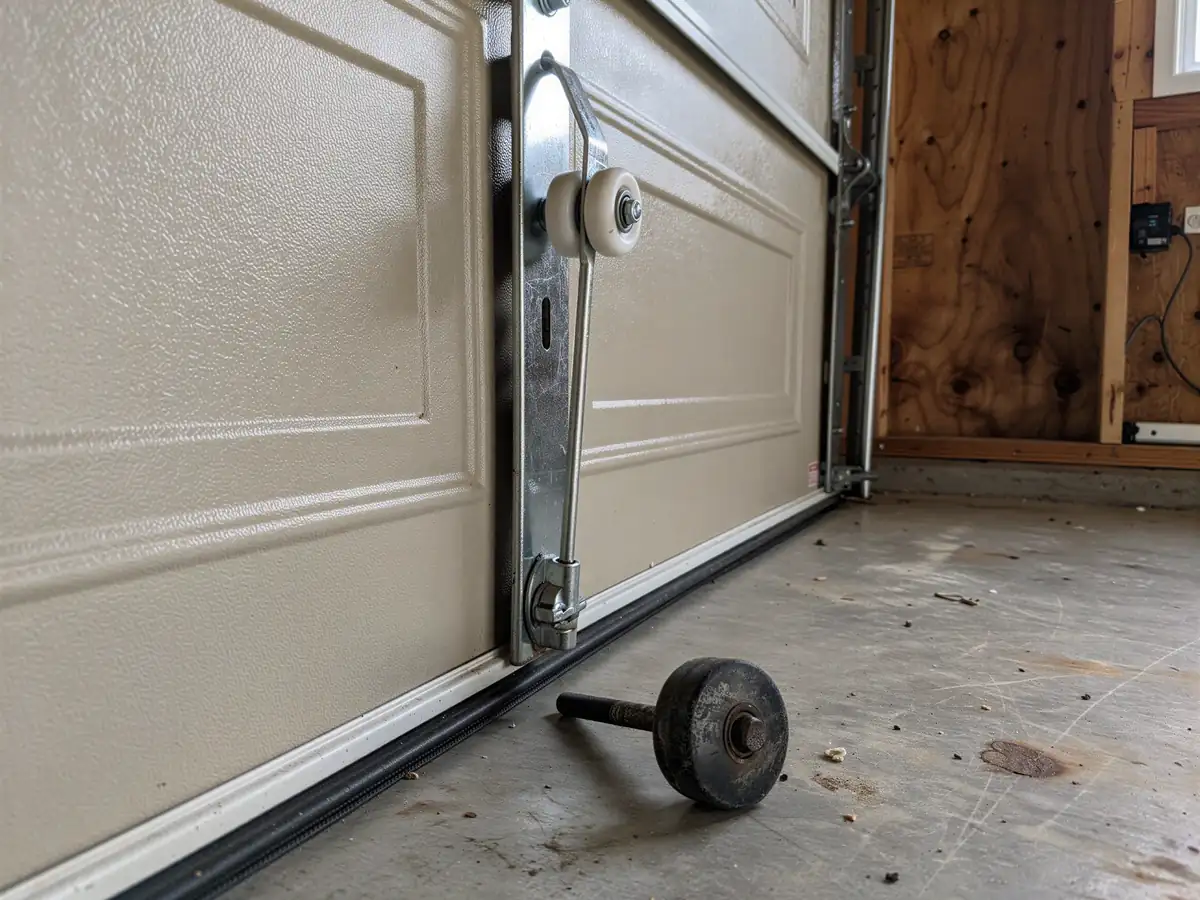
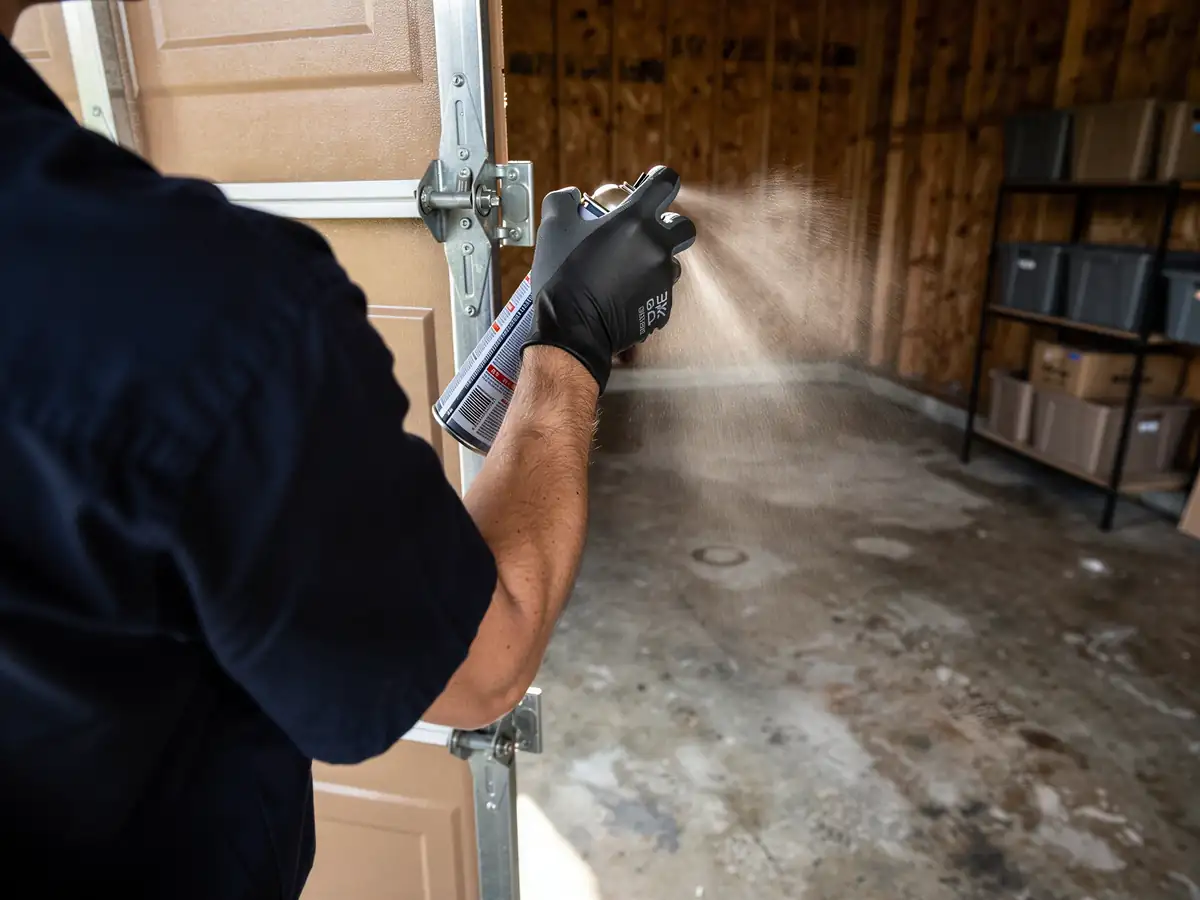
Some of this is fair game for a homeowner. Lubricating rollers and hinges, tightening loose bolts on the track brackets, checking that the photo-eye sensors are aligned and clean - none of that needs a truck.
What isn't fair game: the torsion spring itself. A wound spring on a residential door carries enough stored force to break bones or worse, and on hardware this old, you often can't tell its exact wind tension just by looking at it. Cable replacement has the same problem - the cable's usually under load even when the door looks still.
If your door is original to a 1960-era Pontiac build and something's binding, cracking, or making a new noise, that's the point to stop and call rather than keep adjusting. Hardware this age doesn't forgive guesswork the way a 10-year-old door might.