Why It Happens Here
Most of the housing in this service area went up between 1949 and 1993, with the median build year sitting around 1973. That means a lot of doors are still running on the original roller stems and tracks, or on a replacement door that got hung on tracks that were never upgraded to match. Steel rollers without bearings were standard on doors from that era, and after forty-plus years of cold-weather cycling they wear oval instead of round. That's the root of most of the rumble and bind you hear on a cold morning.
The climate here is the other half of it. This is a severe cold band, and steel contracts hard in a Michigan winter. A roller that's slightly worn rides loose in the track when it's 20 degrees out, then swells back to a tighter fit once the garage warms up in the afternoon sun. That expansion-contraction cycle, repeated every winter for decades, is what turns a minor roller wobble into a track that's walked out of alignment. Houses built in the 60s and 70s across this area weren't engineered with nylon or sealed-bearing rollers in mind, so the wear shows up sooner than it would on a newer build.
Where This Job Goes Sideways
The mistake we see most is someone swapping rollers without checking the track. If the track has already worn a groove to match an oval roller, a new round roller will ride the high spots and bind within a season. On a house with 1960s or 70s stock, the track itself is often the original piece, bent slightly from decades of a rough roller riding through it, and that bend doesn't show up until you put a true round roller back in.
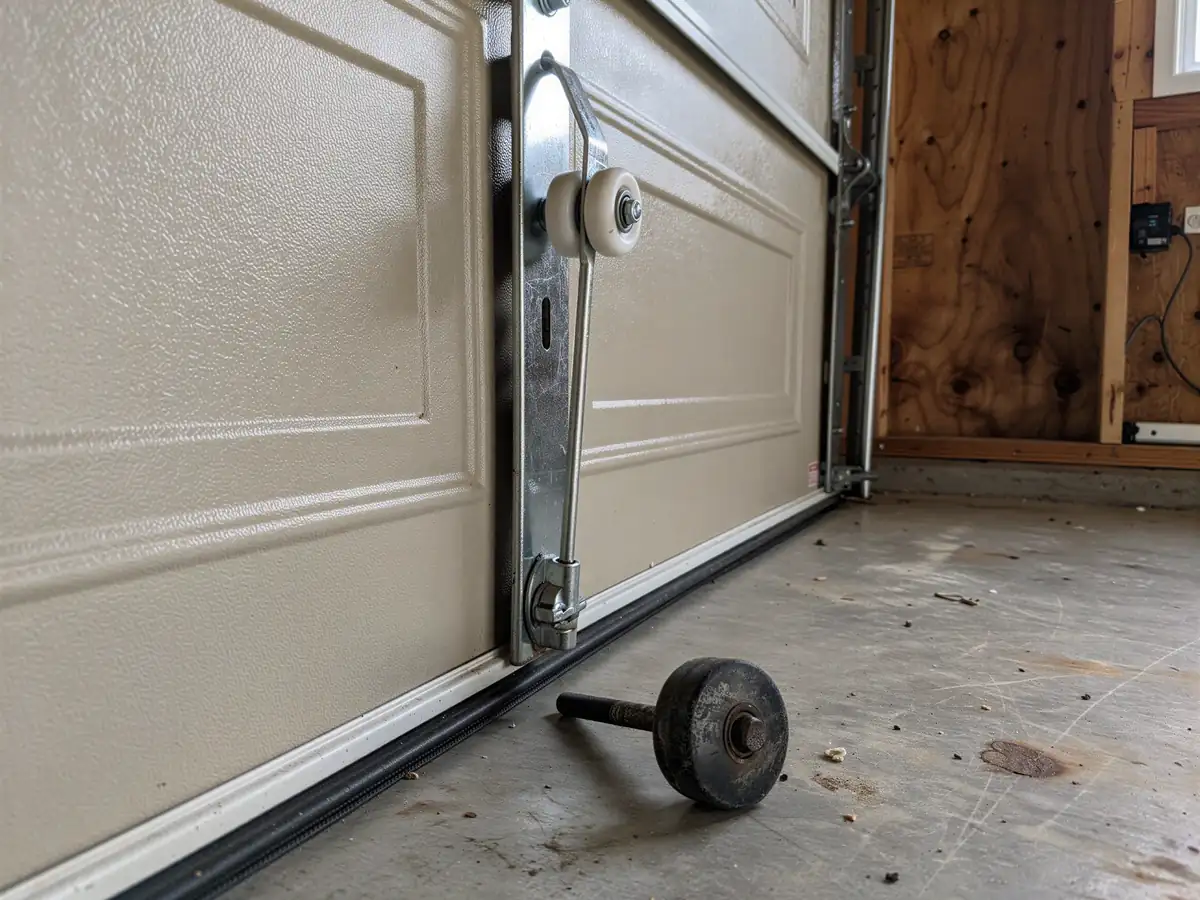
The other place it goes wrong is matching roller stem length to an old-style bracket. A lot of these older doors used short-stem rollers paired with brackets that have since been replaced piecemeal over the years, so you can end up with three roller sizes on one door without realizing it. We won't swap just the rollers and call it done if the track is already out of spec - that's a repair that fails again in a year, and we'd rather tell you that up front than sell you a job that doesn't hold.
How It Shows Up
The earliest sign is noise
A grinding or clunking sound as the door passes through the vertical curve into the horizontal track, worse in cold weather and quieter once the garage warms up. That temperature swing is the tell for roller wear tied to this area's cold band, not just general age.
As it gets worse, you'll see the door hesitate or jump slightly at the same spot every time
Usually right where the curved section meets the horizontal track - that's where worn rollers bind hardest. On older one-piece or sectional doors common to the 1960s-70s stock here, you may also notice the door walking slightly to one side as it closes, which means a roller has worn enough to let the panel ride unevenly in the track. Left alone, this wears the track itself and eventually the opener has to work harder to pull the door through, which shortens the life of the opener motor too.
How We Fix It
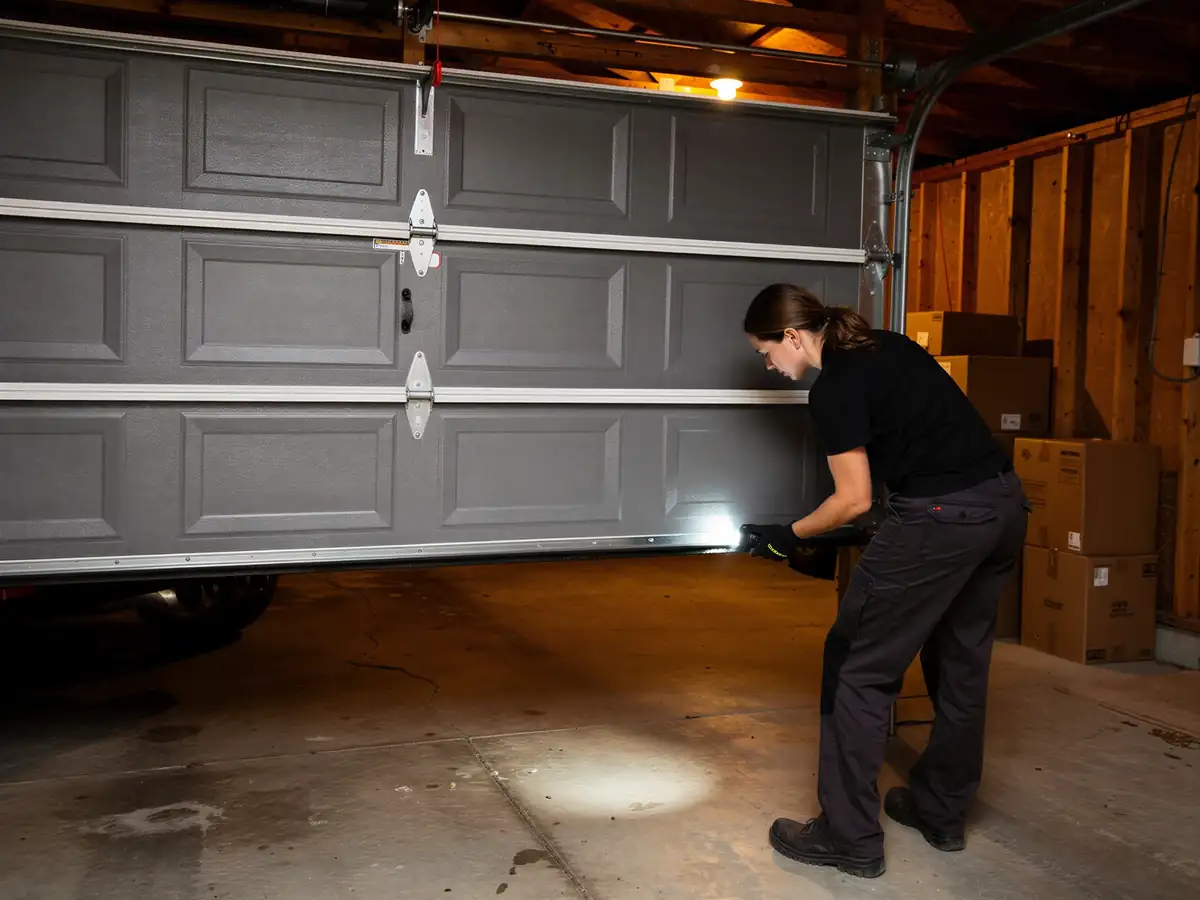
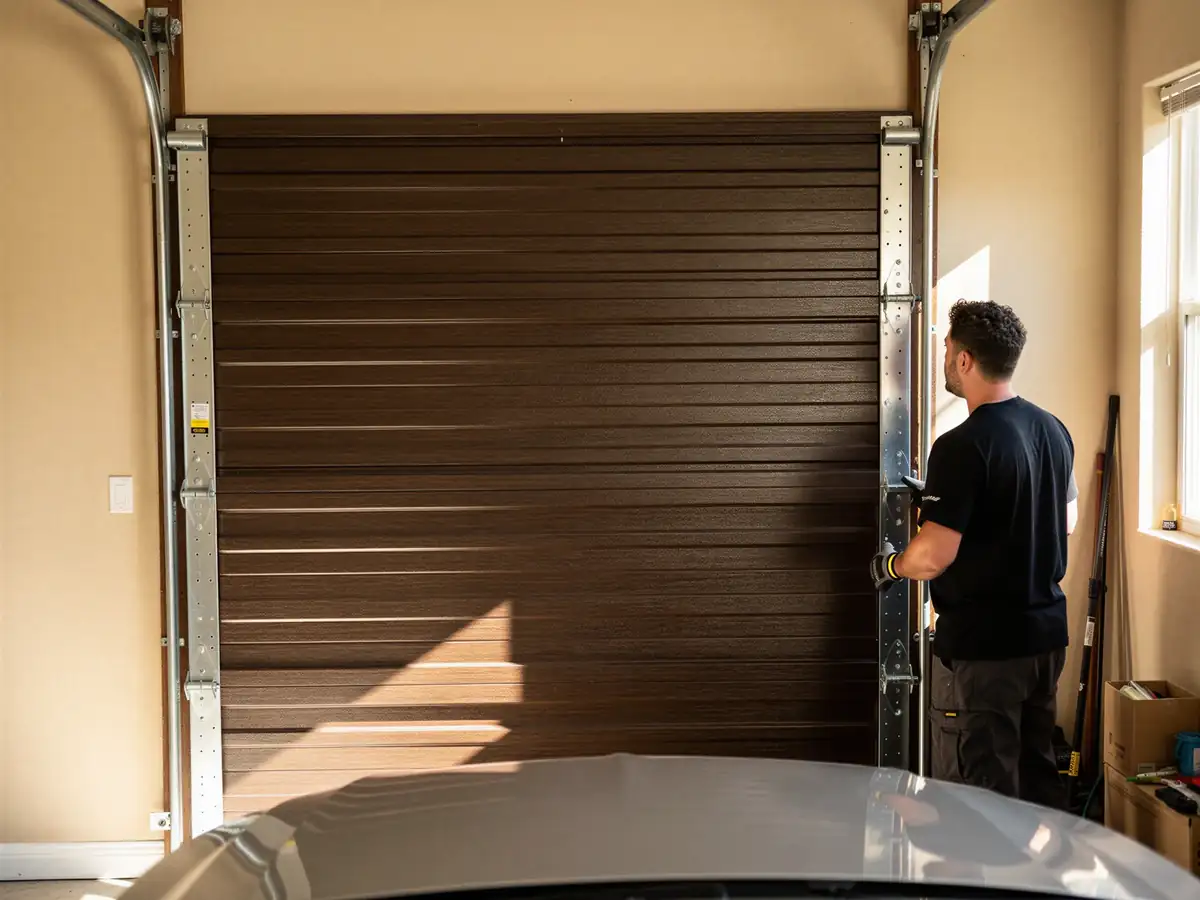
We start by checking the track alignment and roller stem length before we touch anything, since putting new rollers in a worn track just repeats the failure. Given how much of the housing stock in this area dates to the 1960s and 70s, we carry nylon sealed-bearing rollers as the standard replacement - they run quieter and don't develop the flat-wear pattern that steel rollers get after years of cold-weather cycling.
If the track has already worn to match the old roller shape, we'll tell you straight that track replacement needs to happen alongside the rollers, not instead of a quick roller-only swap that won't last. One limitation worth knowing: if the door panel itself is warped or the track brackets have pulled away from framing that's settled over fifty-plus years, roller replacement alone won't solve the noise or binding, and we'll say so rather than charge you for a fix that doesn't address the actual problem.