What You Pay
We're not going to list prices here because what a noisy door costs to fix depends entirely on what's making the noise, and in Waterford that's often tied to how old the hardware is. A lot of houses in this service area were built between 1949 and 1993, with the typical one going up around 1973 - which means a good share of the 63,421 owner-occupied houses here are still running original rollers, original track brackets, or a torsion spring nobody has touched since the Nixon administration. Replacing a worn roller on that kind of setup is a different job than replacing a snapped spring or a bent track, and the price difference reflects parts and labor time, not markup. With a median household income around $102,333 in this area, most owners we talk to want a straight answer on whether a noise means a $40 roller swap or a full spring replacement before they commit to either. We'll tell you which one it is before we touch anything. If a door is old enough that patching one part just means the next part fails in six months, we'll say so instead of running up a bill on a system that's past the point of being worth saving piece by piece.
What Local Conditions Do
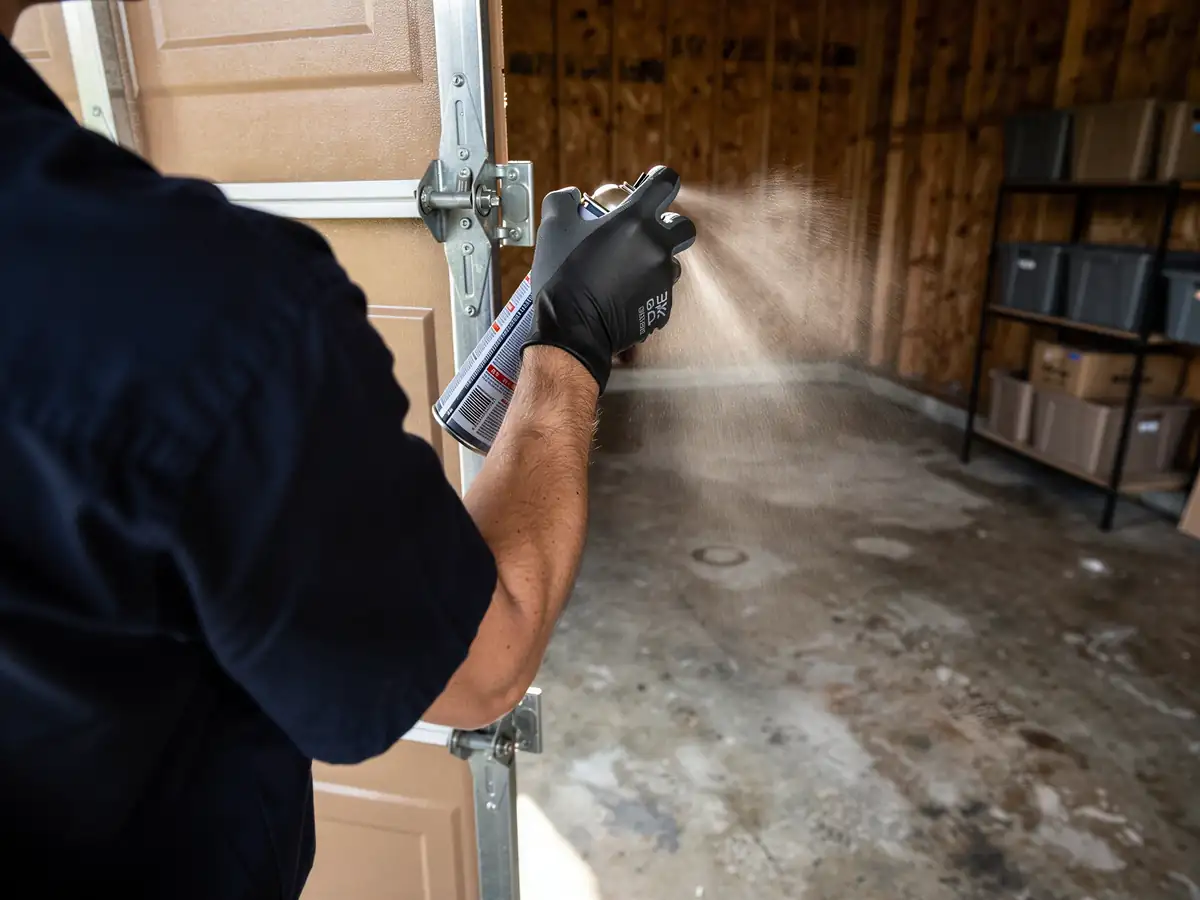
Waterford sits in a cold-severe climate band, and that matters more to a garage door than most people think. Steel contracts in deep cold, and a torsion spring or track built on a house from the 1960s or 70s wasn't engineered with today's cold-rated lubricants in mind. When temperatures swing hard through the winter, the grease on old rollers and hinges thickens up, bearings bind slightly, and the door starts groaning or squealing on its way up - not because anything's broken yet, but because the metal and the lubricant are moving at different rates. That grinding or chattering sound you hear on the first really cold morning of the season is usually the door telling you it's working harder than it should, not that it's about to fail. Give it a few weeks of that extra strain, though, and something does fail - usually a roller bearing or a spring that was already near the end of its life. The freeze-thaw cycle doesn't create the problem, but it finds every weak point in an aging system and makes it loud.
What Is Going On
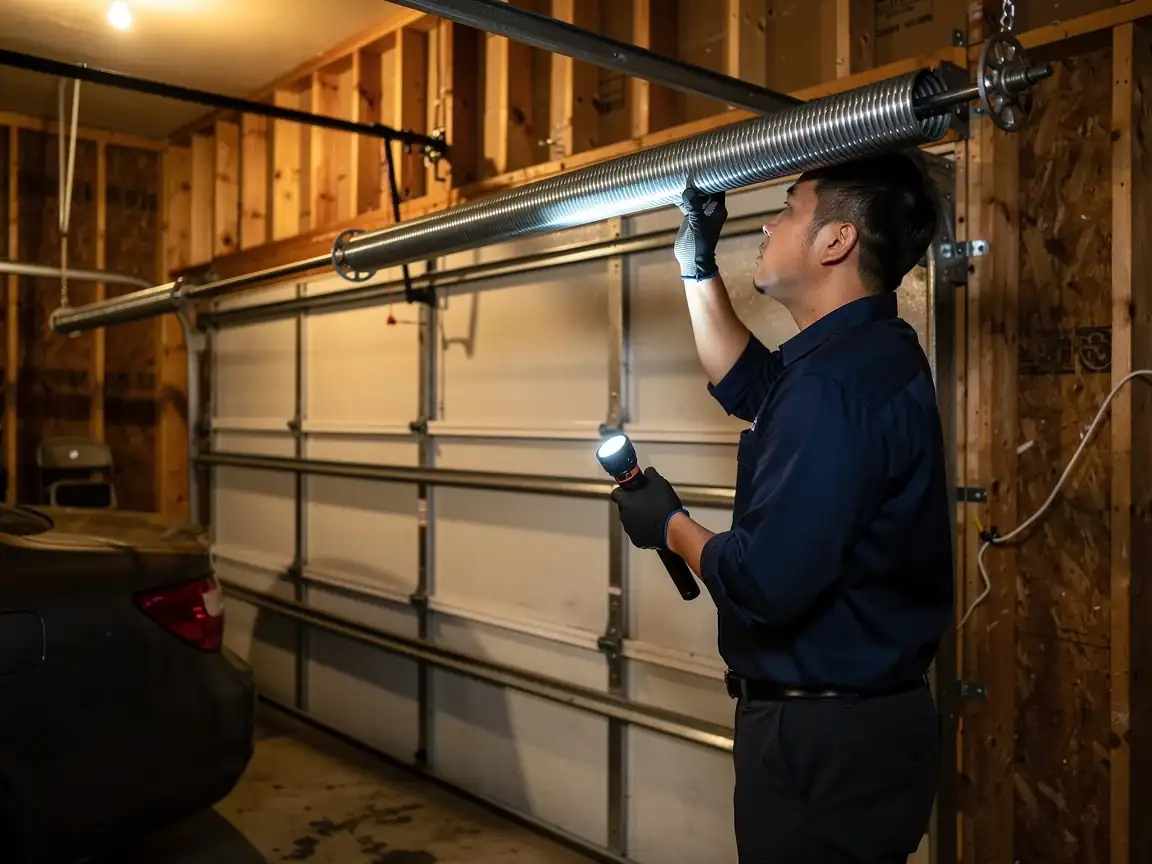
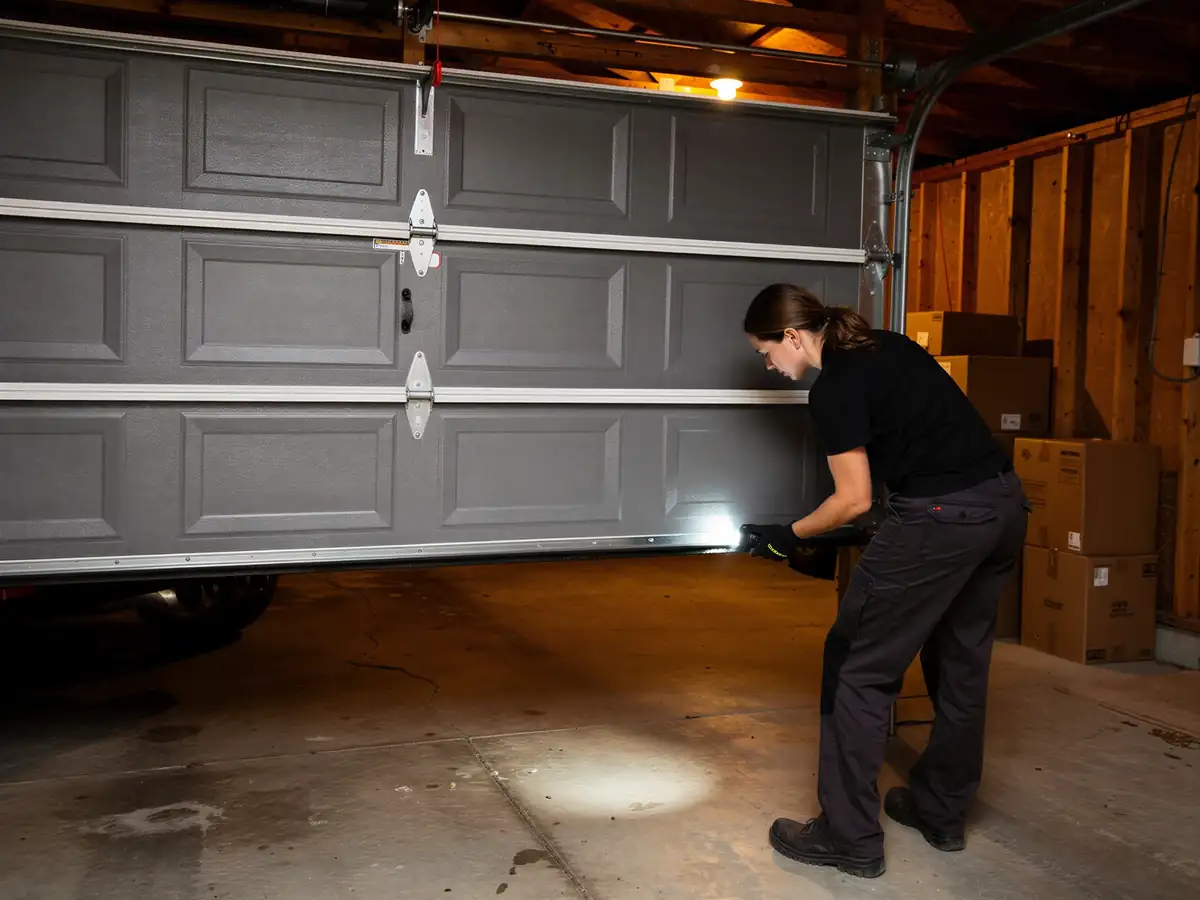
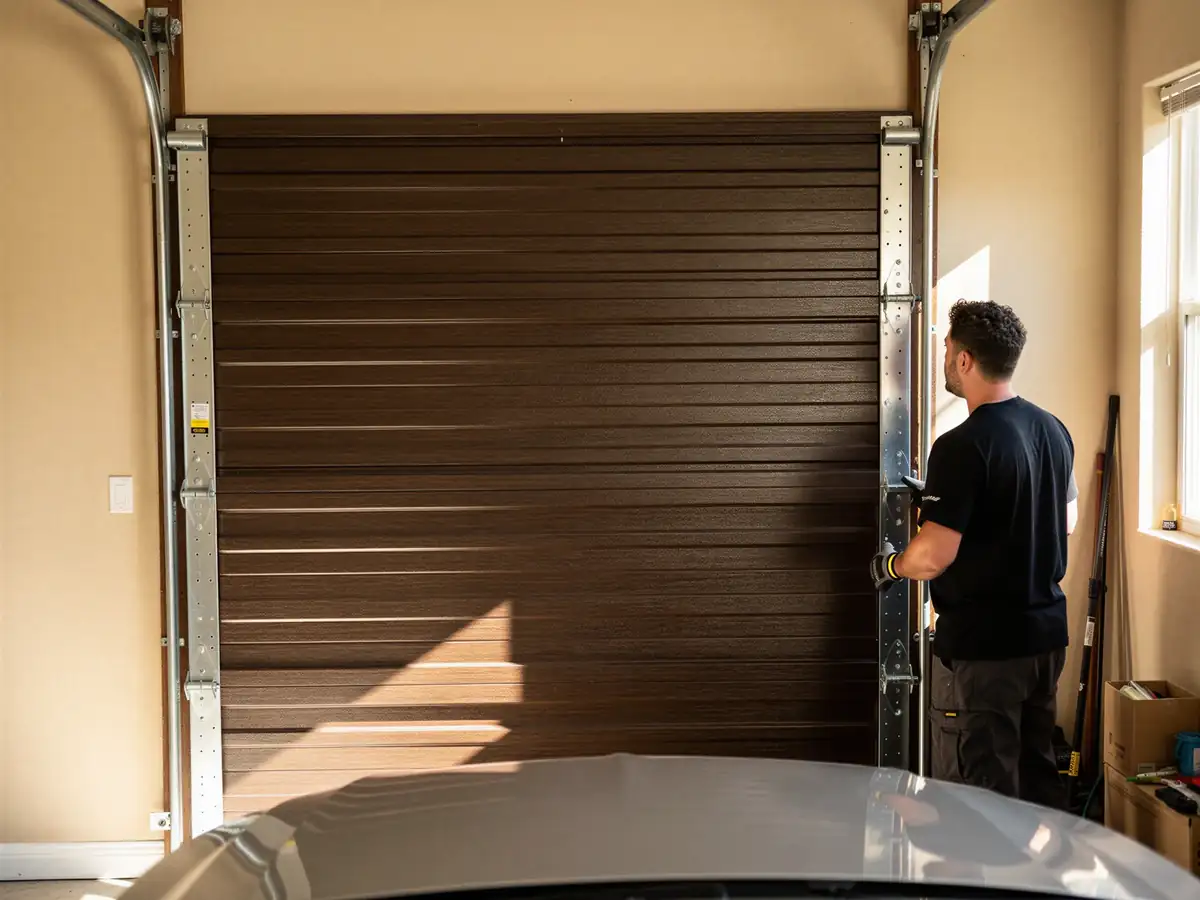
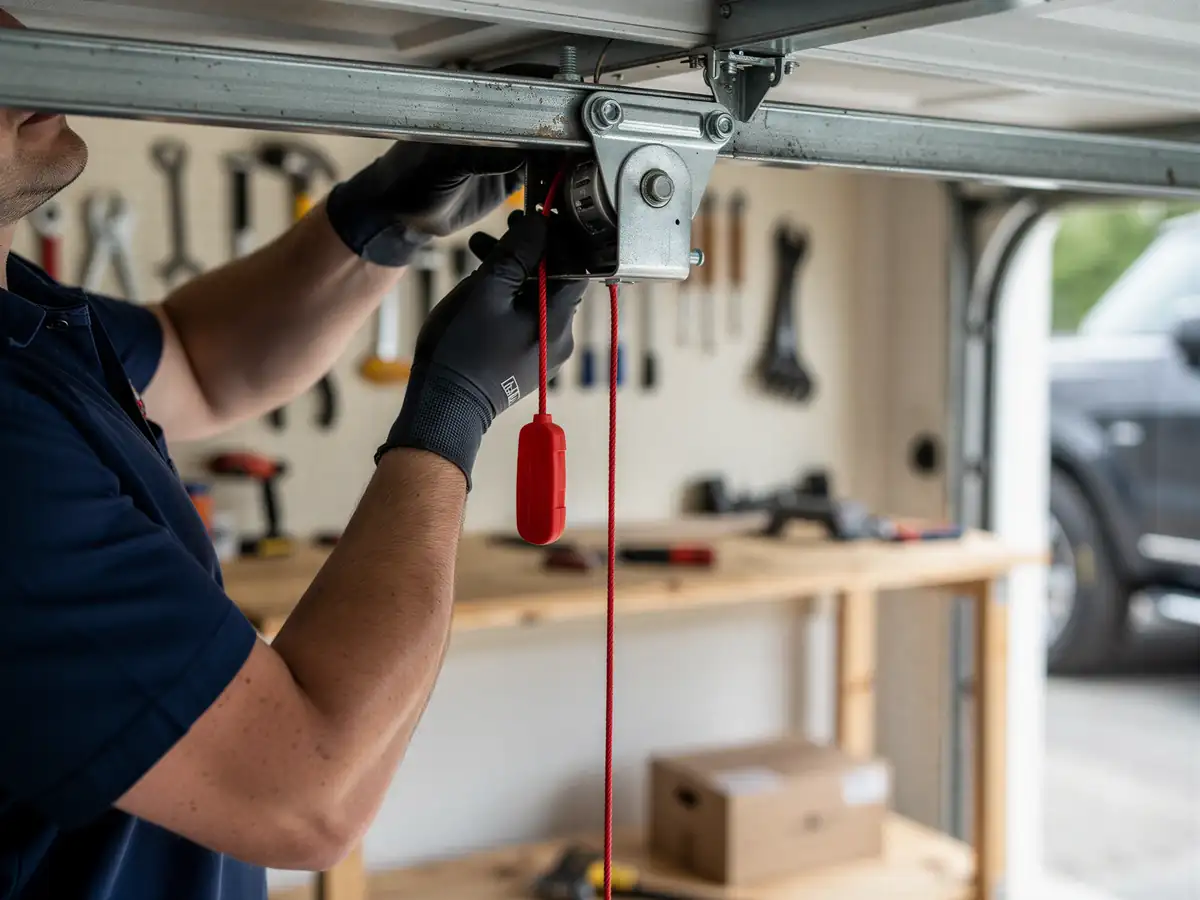
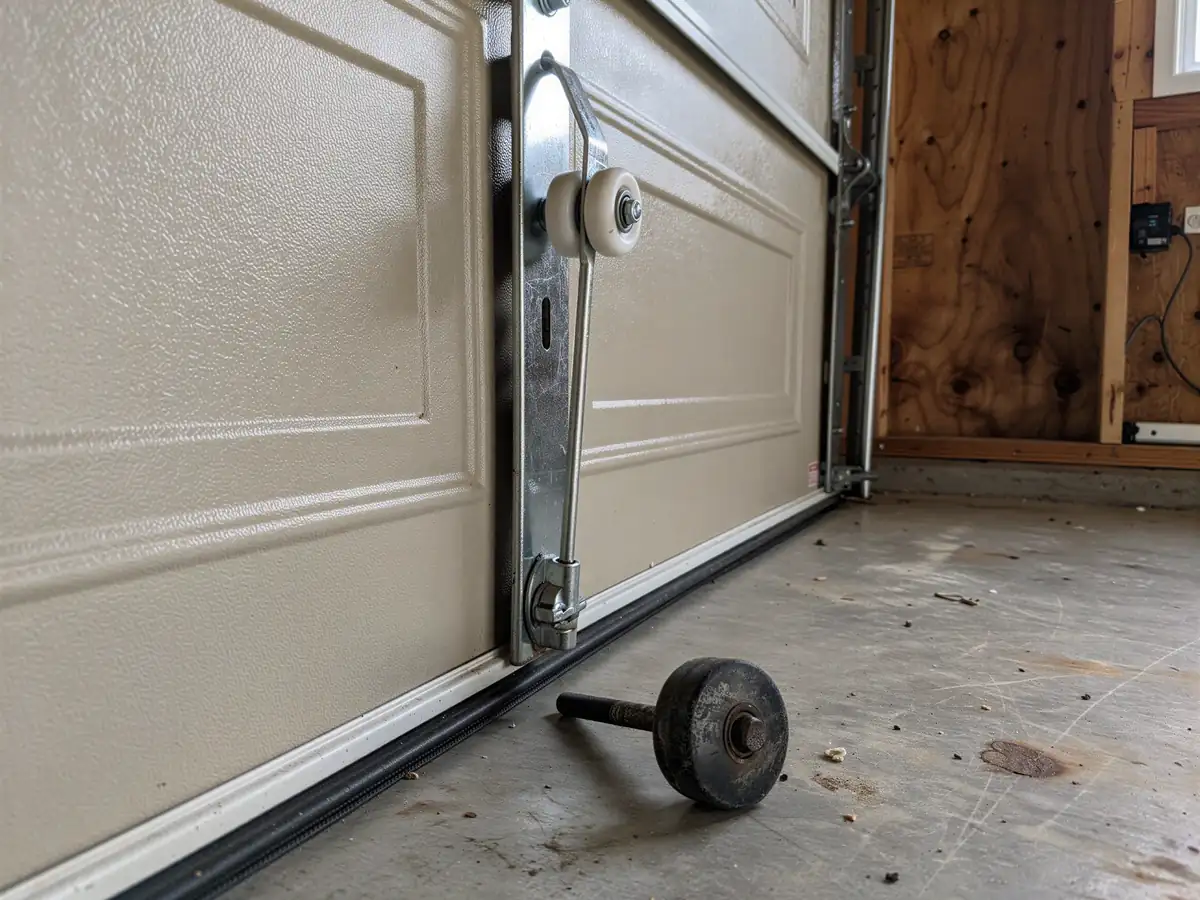
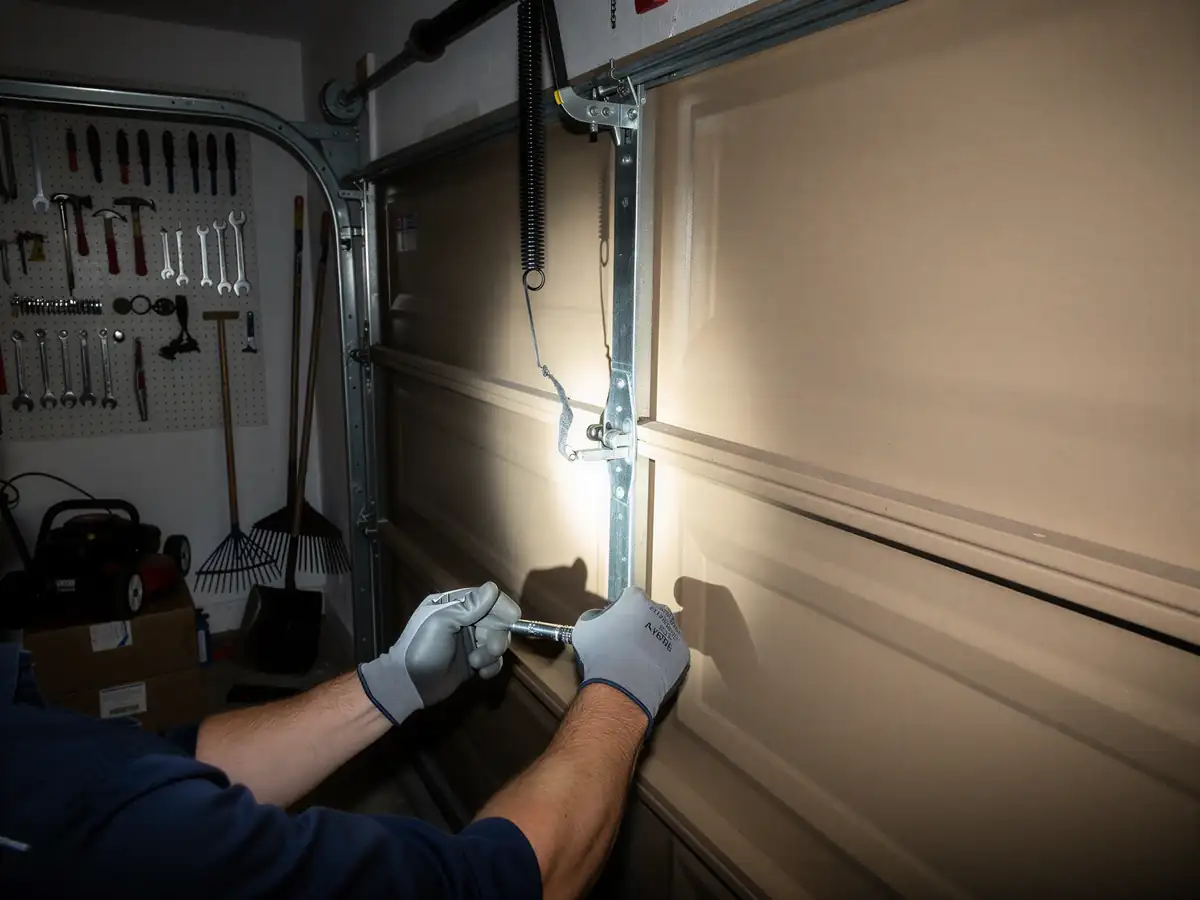
Different noises point to different parts, and on the older stock common across Waterford's 32 named areas, the pattern is pretty consistent. A sharp metallic bang usually means a cable has slipped off a drum or a spring has broken - stop using the opener immediately if you hear this one. A rhythmic thump once per cycle is almost always a flat spot on a roller, worn from decades of the same contact point. A high squeal is dry hinges or roller bearings, often made worse right as the cold sets in. A low grinding or rumbling sound as the door travels usually means the track is out of alignment, which happens over time as a house settles - not unusual in homes built in the 1949-1993 range. A loud rattle on an older torsion system can mean the center bearing plate has worn loose. None of these are guesses once we're standing in front of the door; they're specific failure points with specific fixes, and the noise itself tells us most of what we need to know before we open the panel.