What You Pay
We don't have a flat number to give you here because opener jobs split into two very different categories, and what you pay depends on which one you've got. A straight opener swap is one job. A house where the power cut also fried a circuit board, or where the door itself won't release from a dead opener because the manual release was painted shut years ago, is a different job entirely.
Waterford's housing stock runs 1949 to 1993, median build year 1973, and a lot of those openers are original or one replacement removed from original. That means when the power goes out and someone finally calls, we're not just swapping a motor - we're often dealing with wiring and mounting hardware that predates the current code cycle. That adds time, and time is most of what you pay for.
We can tell you honestly: if your opener is pre-2000 and a power event just took it out, replacement usually beats repair. Parts for openers that old are getting harder to source, and we're not going to quote you a repair that'll fail again in six months.
What Local Conditions Do
Waterford sits in a severe cold climate band, and that matters for openers in a specific way: cold doesn't just slow a chain drive down, it stresses the capacitor and circuit board inside the unit every time the power comes back on after an outage. A clean outage is one thing. An outage followed by a cold restart, repeated over a winter with multiple grid blips, is what actually kills these units early.
Houses built in the 1960s and 70s boom across the area's named subdivisions typically have openers mounted in unheated or marginally insulated garages. That's the environment the hardware has been living in for decades, through a lot of winters, and it shows up as boards that fail not from one event but from accumulated cold-start cycles.
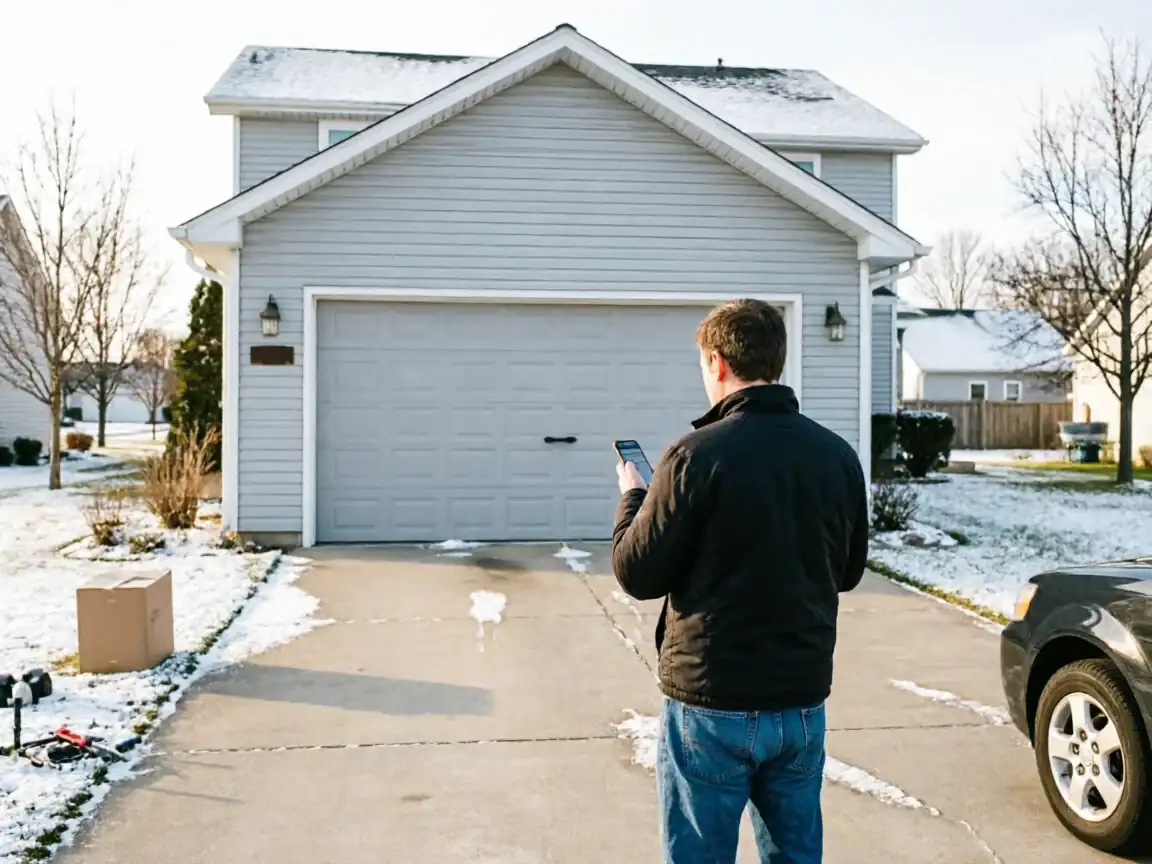
When a storm knocks power out and your opener won't respond when service comes back, that's not always the storm's fault directly - it's often the last straw on a board that's been taking this kind of stress for years. We see this pattern often enough in this area that it's worth mentioning before you assume the opener itself is simply broken.
Where People Go Wrong
The most common mistake we see after a power cut
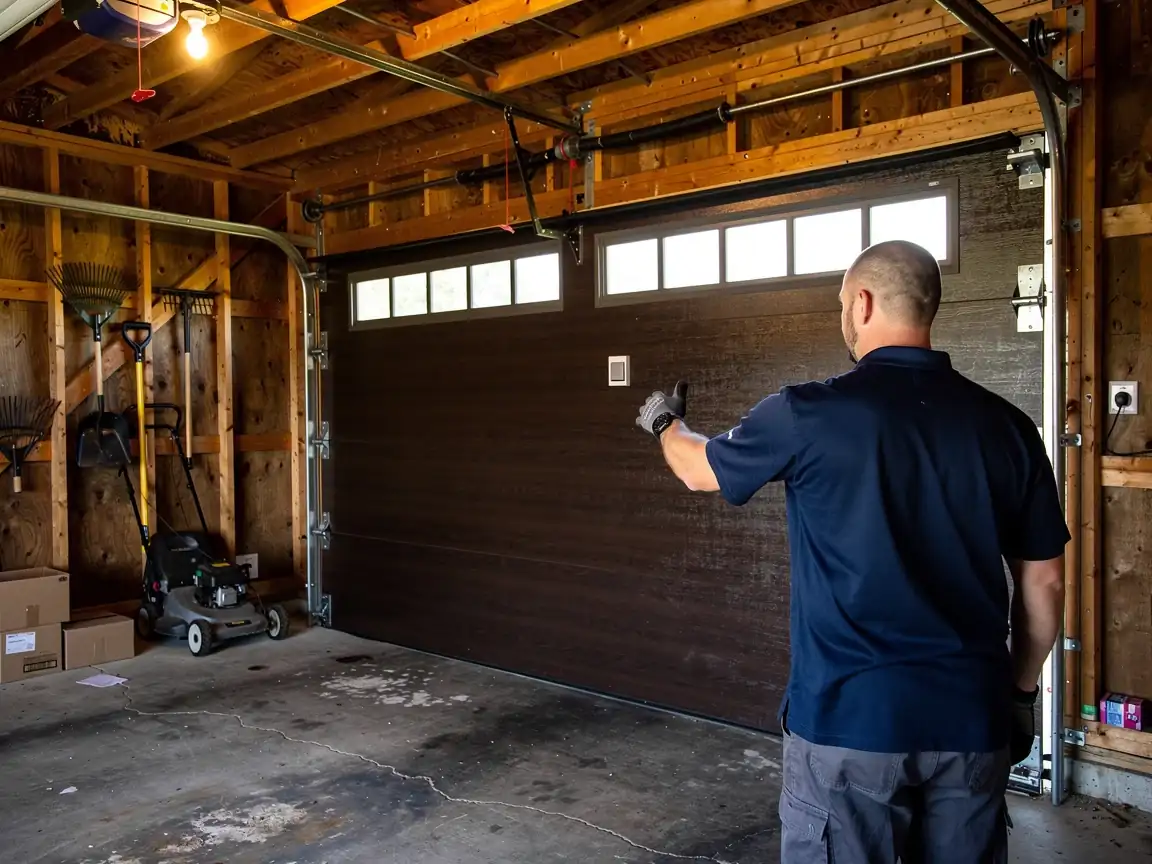
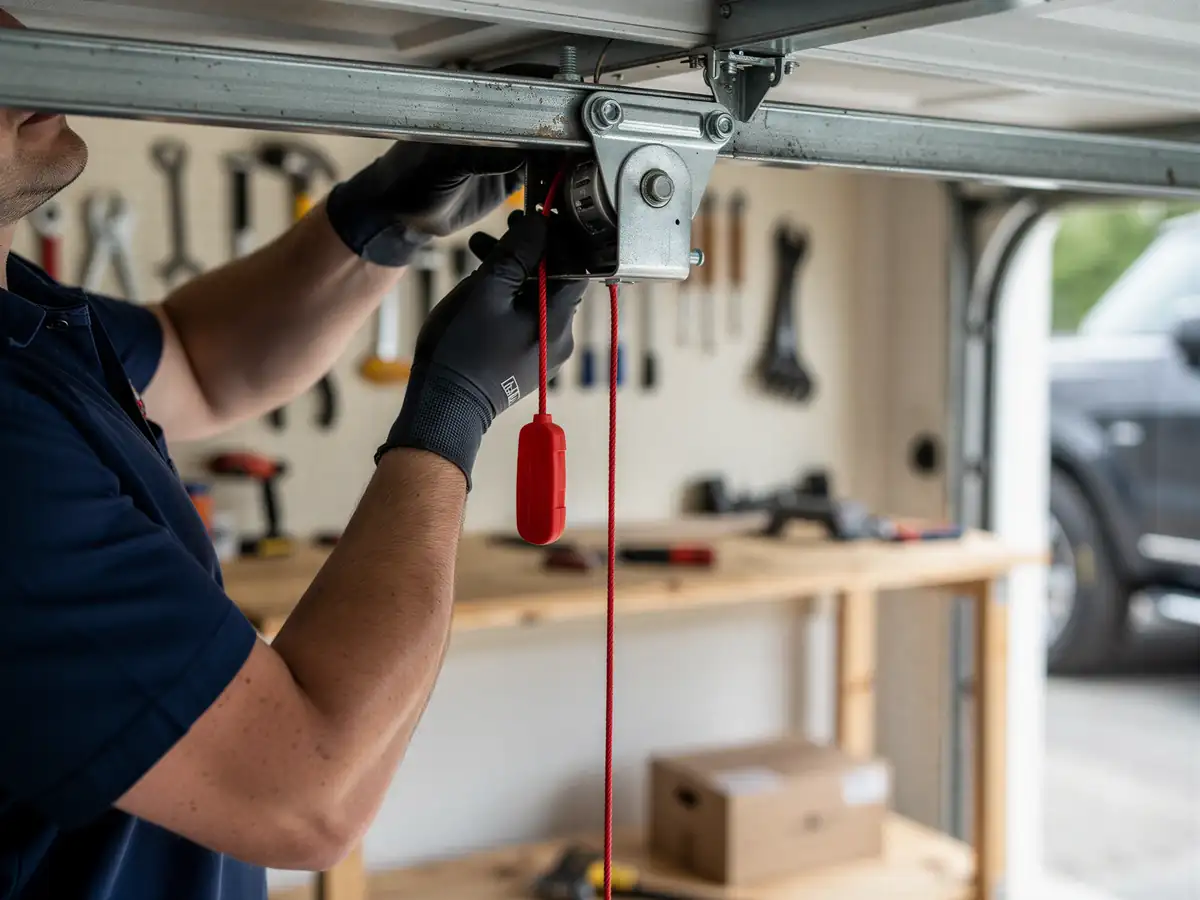
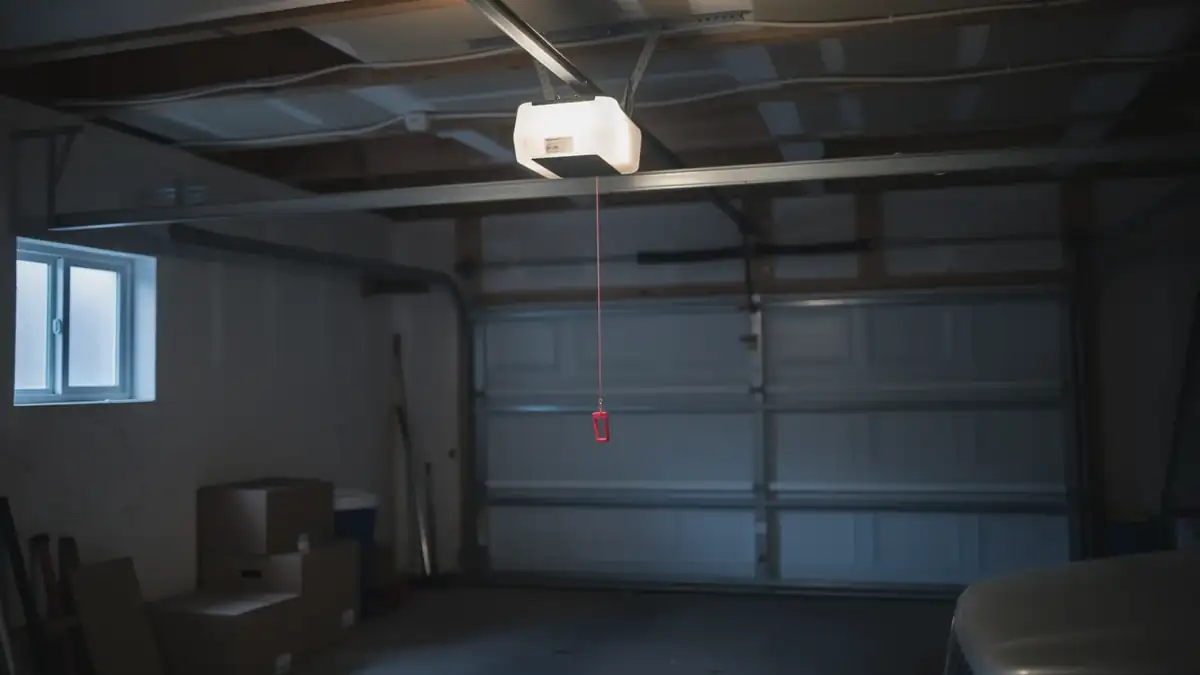
Someone forces the door open manually, using the emergency release, and doesn't disengage the opener trolley correctly first. On a door that's been running on original or near-original hardware from the 1960s-70s build era, that can bend the arm connecting the opener to the door, or worse, snap a cable that was already past its service life.
The second mistake is assuming a dead opener means a dead door
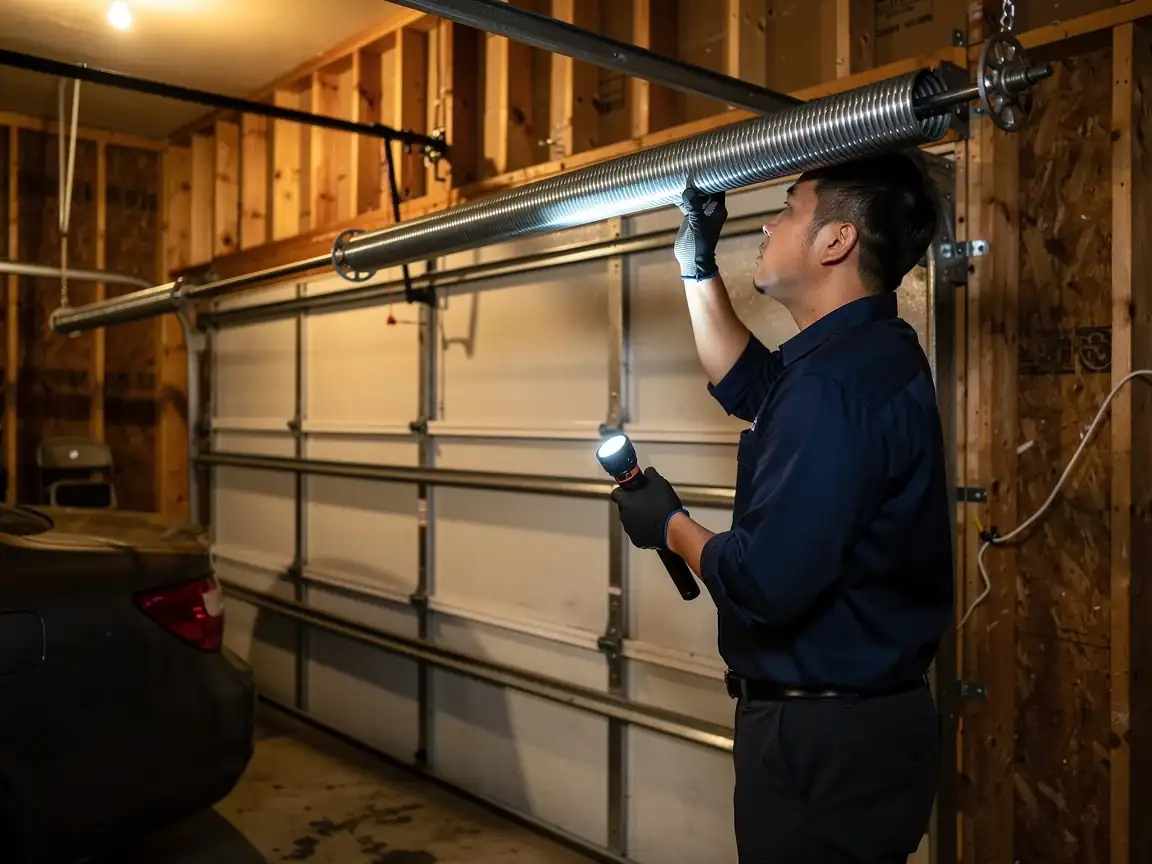
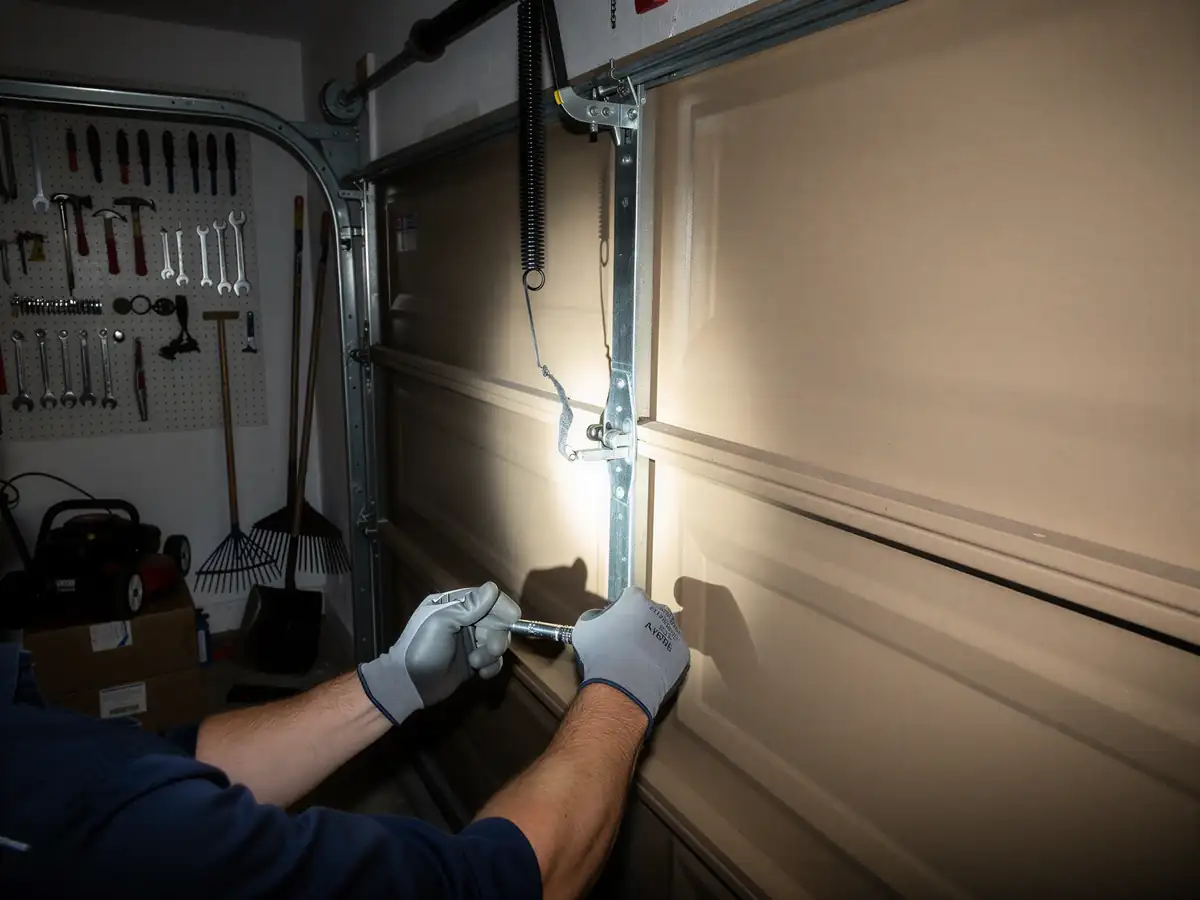
In most of the houses we go into here, the spring system and the opener are separate problems. A power cut takes out the opener. It does not touch the torsion spring. People sometimes replace the opener and still can't get the door moving right, because nobody checked the spring tension while they were in there.
We'd rather tell you to check both than sell you one fix that leaves the second problem waiting
On a house with original 1970s-era hardware, that second problem is usually closer than people think.
What Is Going On
Here's the actual mechanism, plain: an opener's logic board holds a small charge and depends on a stable return of power to reset correctly. In a severe cold climate, a power cut followed by restoration often happens during a temperature swing, and that swing is hard on the board's solder joints over repeated cycles. One outage rarely kills an opener outright. A winter of them, on a unit that's already 20 or 30 years into a house built in the 1949-1993 window, usually does.
If your opener won't respond after the lights come back on, test the obvious things first: wall switch, breaker, and whether the unit's logic light blinks at all. No light usually means the board is gone, not just the motor. We won't pretend every outage call ends in a full replacement - sometimes it's a tripped breaker and nothing else - but in homes with original-era wiring, that's the exception more than the rule.