What You Pay
We're not going to quote you a number here, because what you pay depends on what's actually wrong and what parts your door takes, and that varies house to house. What we can tell you is how the decision usually breaks down in this area. A lot of Waterford homes were built between 1949 and 1993, with the median landing around 1973, so a huge share of the doors we look at are original or close to it - steel or fiberglass panels on torsion hardware sized for a lighter door than what's hanging there now after decades of re-insulation or panel swaps. Fixing one part, a spring, a cable, a pair of rollers, is almost always cheaper than replacing the whole unit, as long as the track and drums are still true and the panels aren't rusted through at the bottom. With roughly 63,421 owner-occupied houses in the service area and a median household income of $102,333, plenty of owners here can afford to replace rather than keep patching, but that doesn't mean repair is the wrong call. It usually means replacement is a choice, not a forced one, and that's worth knowing before anyone tells you otherwise.
What Local Conditions Do
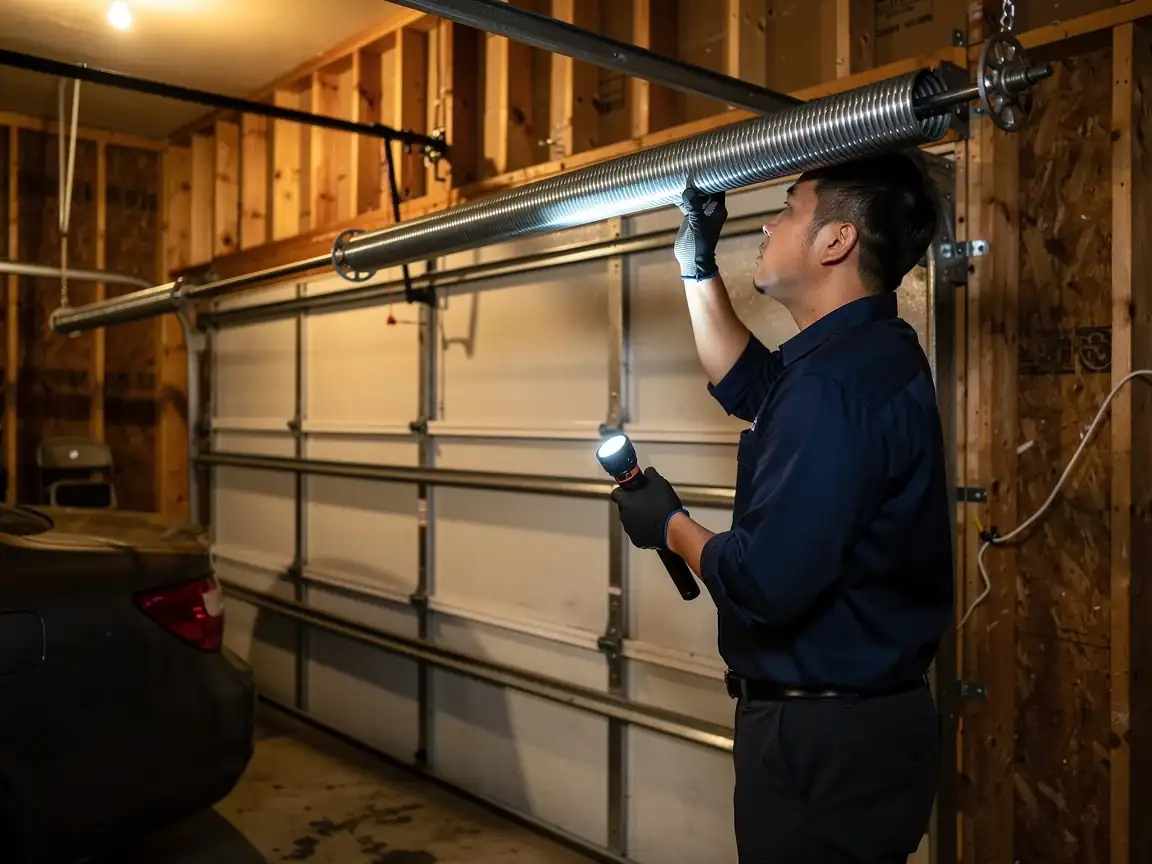
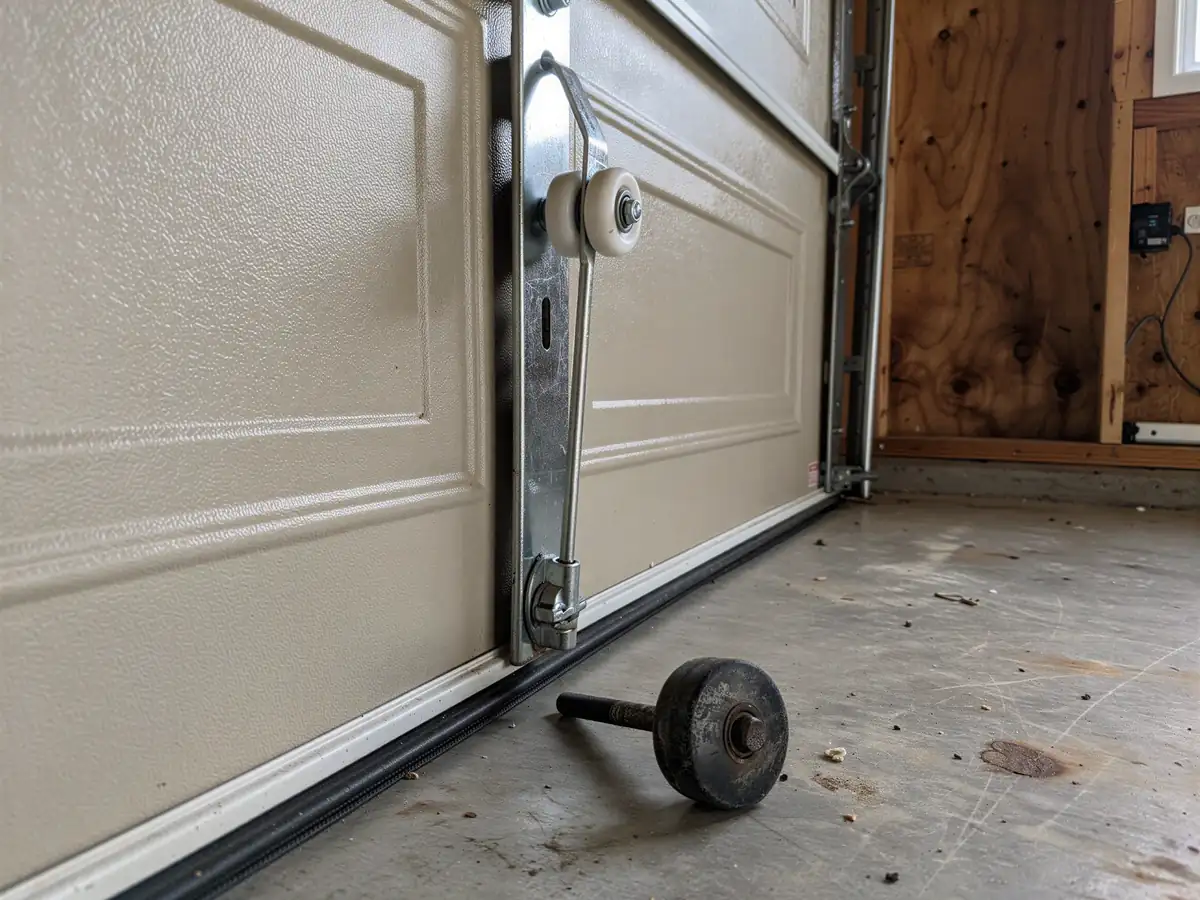
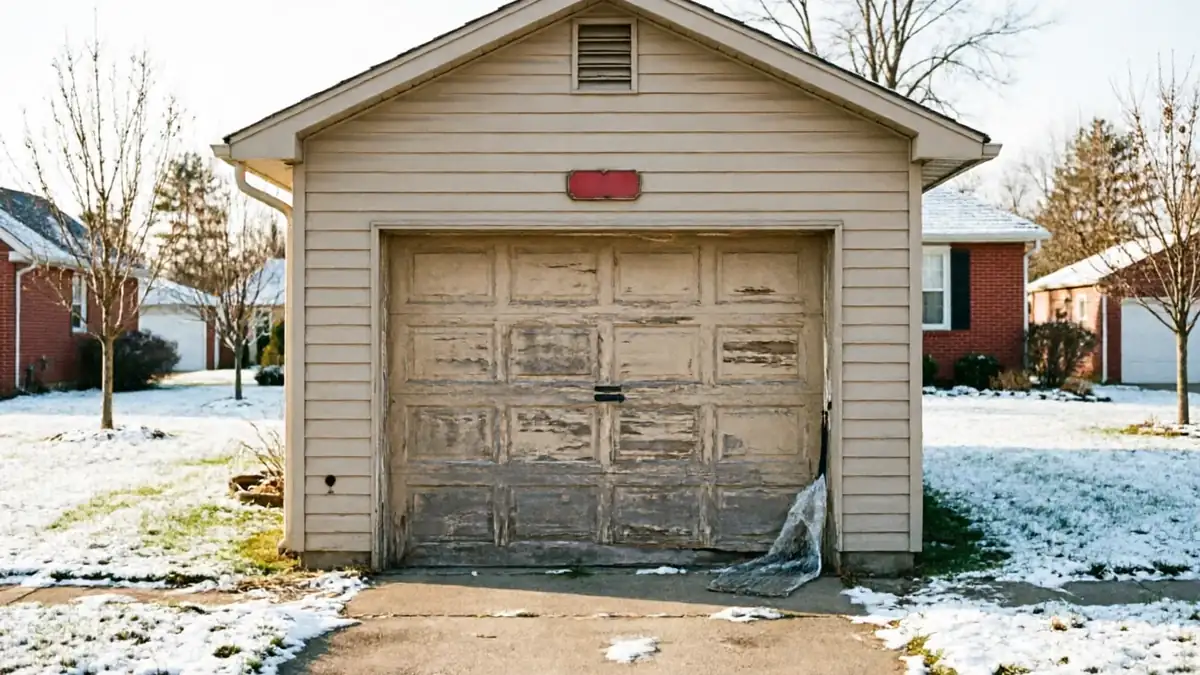
Waterford sits in a cold-severe climate band, and that matters more to an old door than most people think. Steel panels contract and expand every time the temperature swings hard, which it does here through a long winter, and that cycle is what cracks dried-out bottom seals, loosens hinge screws, and works torsion springs toward fatigue faster than a mild-climate door would see. On a door built or installed back when the local housing stock went up - 1960s and '70s construction is common across much of the area - the steel gauge and spring wind were spec'd for a different set of expectations than what cold-severe conditions put on hardware today. Condensation inside an uninsulated steel panel adds rust at the seams, usually starting at the bottom corners where water sits after a thaw. None of this means an old door is doomed. It means the parts most likely to fail first - seals, rollers, the spring - are also the ones that are cheapest to replace, and a door that's otherwise square and running true is usually worth keeping.
What Is Going On
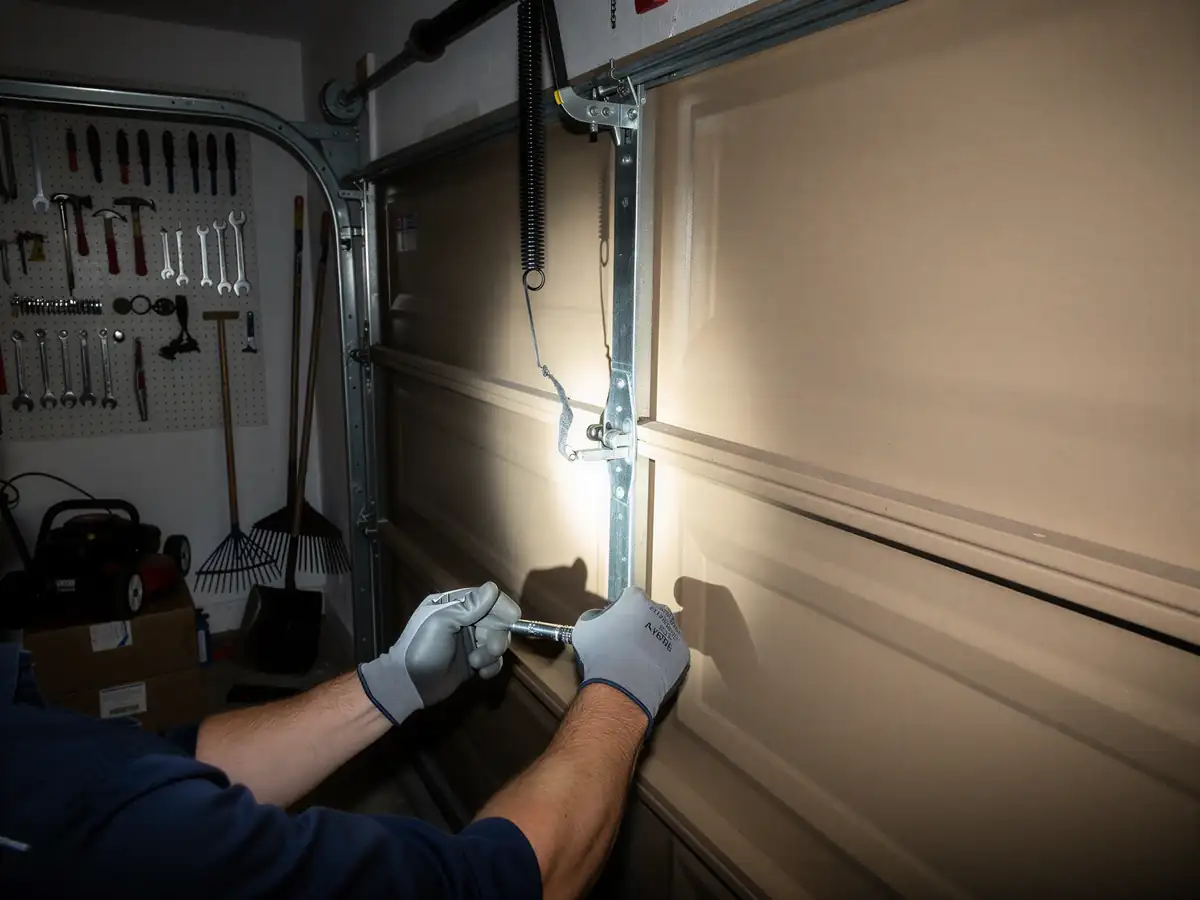
Put the pieces together and the picture for Waterford is pretty consistent. Housing here mostly went up between 1949 and 1993, median year 1973, and a lot of it followed the same builder patterns across dozens of neighborhoods rather than one-off custom construction. That means the garage doors behind those houses were, for the most part, installed on the same handful of hardware configurations - side-mounted torsion springs, steel or fiberglass panels, standard-width tracks - and installed in a climate that's been putting cold-severe stress on that hardware ever since. So when a door from that stock fails, it's rarely a mystery: it's a spring at the end of its cycle life, a seal that's dried out and cracked, rollers that have worn their bearings loose. The door isn't failing because it's old for its own sake. It's failing in the specific, predictable way that doors built for this housing era and this weather fail. That's good news, actually - predictable failure is fixable failure, as long as the rest of the door is still square.