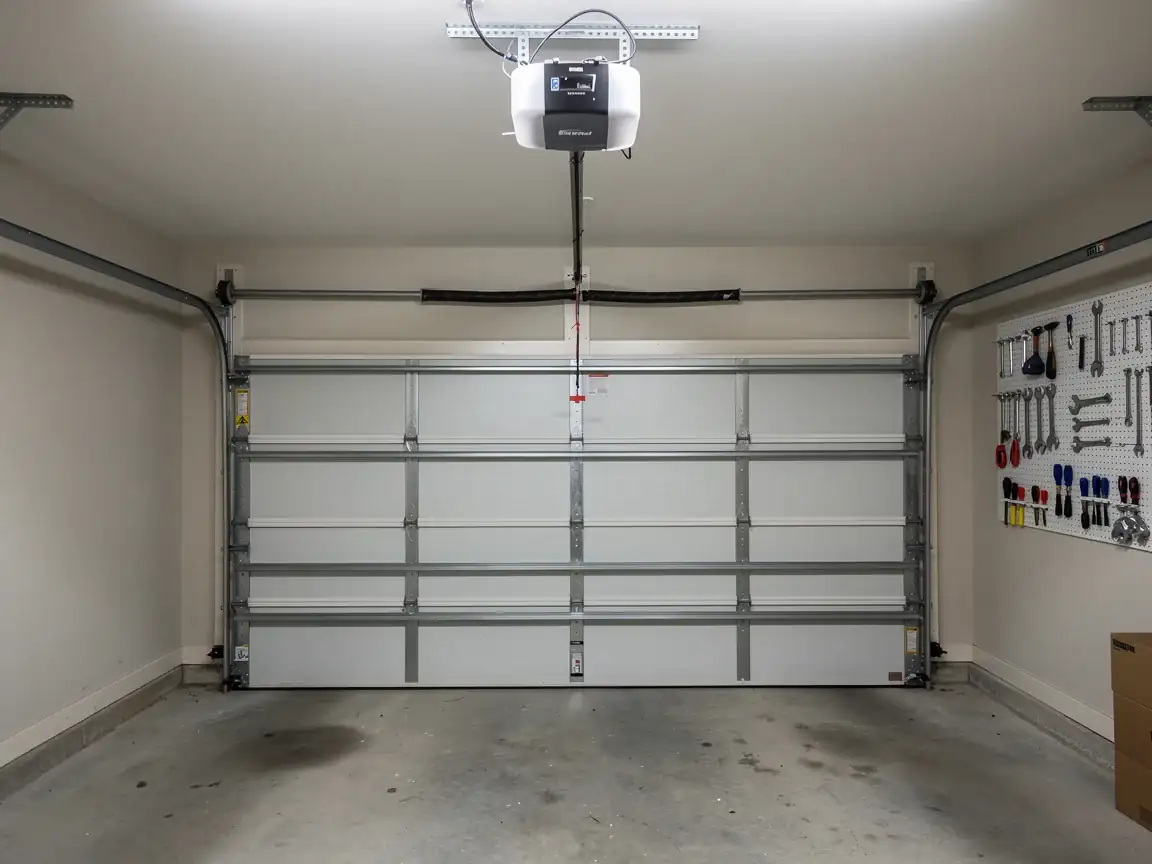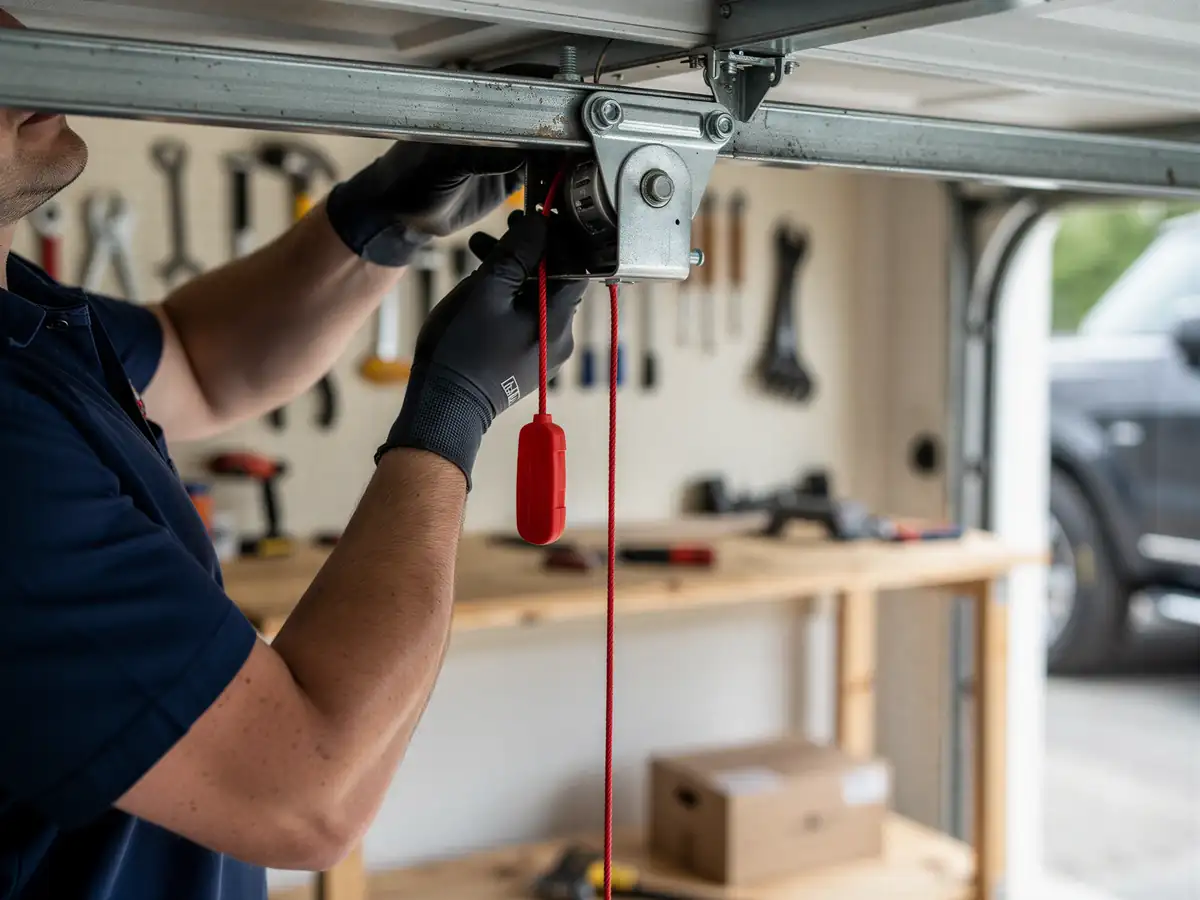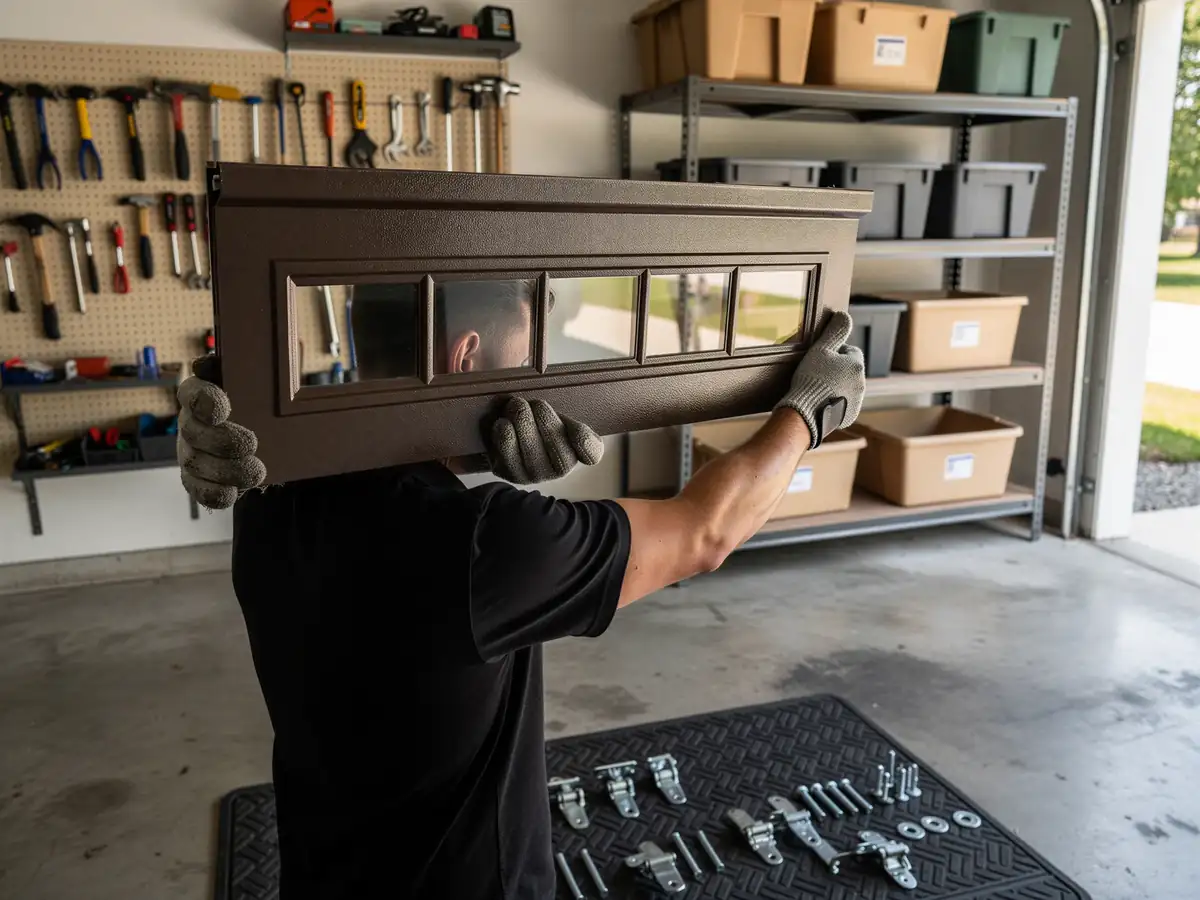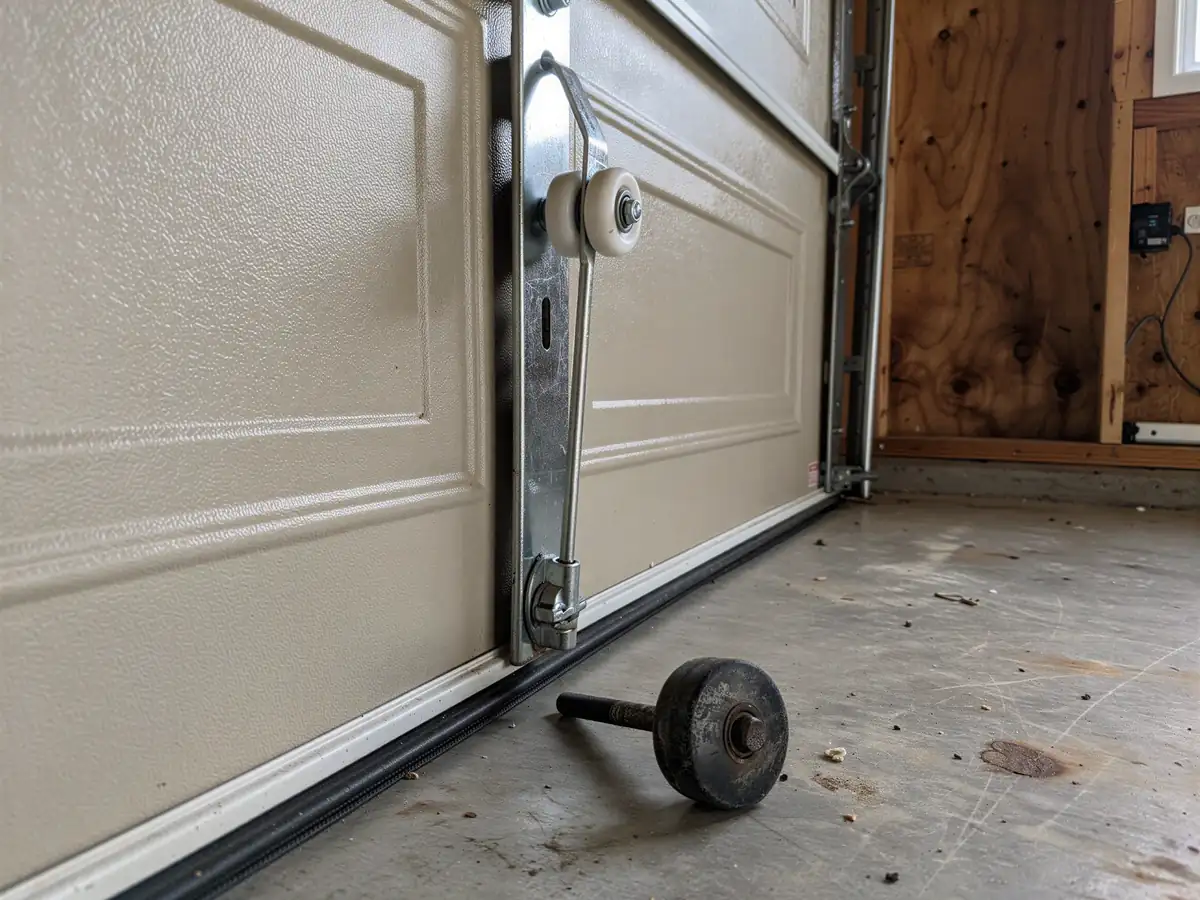
Why It Happens Here
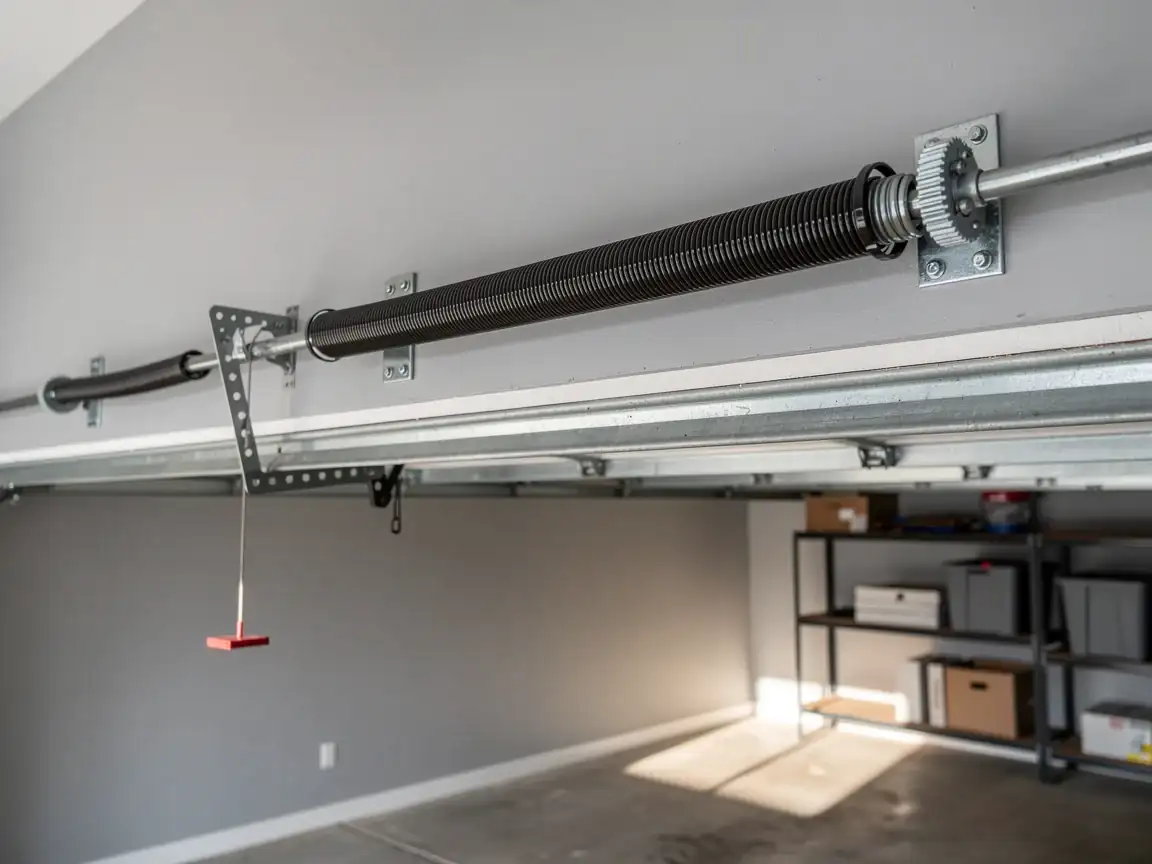
Most of the houses we get called to across this service area went up between 1949 and 1993, with the median build year landing around 1973. That means a huge share of the doors and track hardware out there are original or close to it - torsion springs rated for a load that's been cycling for fifty winters, galvanized track that's seen five decades of freeze-thaw, and openers that were already a second or third replacement before anyone thought to call us.
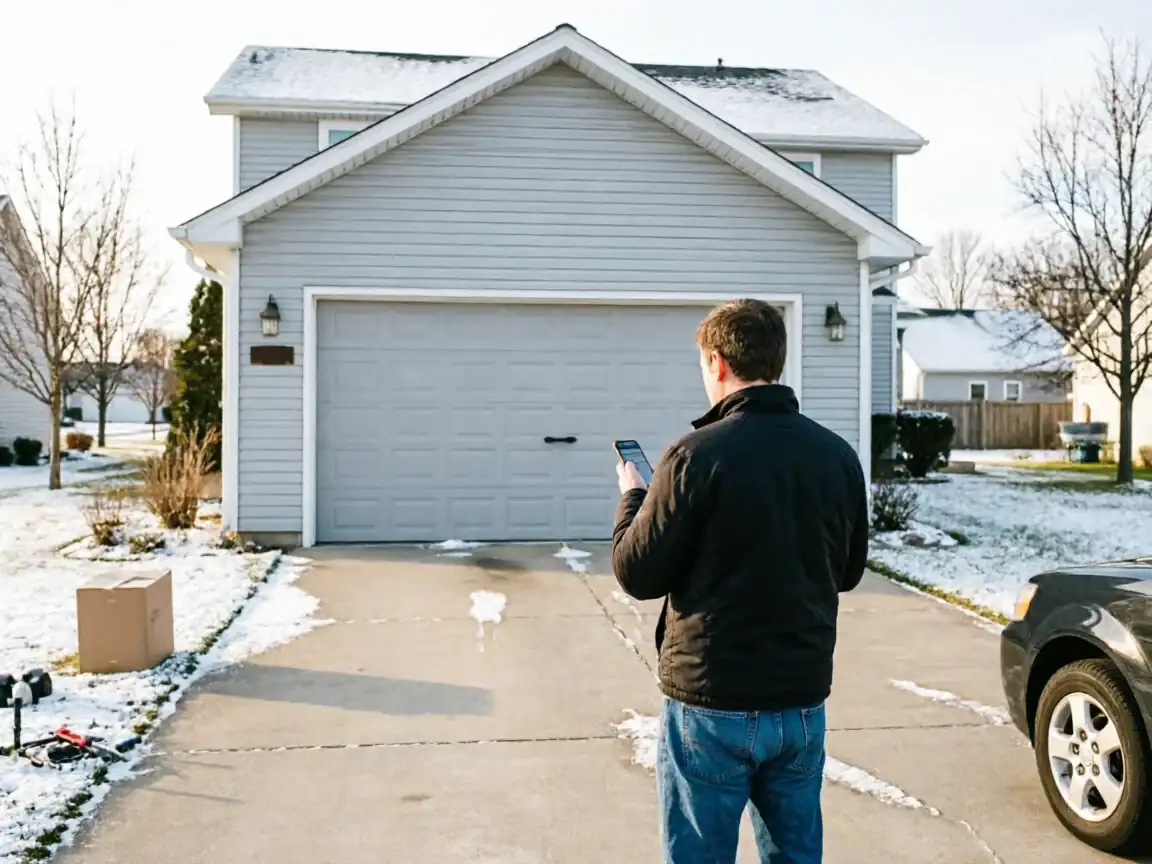
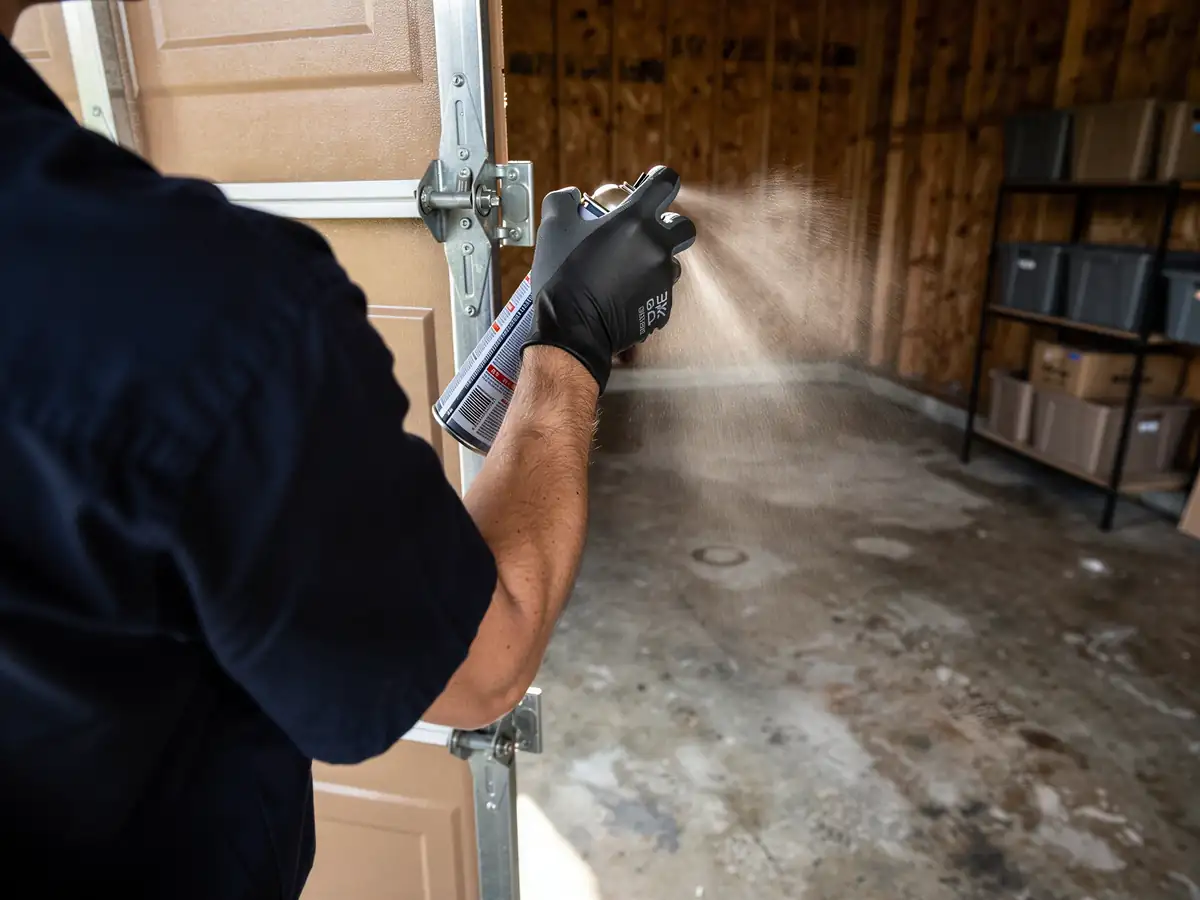
Add a climate band that's officially cold and severe, and you get a specific failure pattern. Steel contracts hard below freezing. Spring steel that's fatigued from forty years of cycling doesn't bend anymore, it snaps. Grease in old ball-bearing rollers gums up stiff in a cold snap, which loads up the opener's gears trying to force a door that won't roll free. None of this is a mystery once you've seen a few hundred of these 1960s-70s builds - it's just what happens when original hardware meets another Michigan winter.
We see this pattern repeat across all 32 of the named communities in this service area, not just one neighborhood. The housing era and the climate are the constant. The specific street and door model change, the physics doesn't.
Where This Job Goes Sideways
A broken spring call turns into a bigger job more often than homeowners expect, and it's usually because of what's underneath the obvious problem. On a door this old, the cable drums are often the original stamped-steel kind, and they can be worn thin enough that pulling a new spring onto them just transfers the failure point. We've opened up jobs where the track bolts had backed out of brittle old framing, or the bottom bracket was rusted through from decades of road salt tracked in off the slab.
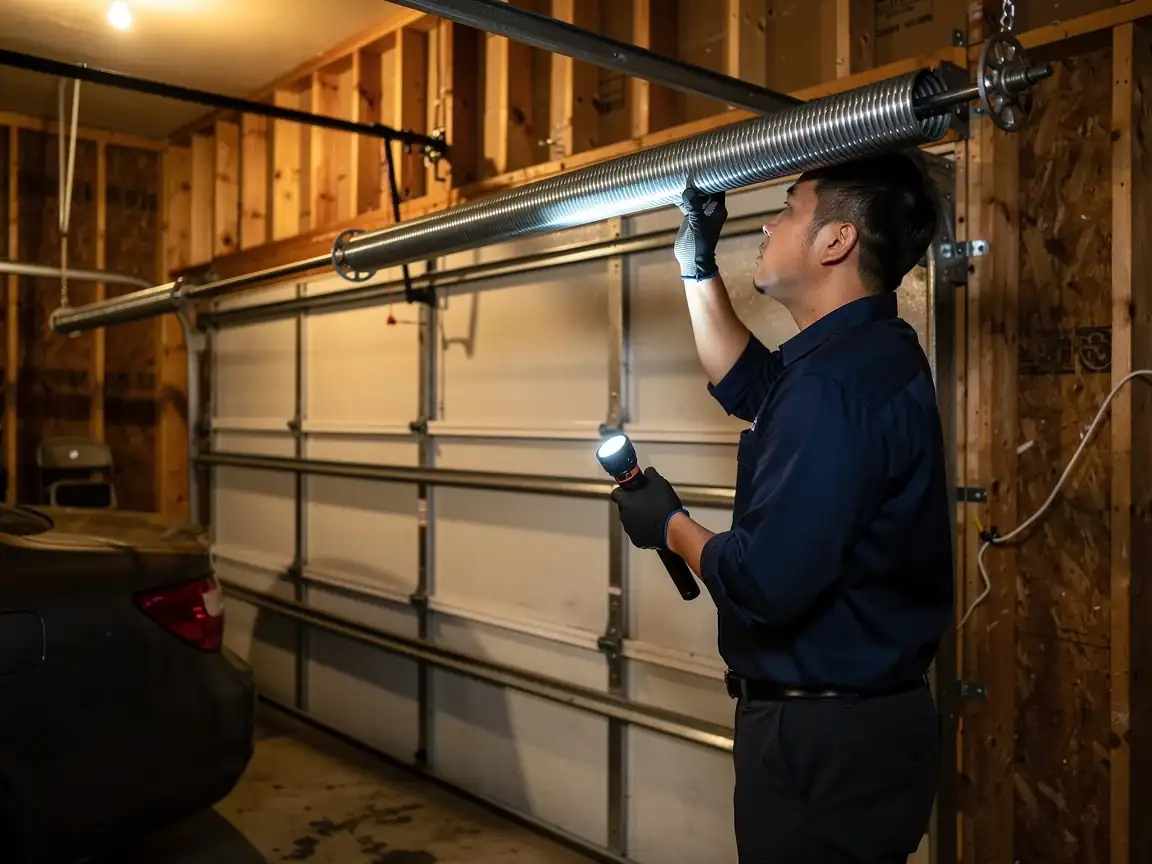
Cold makes this worse in a specific way: a technician working a torsion spring under tension in a freezing garage is already managing risk, and old, corroded hardware that doesn't behave the way new hardware would adds a layer most homeowners never see. This is also where we're honest about limits - if the opener motor itself has failed and it's an older chain-drive unit that's been discontinued, we're not going to pretend a generic part will match it perfectly. Sometimes the right call is a new opener, not a patched one, and we'll tell you that up front instead of billing for a repair that won't hold through the next cold stretch.
The households we work in average a decent income level for this region, but that doesn't change the math on a door that's structurally tired. Money doesn't fix fatigued steel - the right parts and the right sequence do.
How It Shows Up
The calls follow a pattern tied directly to the housing stock and the cold
A door that won't budge, with a loud bang beforehand, is almost always a torsion spring letting go - common on anything built in that 1949-1993 window where the spring has never been swapped. A door that opens a few inches and reverses is usually the opener's safety sensors or a binding track, and in winter that binding is often ice or stiff grease rather than a real mechanical fault.
A door that's heavy to lift by hand, slow on the opener, or makes a grinding sound as it travels usually points to rollers that have worn past their life in houses with decades-old track
And a door that drops unevenly, one side faster than the other, almost always means a cable has frayed or jumped a drum - more common in this climate because cold makes steel cable brittle at the exact spots it's already worn.
If you're hearing any of these in a house from this era, it's not random bad luck
It's the age of the stock plus the season lining up the way they tend to.
How We Fix It
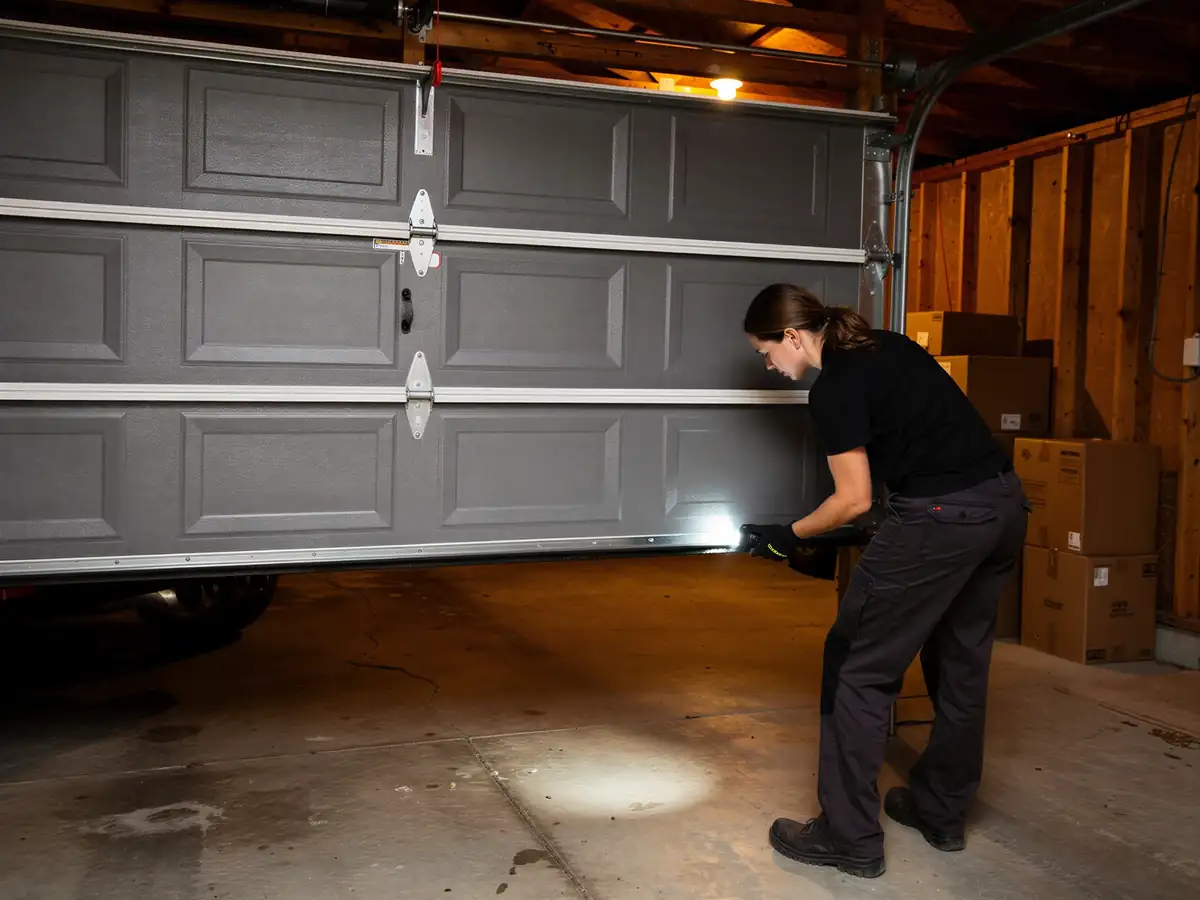
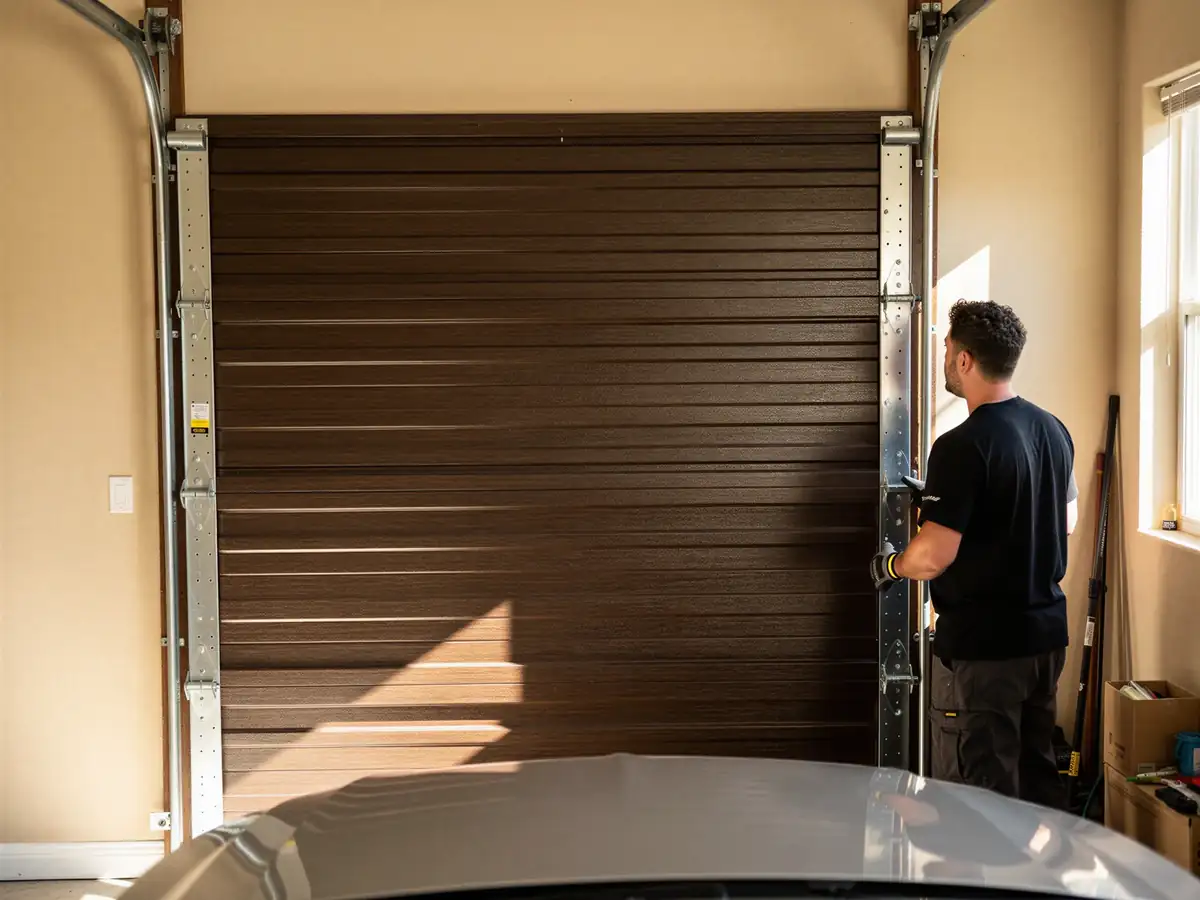
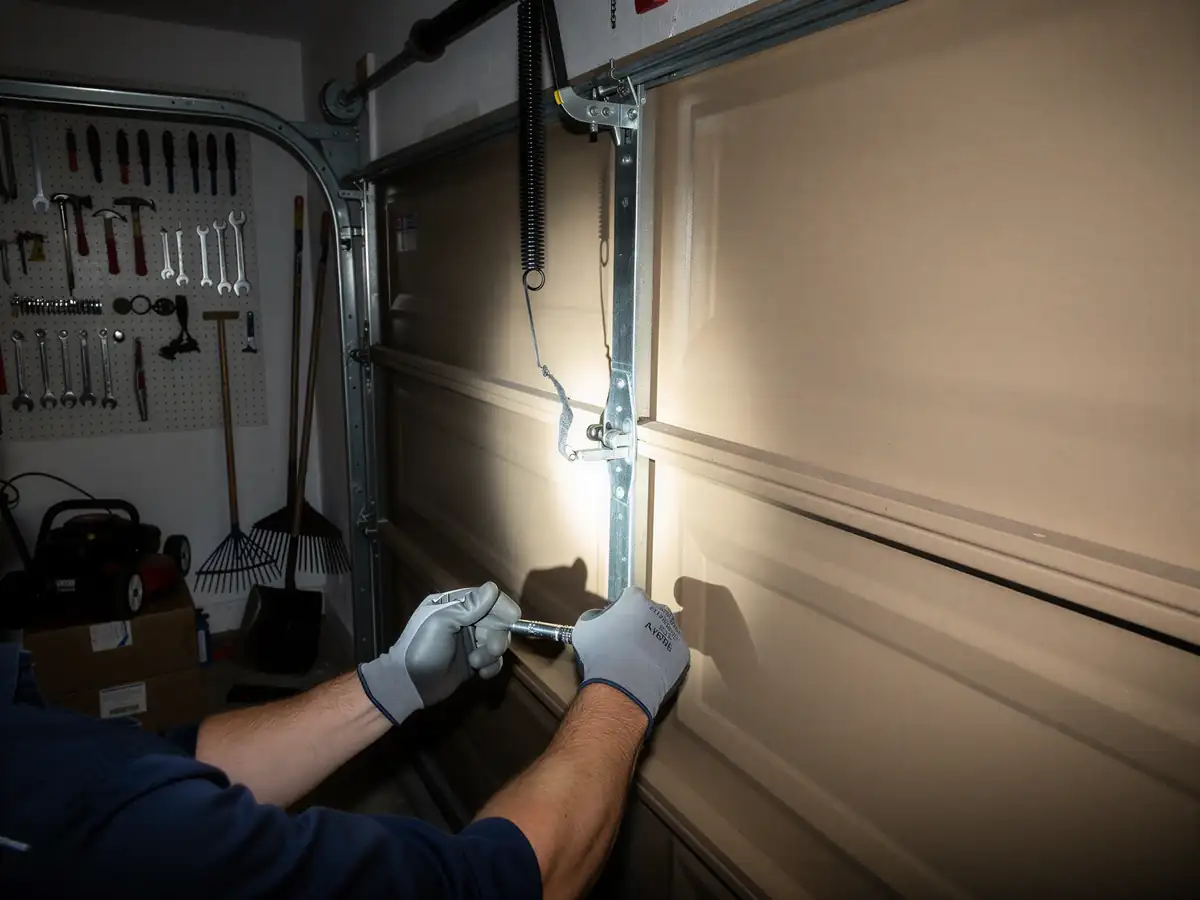
We start by figuring out which part failed and why, not just swapping the obvious piece. On a torsion spring break, that means checking the drums, the cables, and the track alignment before we tension a new spring - skipping that step is how a repair fails again in a month. On opener issues, we test the sensors and the gear set before assuming the whole unit needs replacing.
We carry stock sized for the kind of doors common in houses built across that 1949-1993 range, since that's most of what we're called out to in this service area. If a part is genuinely obsolete - some older opener models are - we'll say so rather than force a mismatched fit that won't hold up to another cold winter.
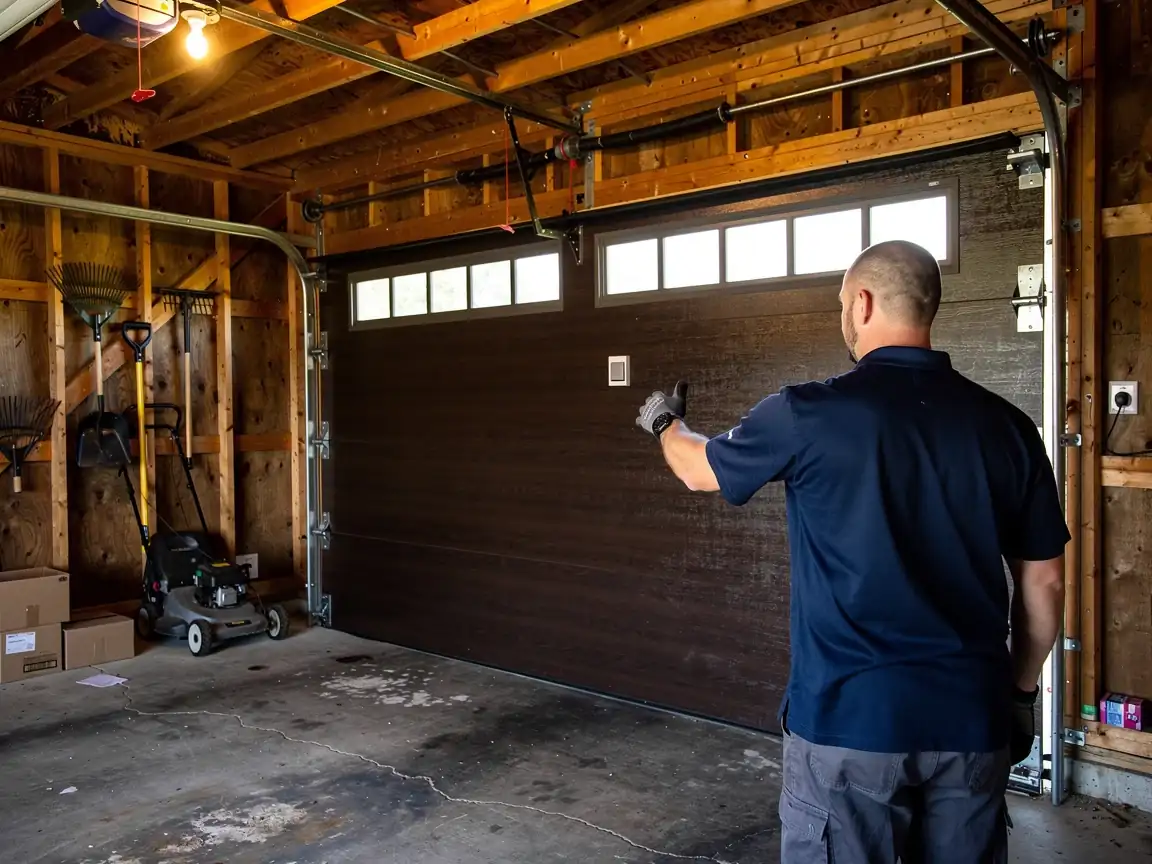
We work on the door in front of us, in the garage it's actually mounted in, cold concrete and all. That's the job.