Why It Happens Here
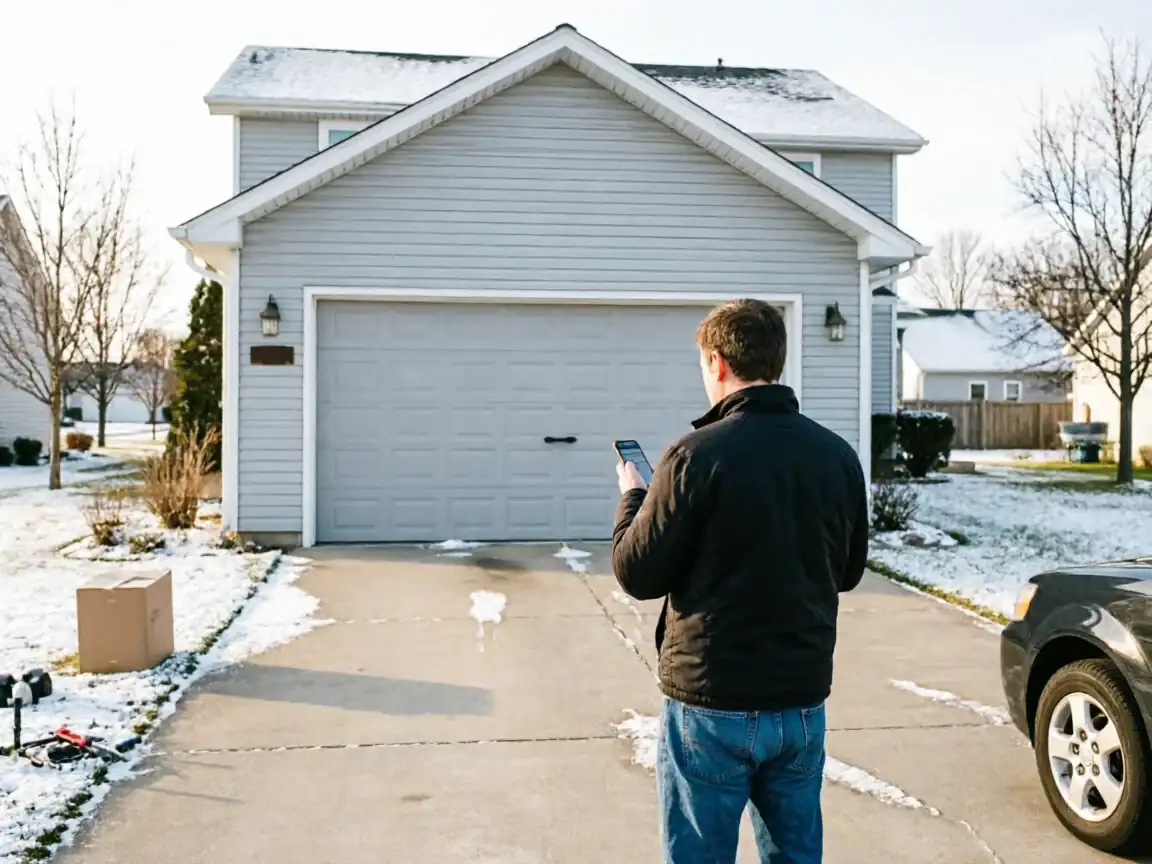
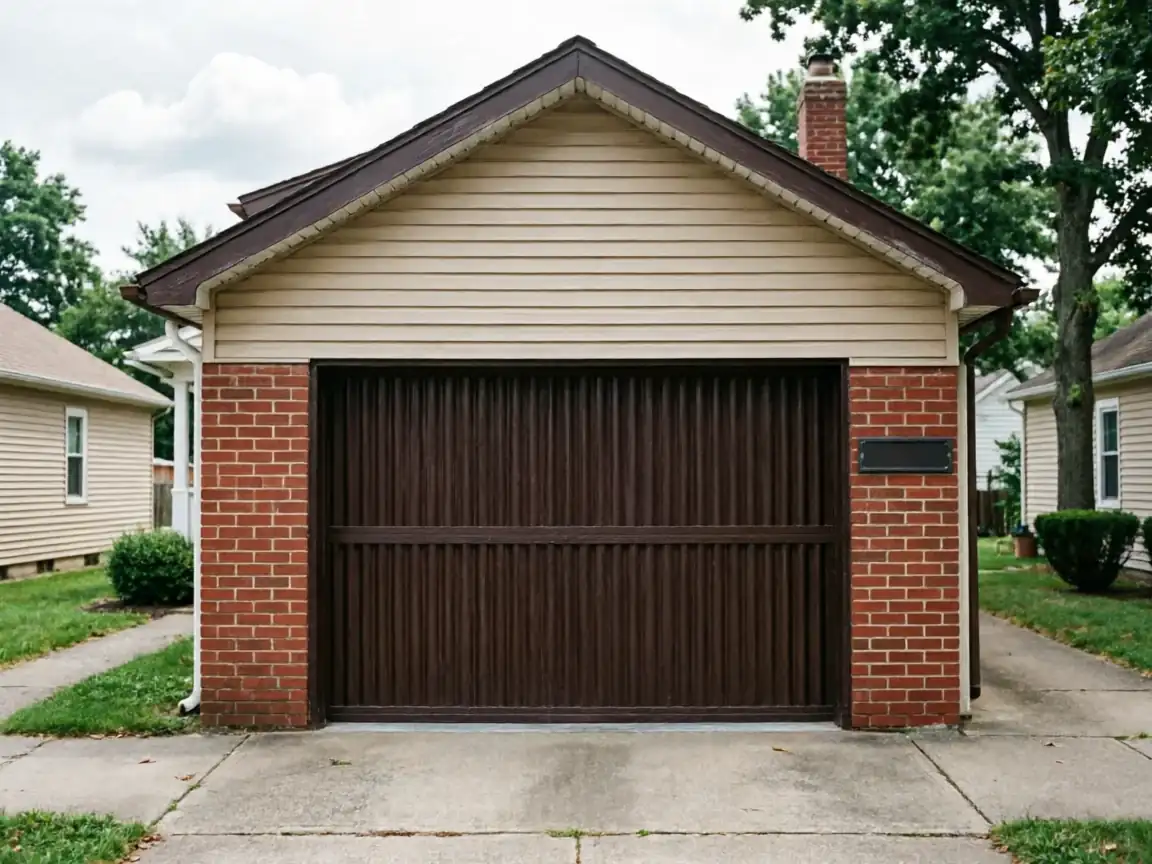
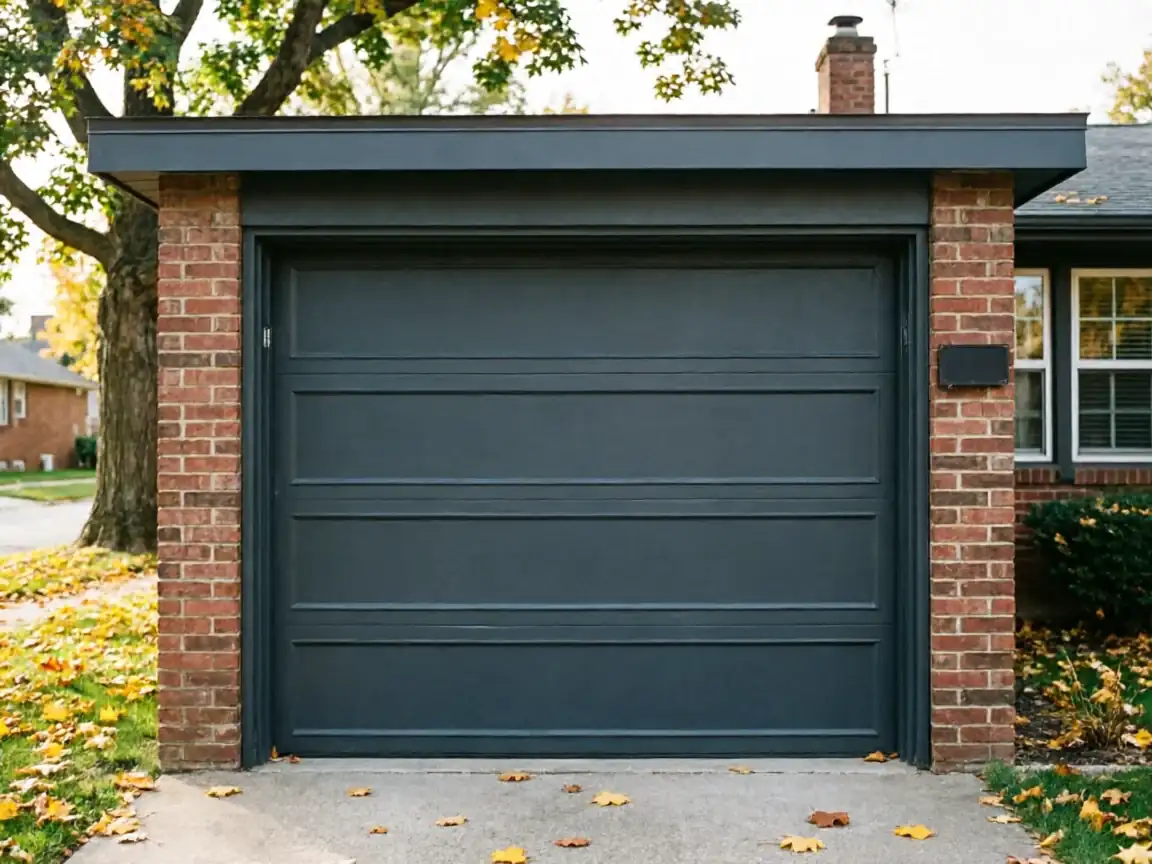
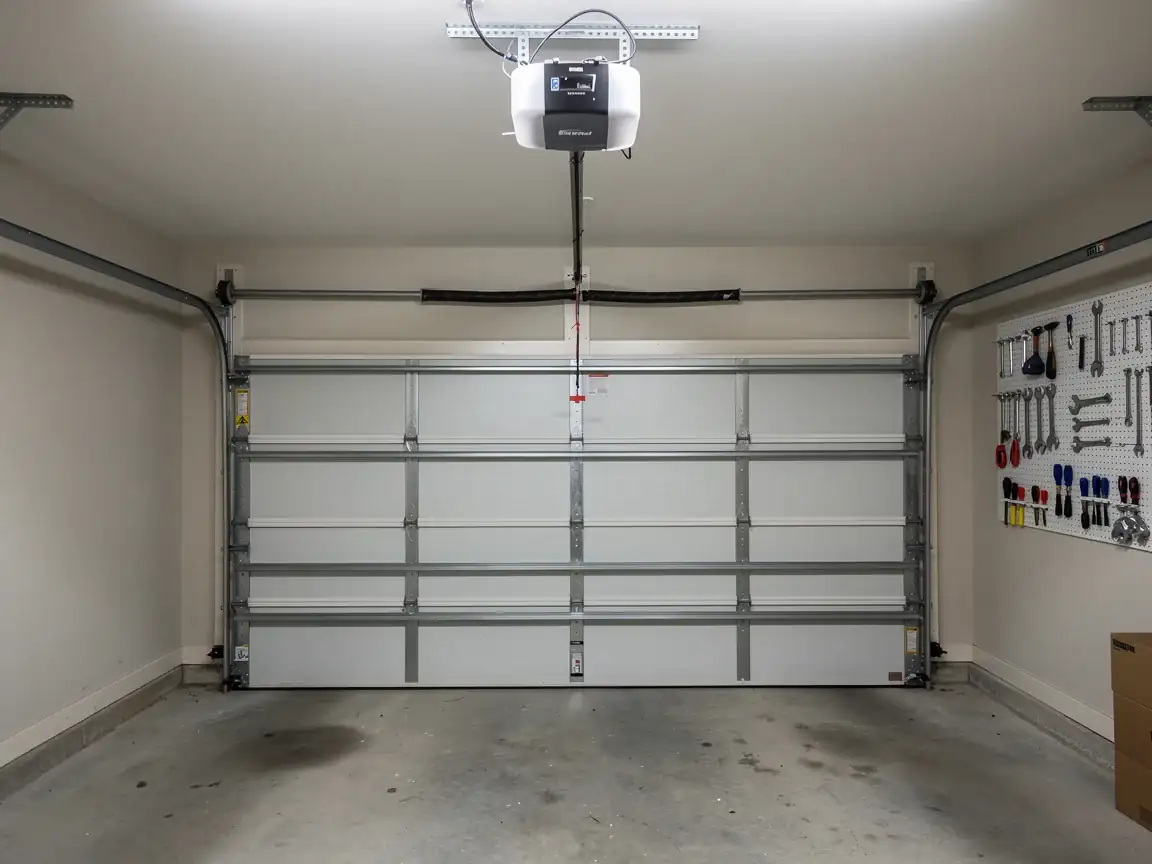
Most of the houses we get called to in Waterford went up between 1949 and 1993, with the median build year sitting around 1973. That means a lot of the torsion springs and openers still in these garages are either original or were swapped once, decades ago, with whatever matched the opening at the time. Across the 32 named areas that make up this part of the county, the stock skews the same way: 1960s and '70s construction, single-car and two-car openings sized to door hardware that nobody manufactures the same way now.
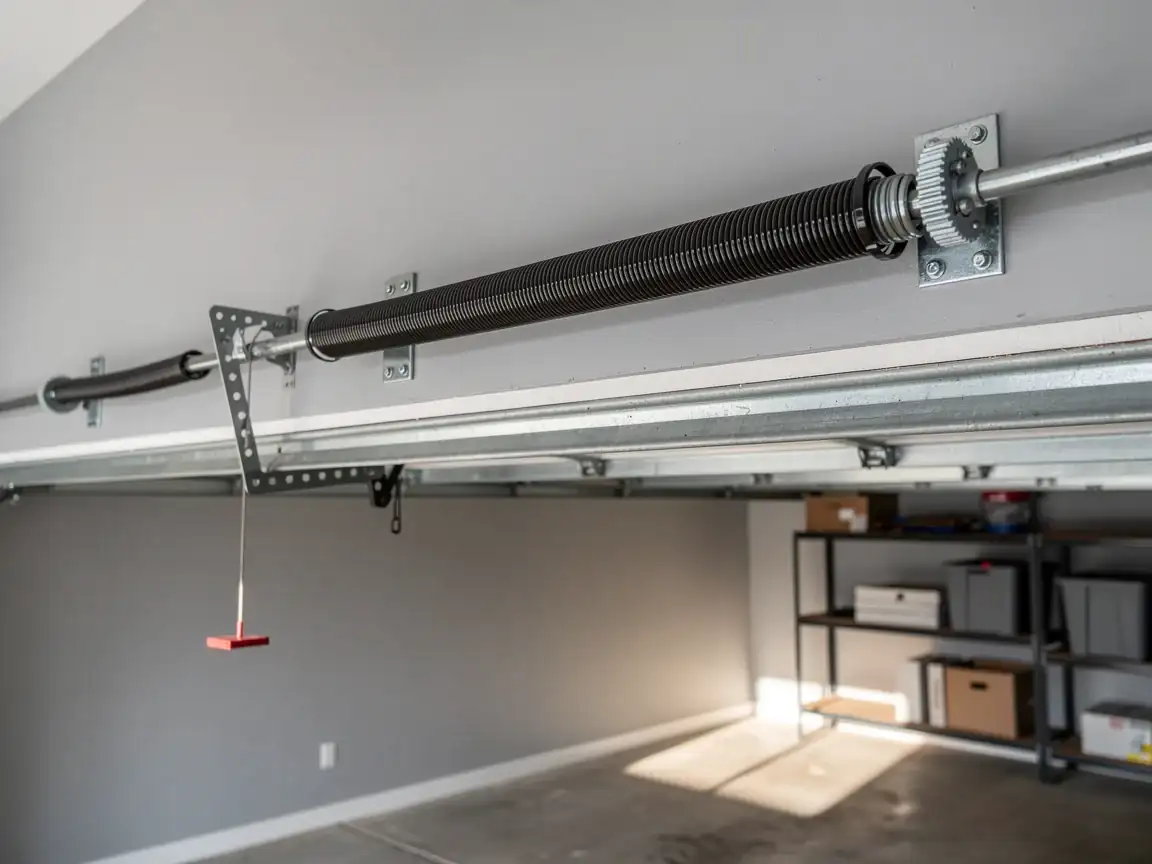
Add the climate. This area sits in a severe cold band, and steel spring wire doesn't age the same in a garage that swings from well below freezing to summer heat as it does somewhere mild. Cold steel is less forgiving - it loses elasticity faster, and a spring that's wound tight for 30-plus winters starts to fatigue in ways you can't see from the outside. Combine original-era torsion hardware with four decades of temperature swing and you get the same failure walking into the same houses, year after year.
It's not bad luck. It's the math of old springs and cold metal.
Where This Job Goes Sideways
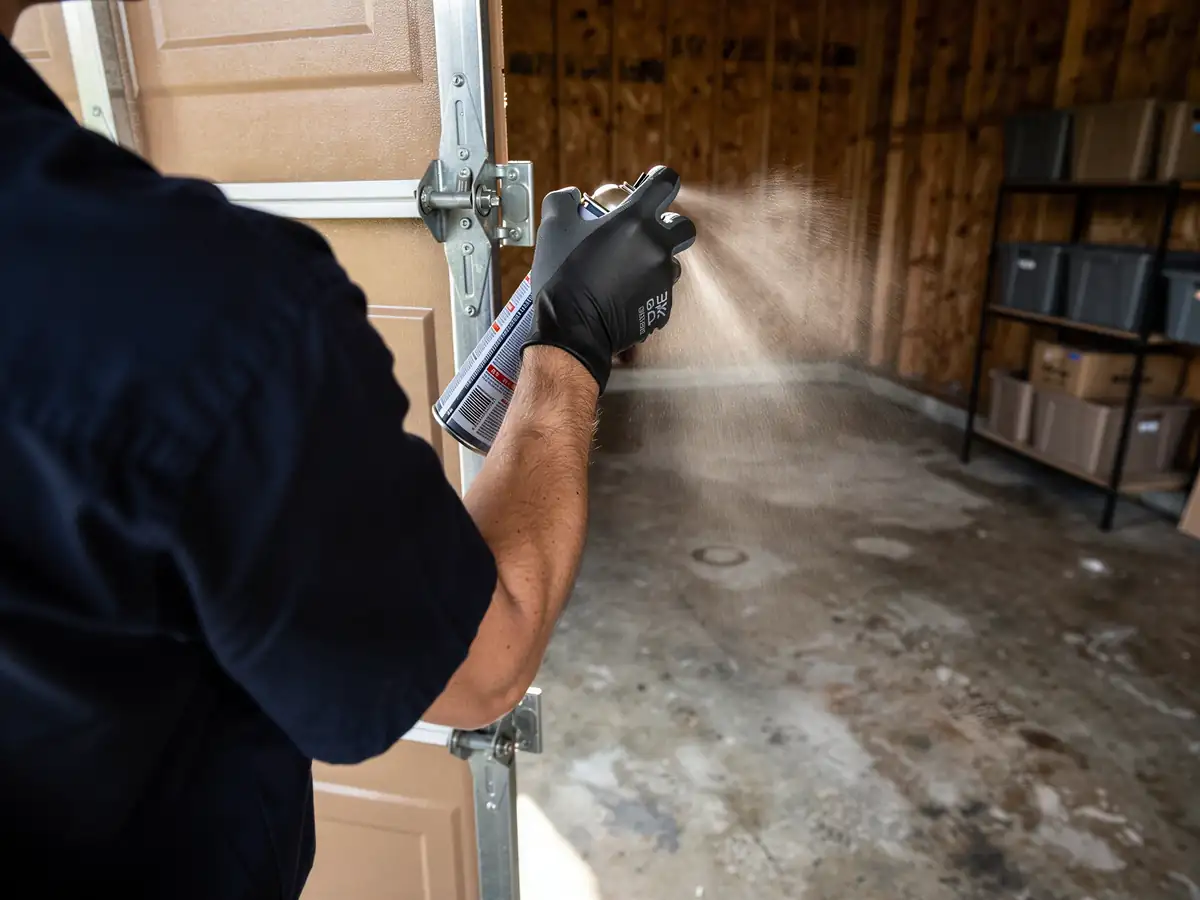
The trouble starts when a homeowner treats a stiff, slow-opening door as a lubrication problem instead of a spring problem. On a door from this era, a spring that's lost tension doesn't always snap outright - it can creep for months, making the opener work harder to lift weight the spring should be carrying. People spray the track, call it fixed, and keep going until the day the cable jumps the drum or the spring lets go entirely, usually in the cold, usually in the evening when the temperature drop closes in.
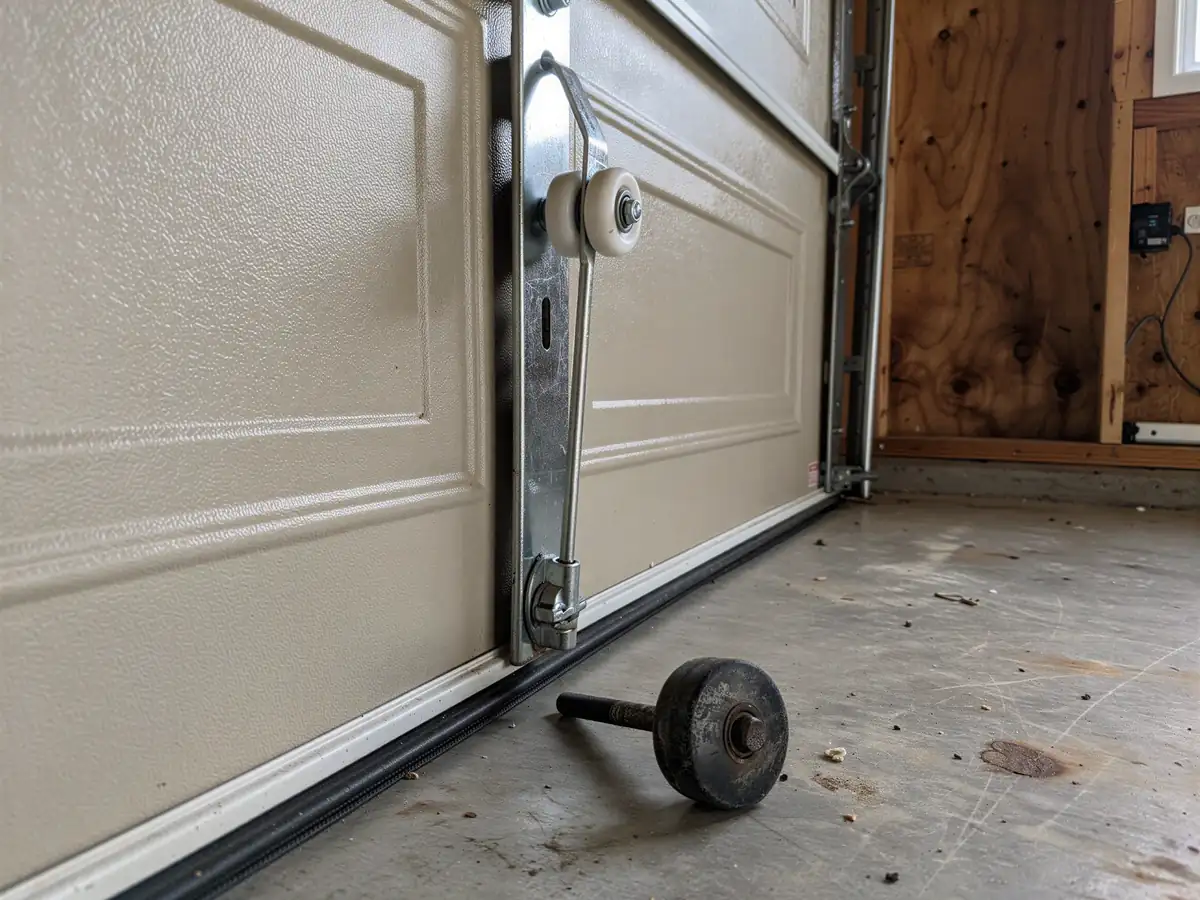
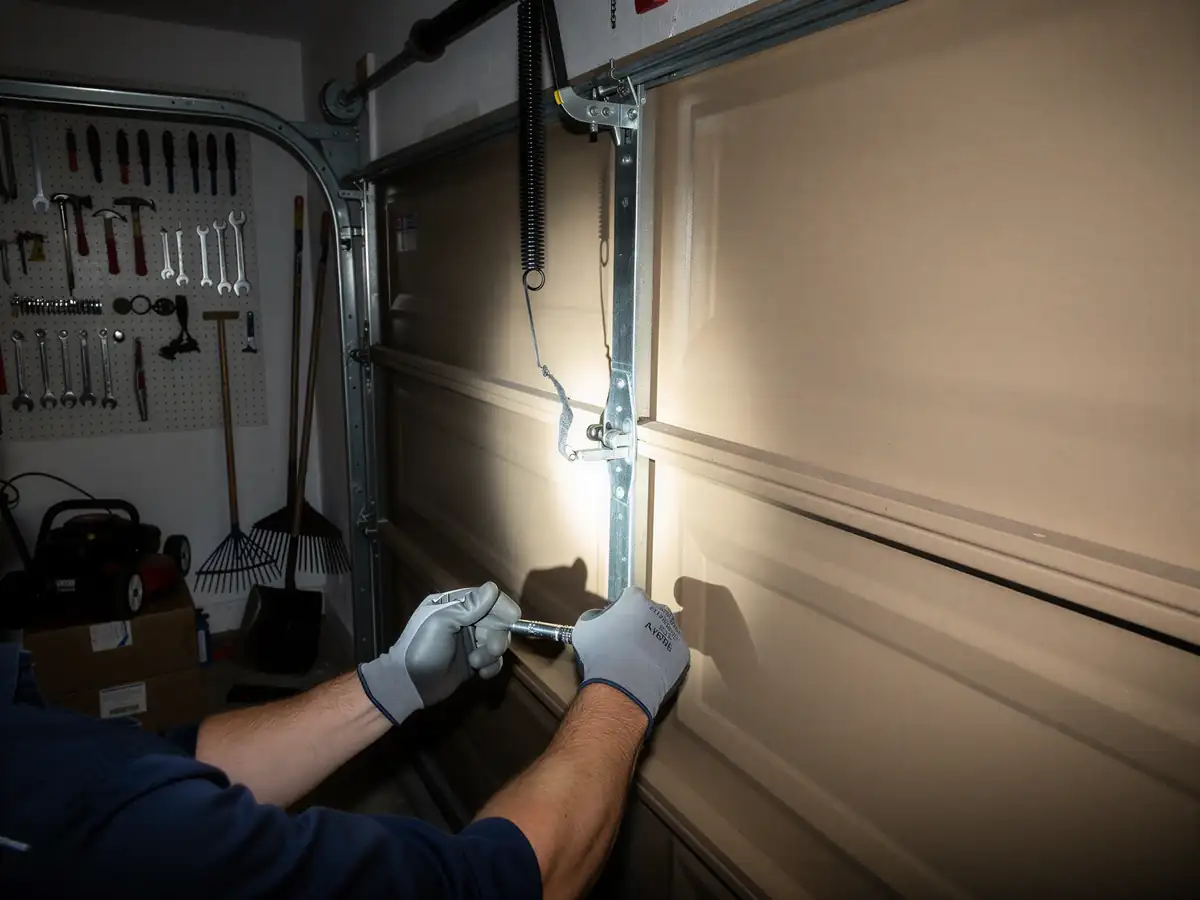
The other way it goes sideways: someone replaces just the broken spring on a 1970s door without checking the drums, cable, and bearing plate underneath. On hardware this old, those parts have the same mileage as the spring. A single new spring on tired brackets just moves the failure point down the line a few months.
We've also seen openers get blamed for spring problems. An opener straining against a weak spring will burn out its gears faster than it should, and swapping the opener without fixing the spring underneath means buying a second repair you didn't need yet.
How It Shows Up
On a house from this era, you'll usually see one of three patterns
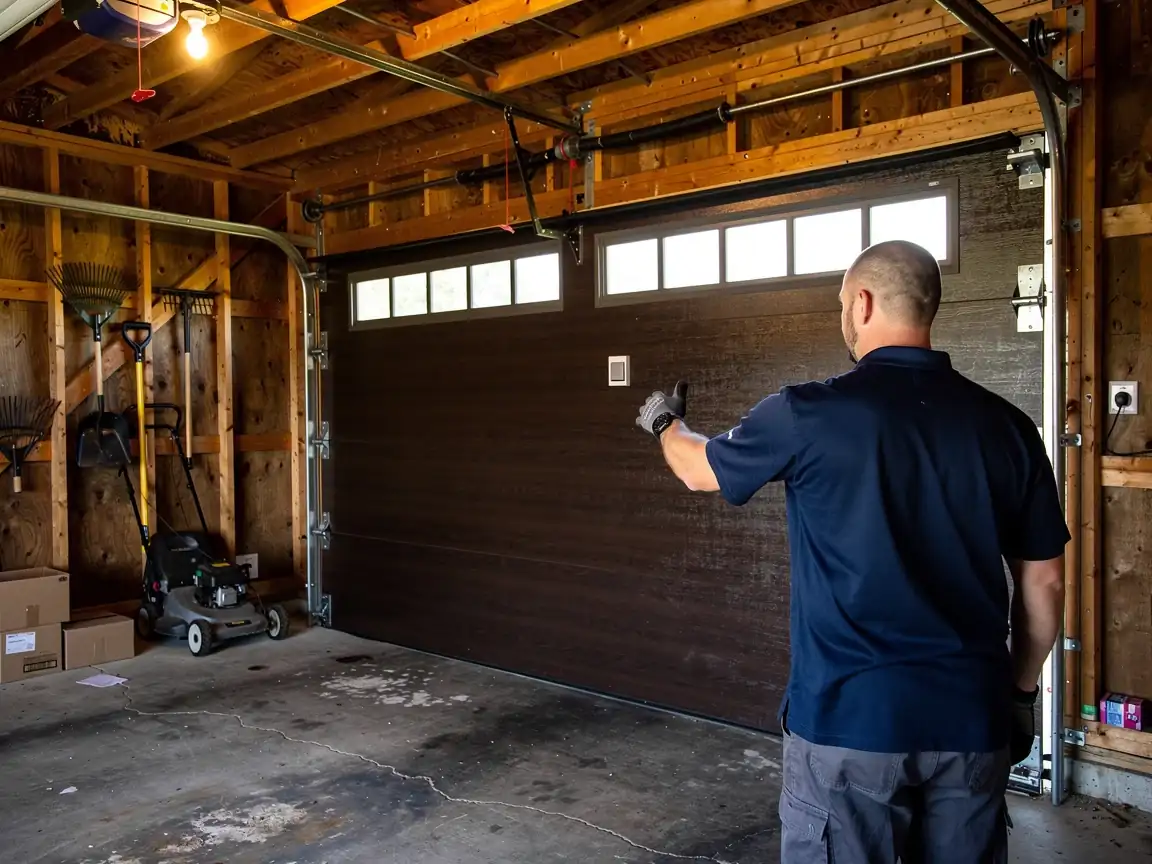
The door is noticeably heavier to lift by hand than it used to be - if you ever pull the release and try it manually, that weight tells you the spring, not the opener, is losing the fight. Second, the opener strains or stutters partway up, sometimes reversing on its own, which on 1960s-70s hardware is almost always the opener compensating for a spring that's down on tension, not a sensor issue. Third - and this is the one that scares people - a loud bang from the garage, usually on a cold morning, which is a torsion spring finally giving out after months of slow fatigue.
On original one-piece or early sectional doors still running side-mounted torsion hardware
You may also notice the door sitting unevenly in the frame, higher on one side, which points to uneven spring wear rather than a track problem. None of these show up overnight. They build for a season or two before the day it actually breaks.
How We Fix It
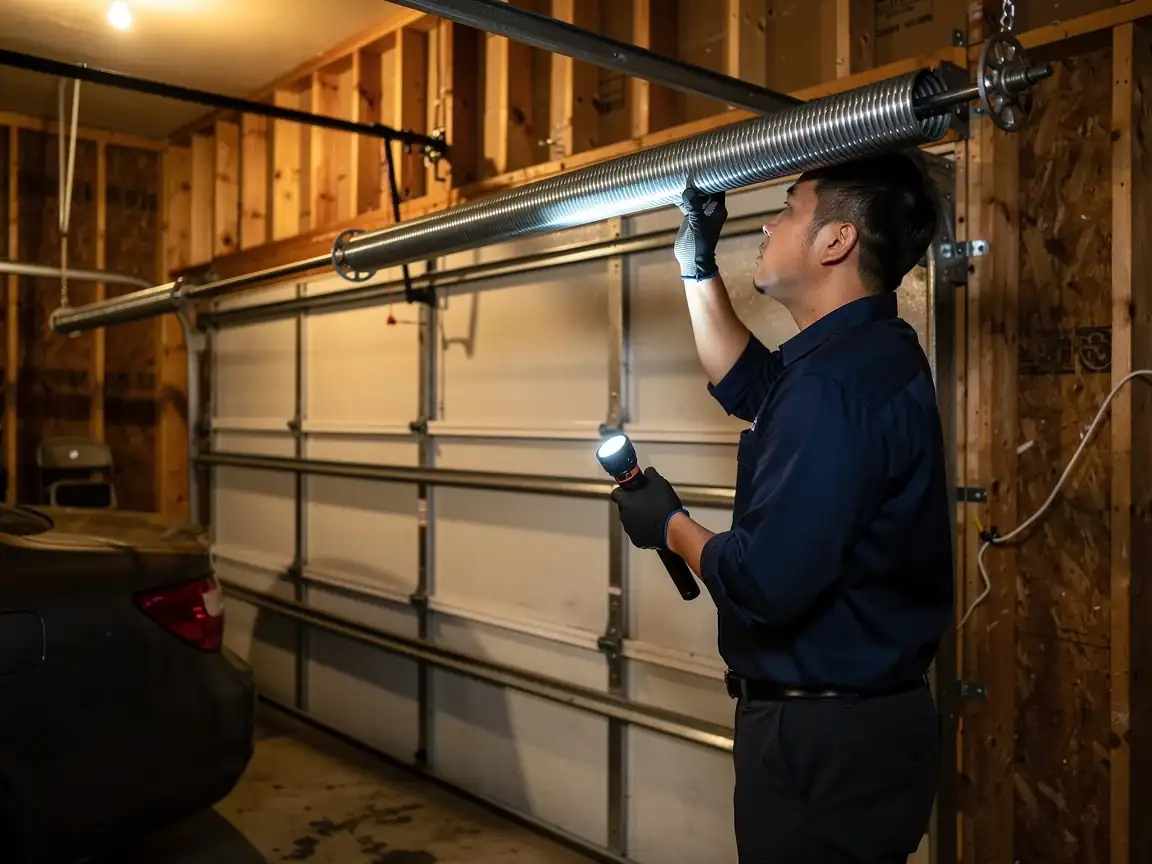
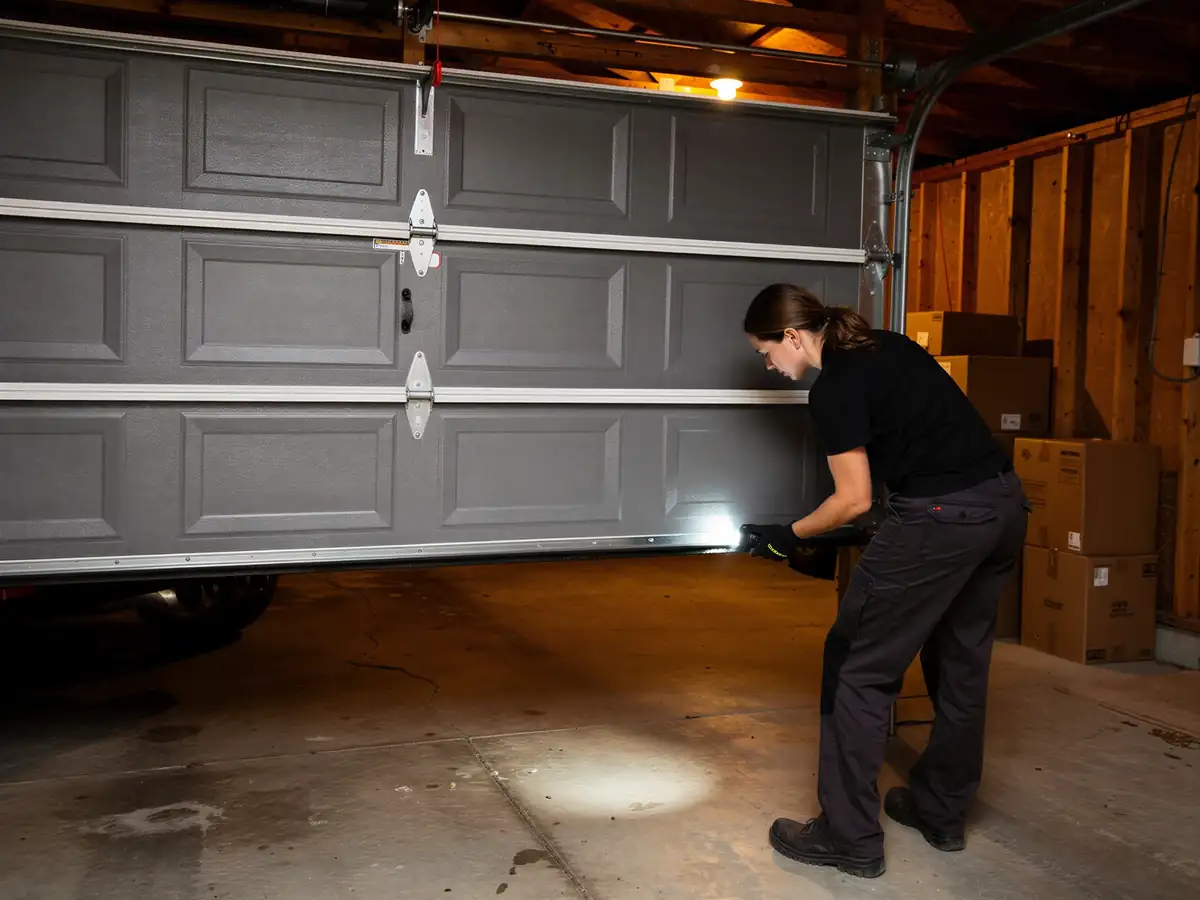
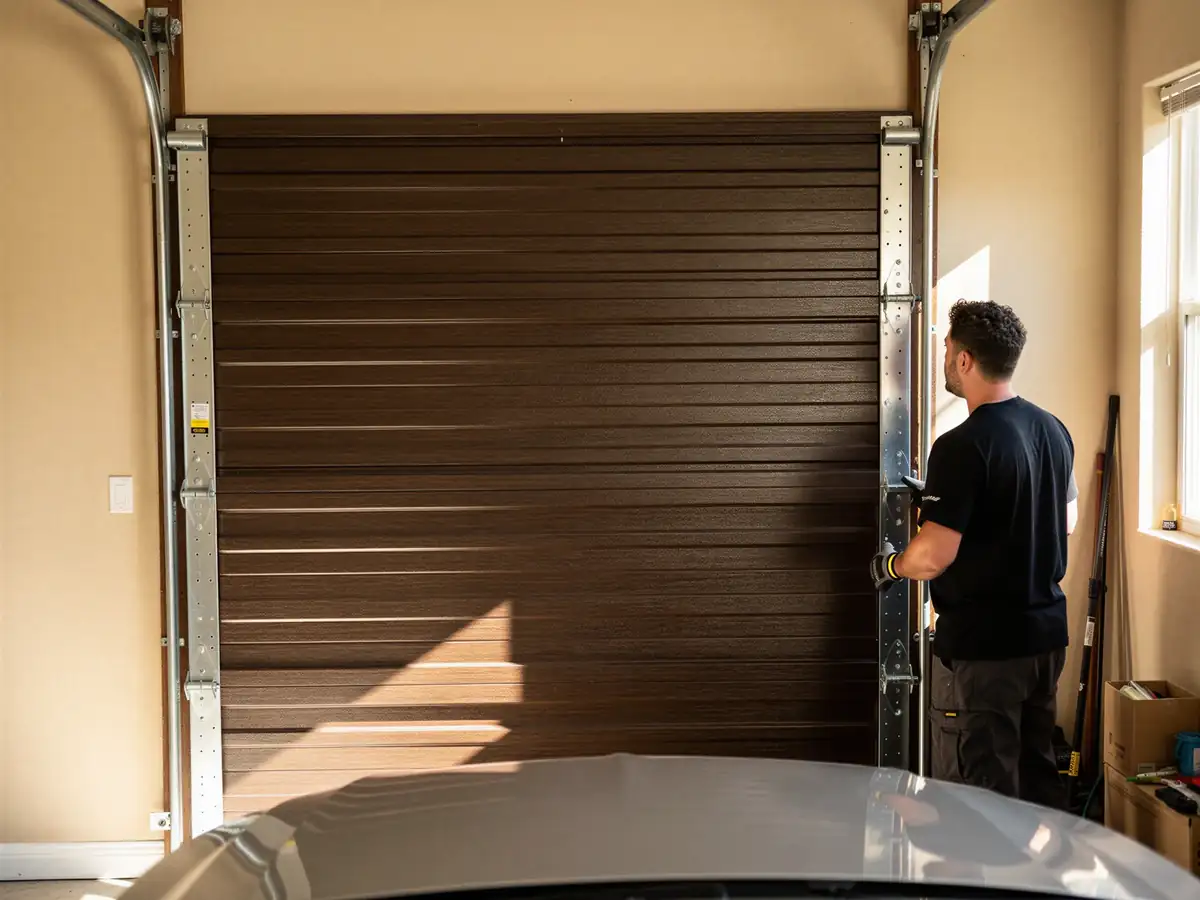
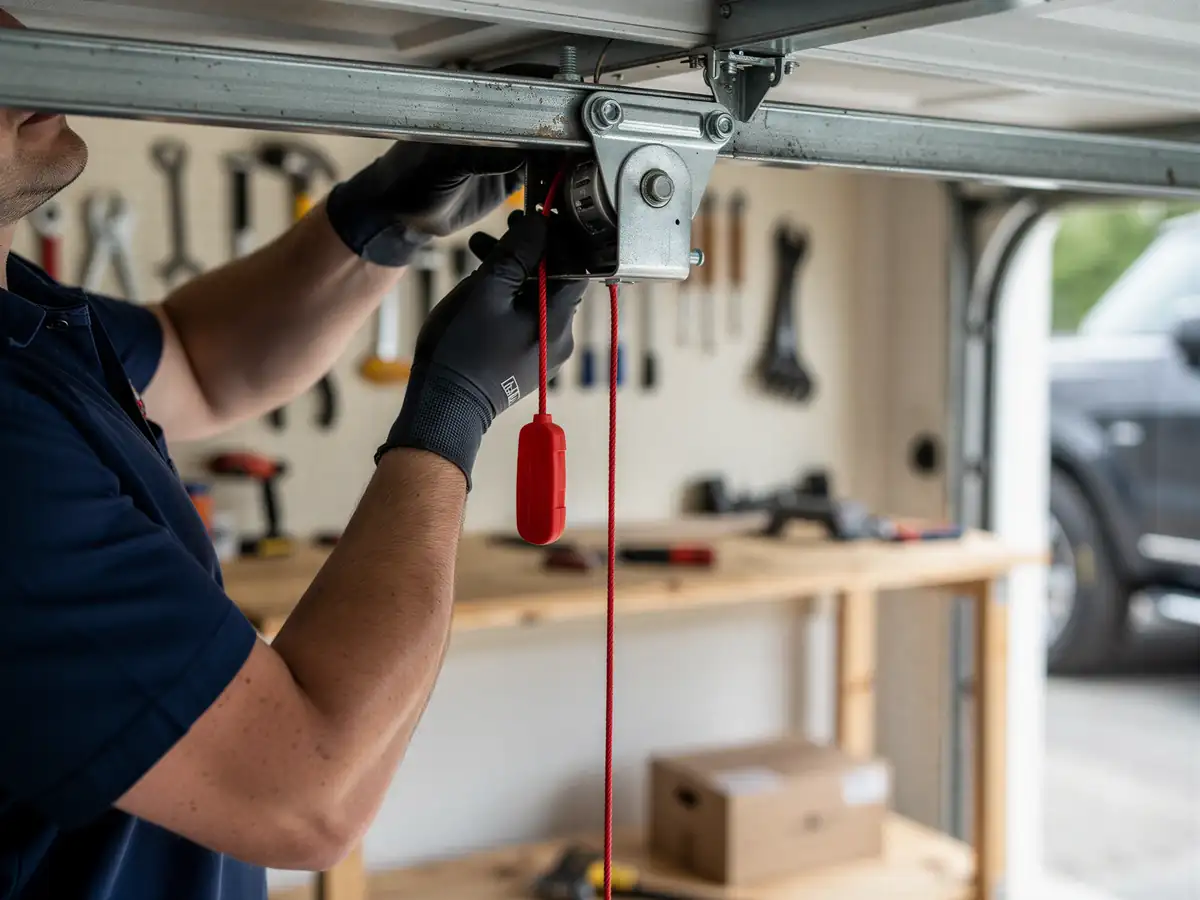
We size the spring to the door's actual weight and the drum setup on the opening, not a generic replacement pulled off a shelf. On older torsion hardware, that means checking the bearing plate, cable condition, and drum wear at the same time as the spring, because replacing one part on 40-year-old hardware and leaving the rest in place just shortens the gap to the next call.
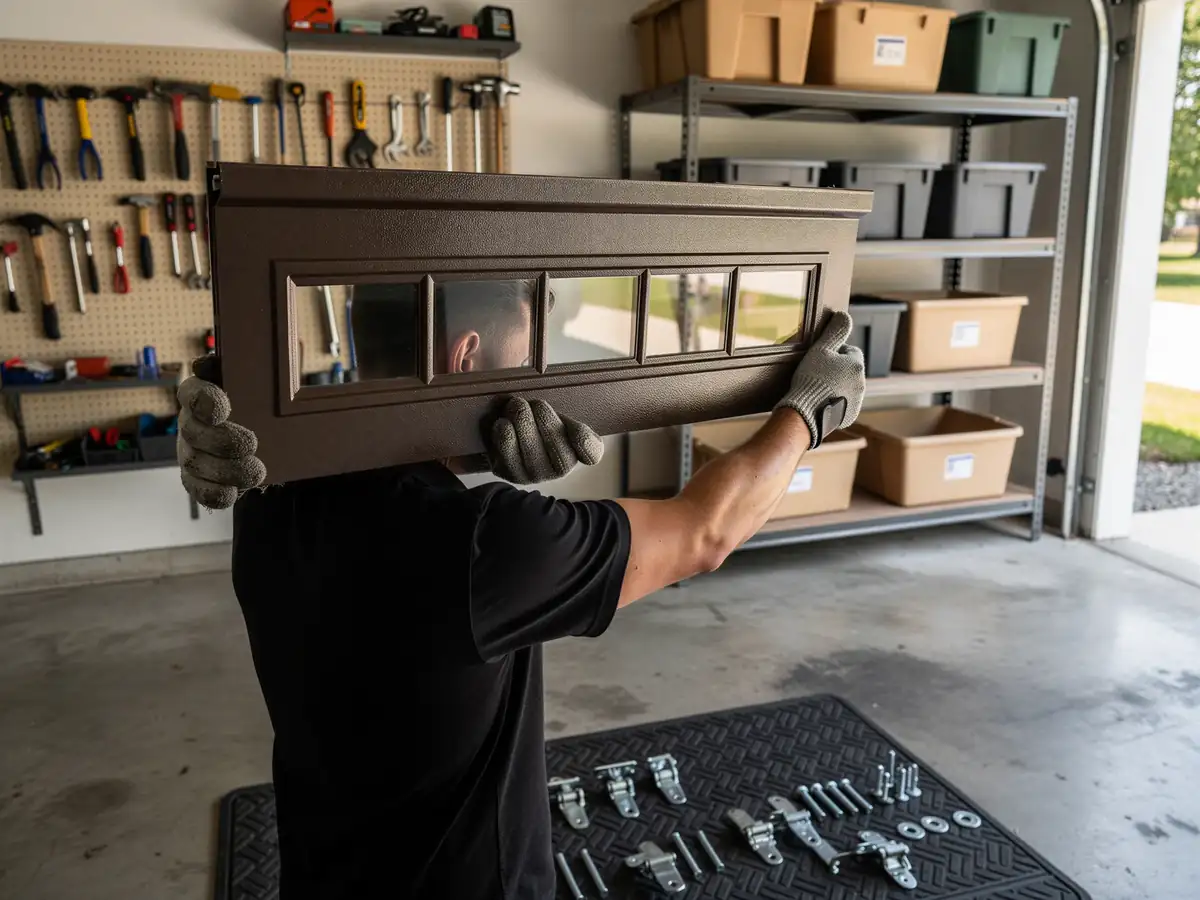
We'll also tell you when the hardware itself is past the point of a clean repair. On some of the original-era doors we see, the frame and tracks have enough wear that a spring swap alone won't hold tension evenly, and we'll say so rather than sell a repair that won't last through next winter. That's the one honest limit here: a 50-year-old door with worn tracks is sometimes a replacement conversation, not a spring conversation, and we'd rather tell you that up front than have you pay twice.