Where This Job Goes Sideways
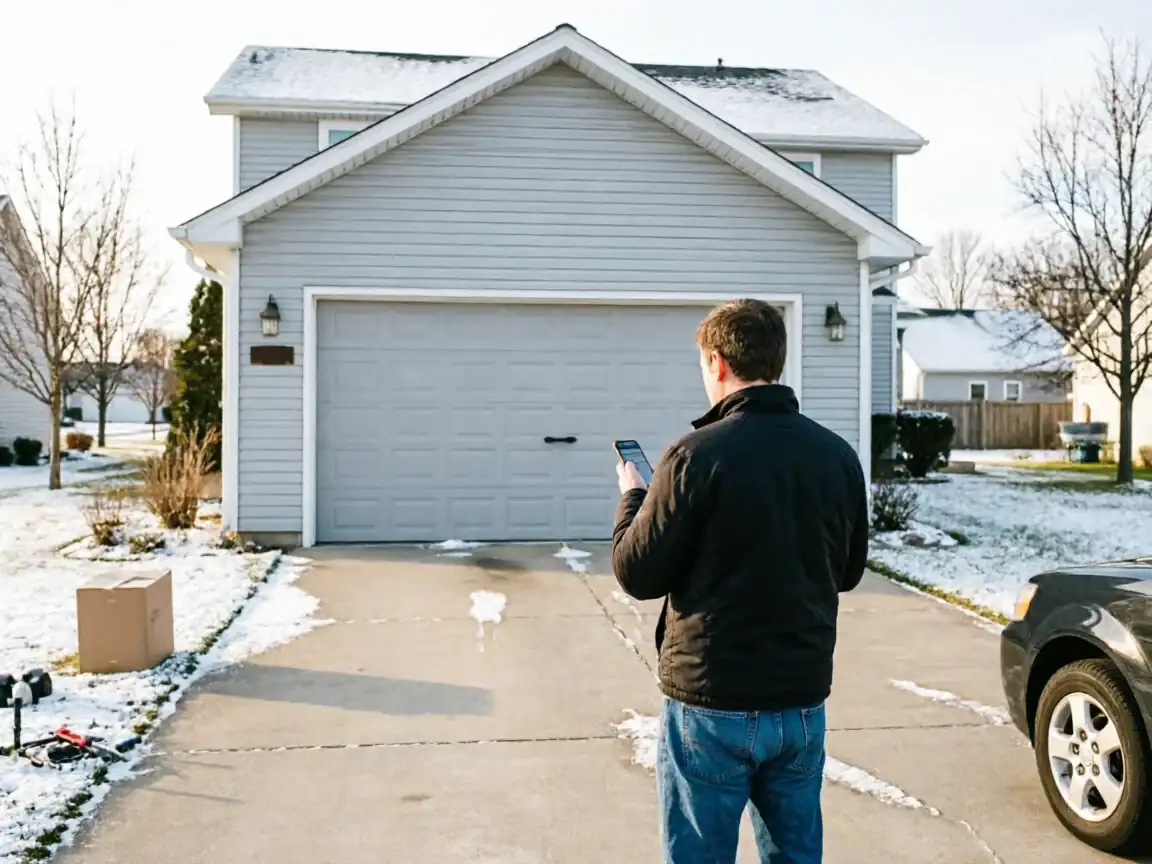
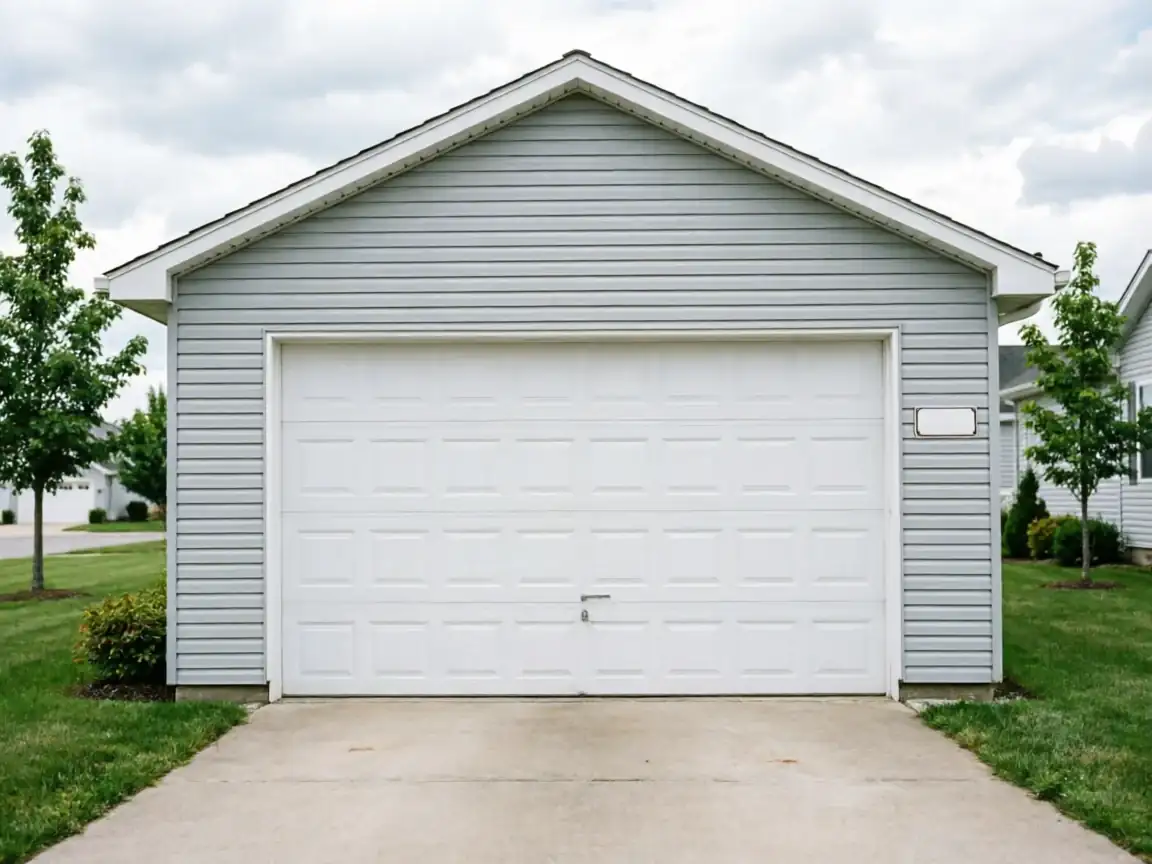
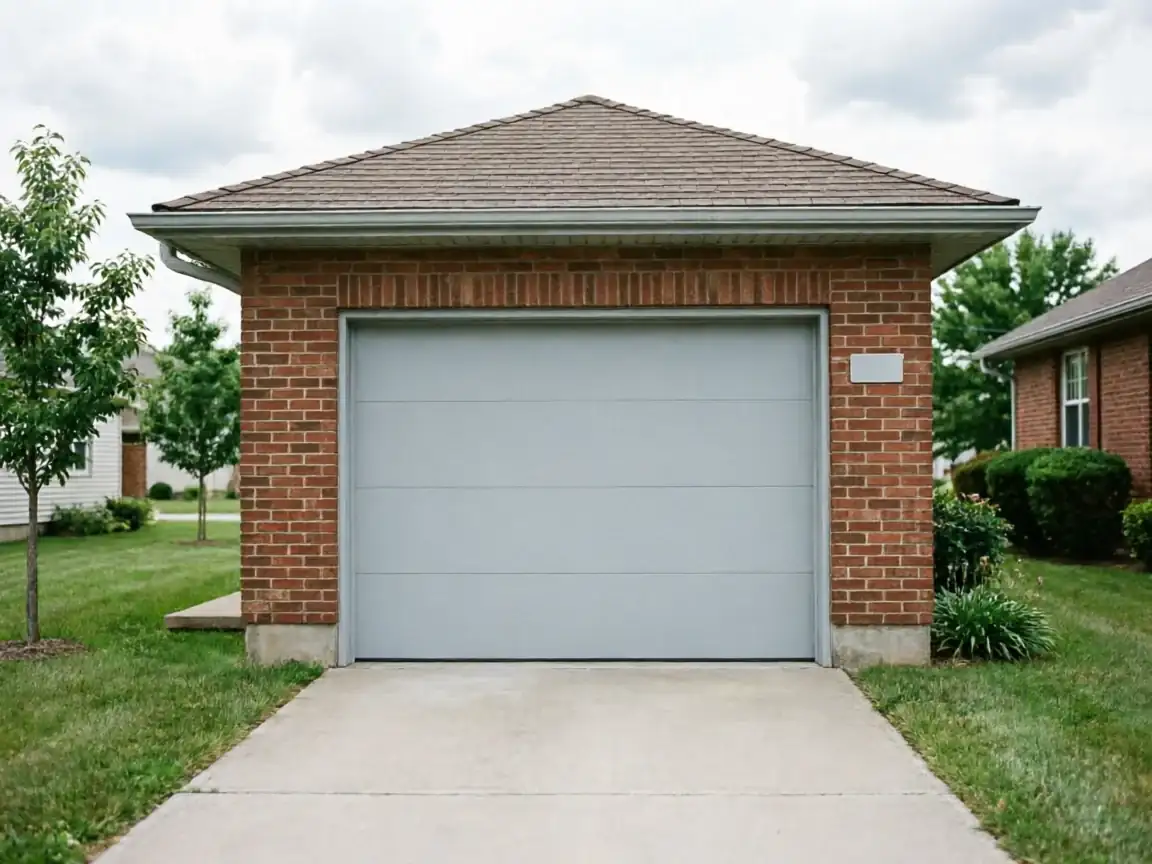
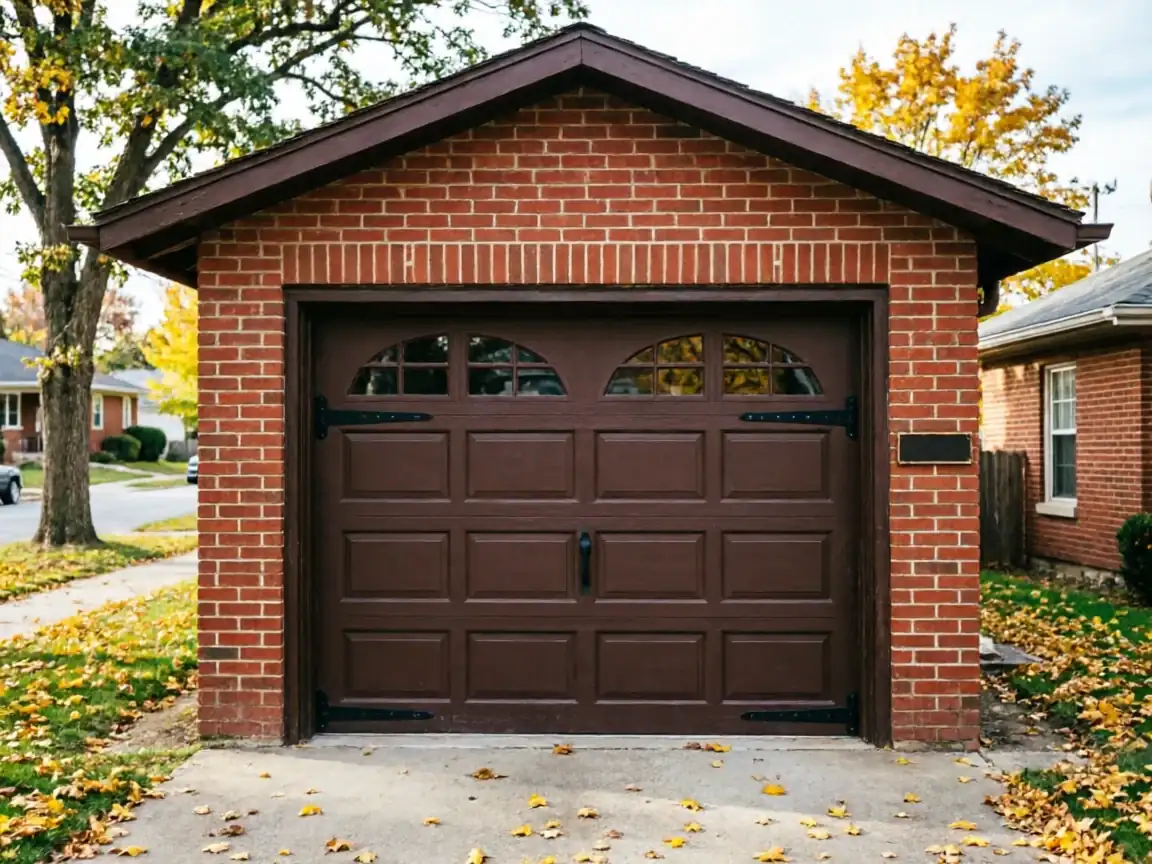
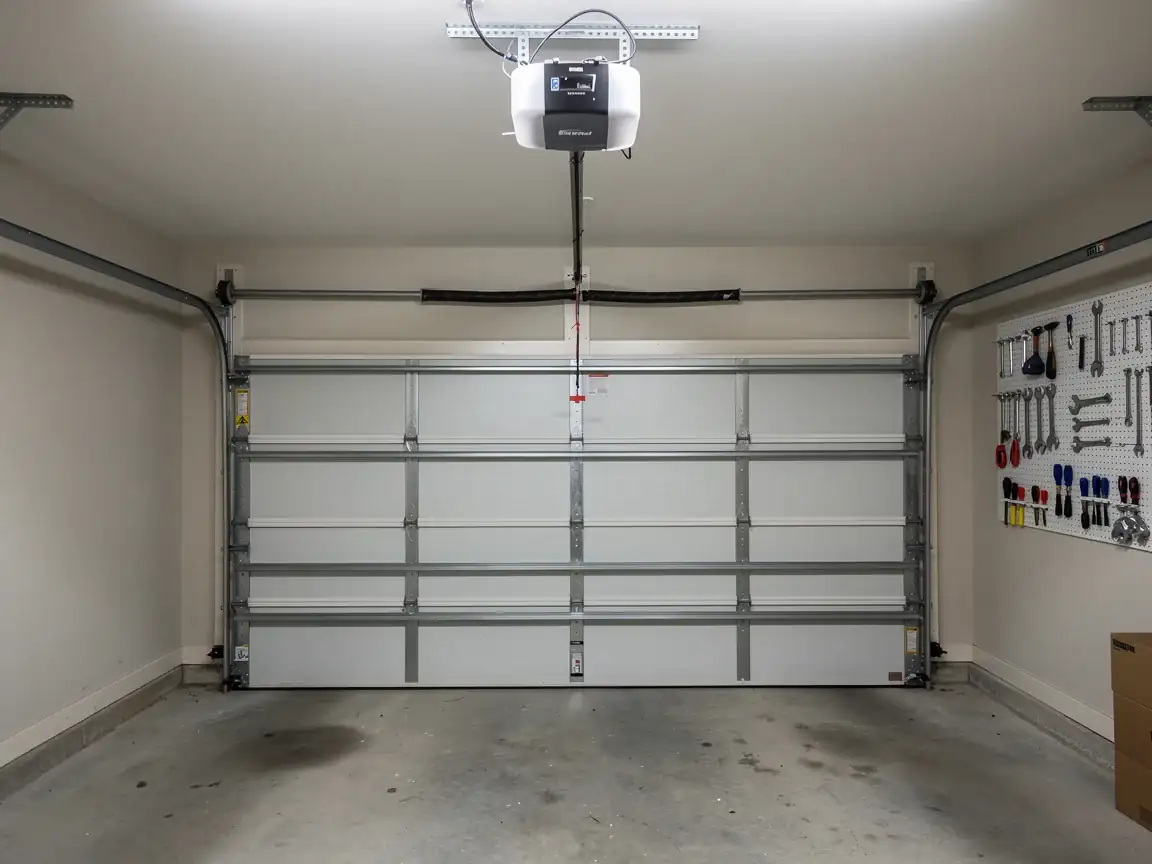
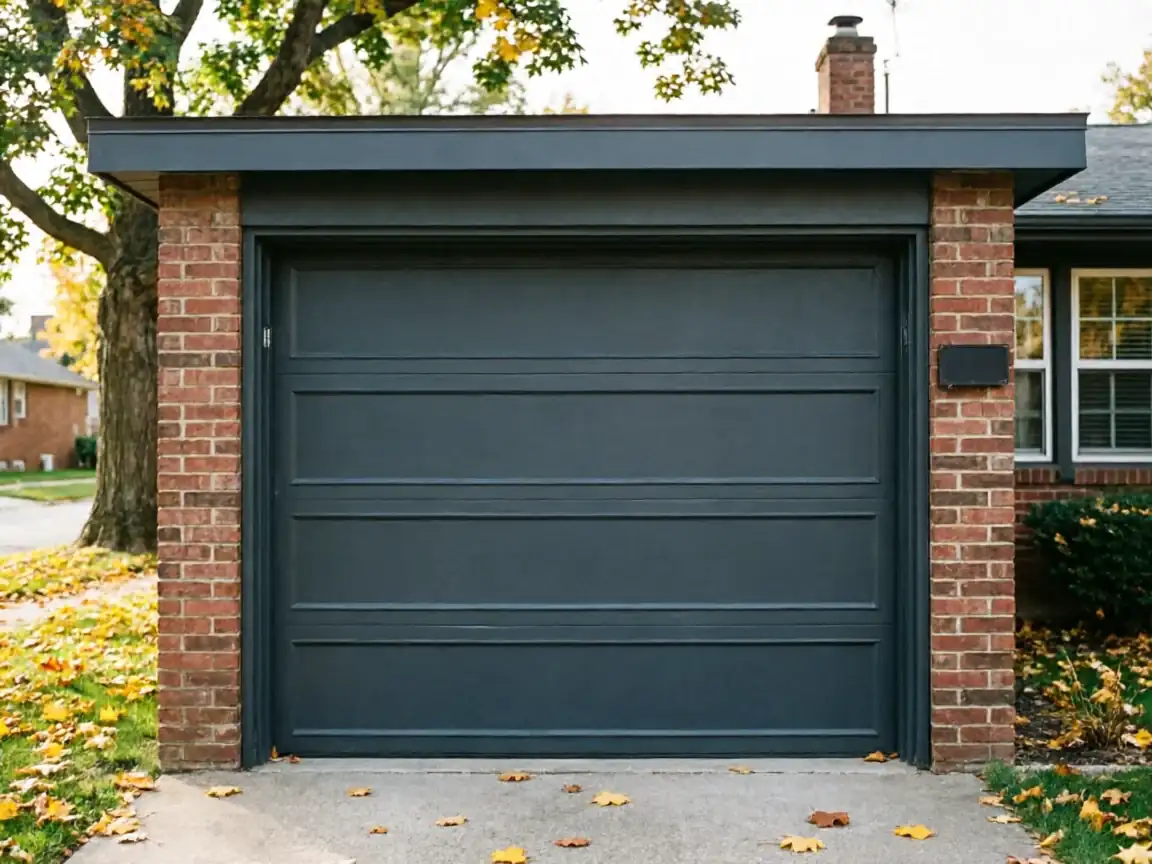
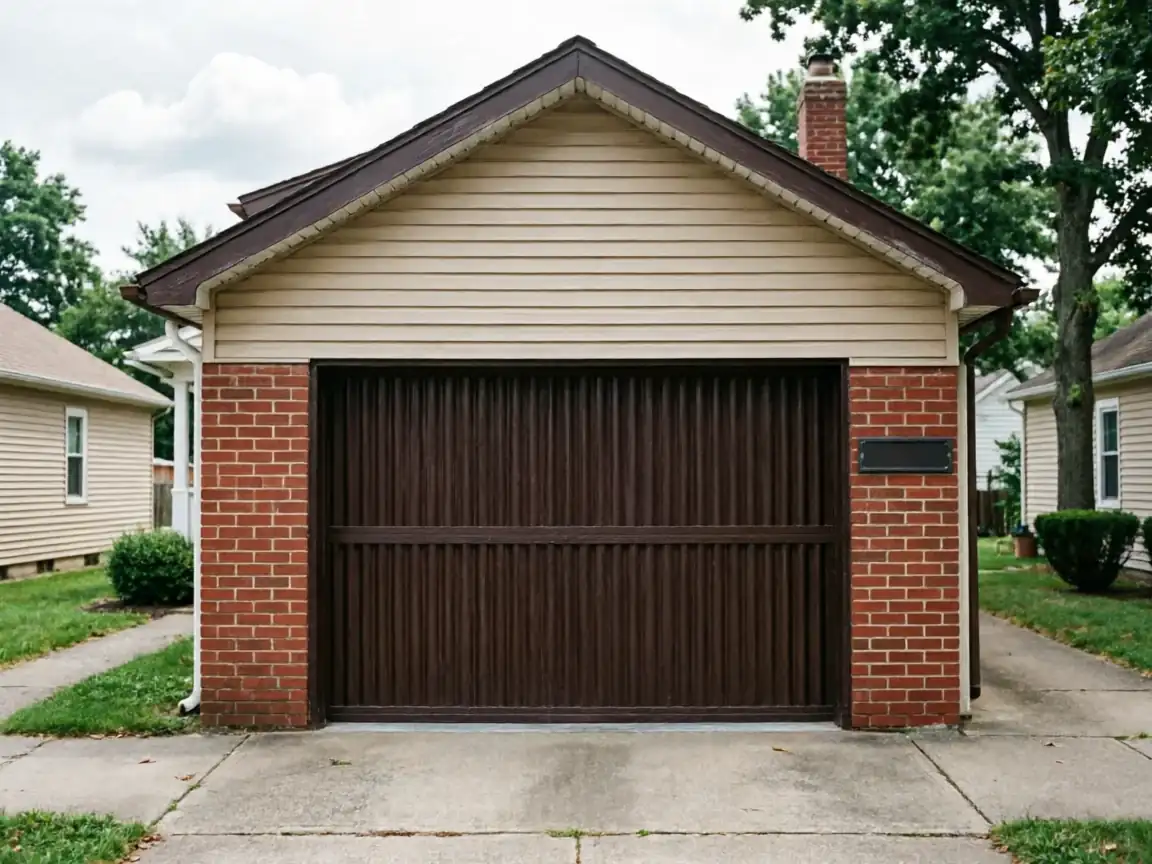
Oak Park's housing stock centers on 1958, which puts it on the early edge of the wider 1949-1993 build window you see across this part of Michigan. That year matters because it set the garage, not just the house. A lot of these are single-car attached garages built for one vehicle, with an 8-foot or 9-foot wide steel door on a short track and a low headroom clearance that newer openers weren't designed around. Extension springs mounted along the horizontal track were standard then, not the torsion springs you'd find going into anything built later.
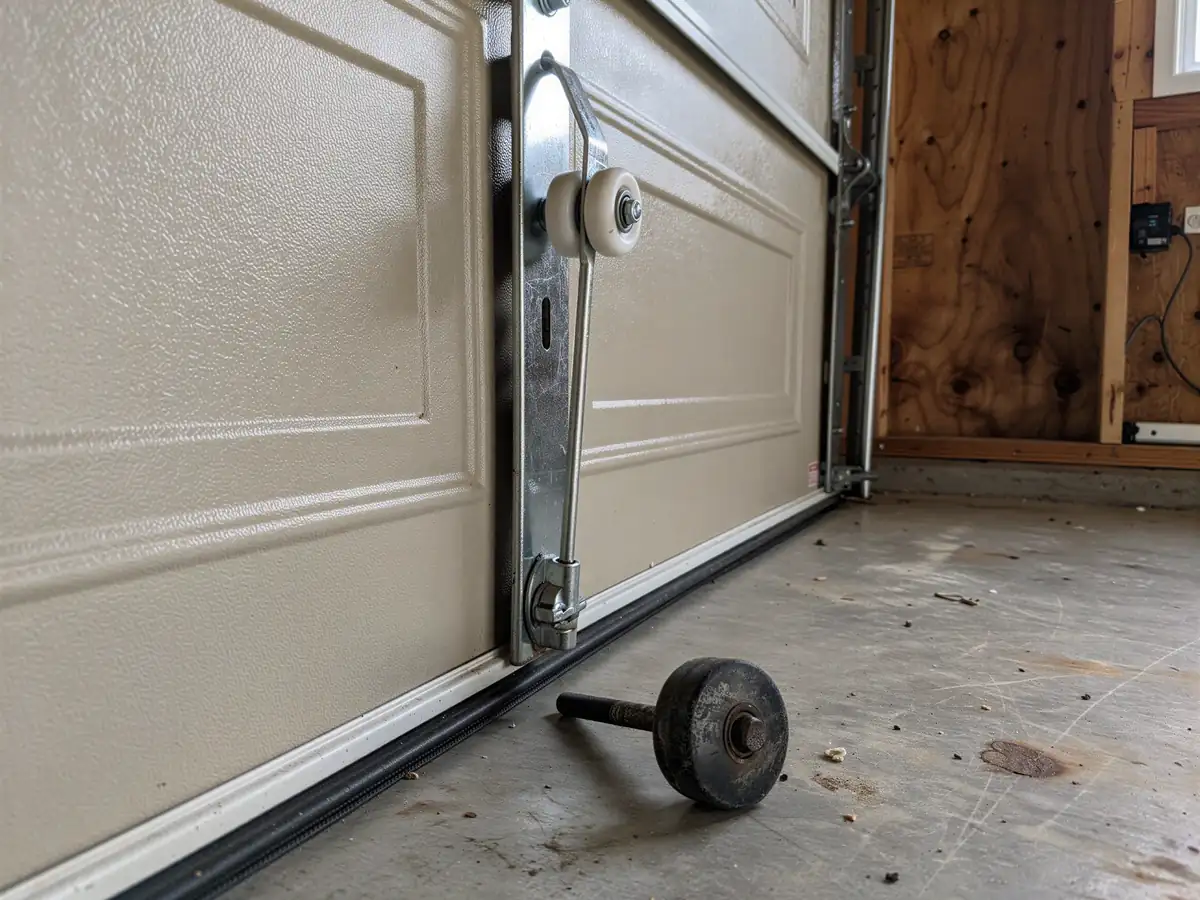
The failure point is usually the same: a door sized for a car that's smaller than what people drive now, on hardware that was fine in 1958 and is tired in 2024. Rollers wear down in the narrow track, the extension spring stretches past its rated cycles and snaps, or the panel itself - thin steel, no insulation layer - dents and binds in the frame. None of this is dramatic. It's just old parts doing old-parts things, usually in winter when the cold makes steel brittle and grease stiff.
How We Fix It
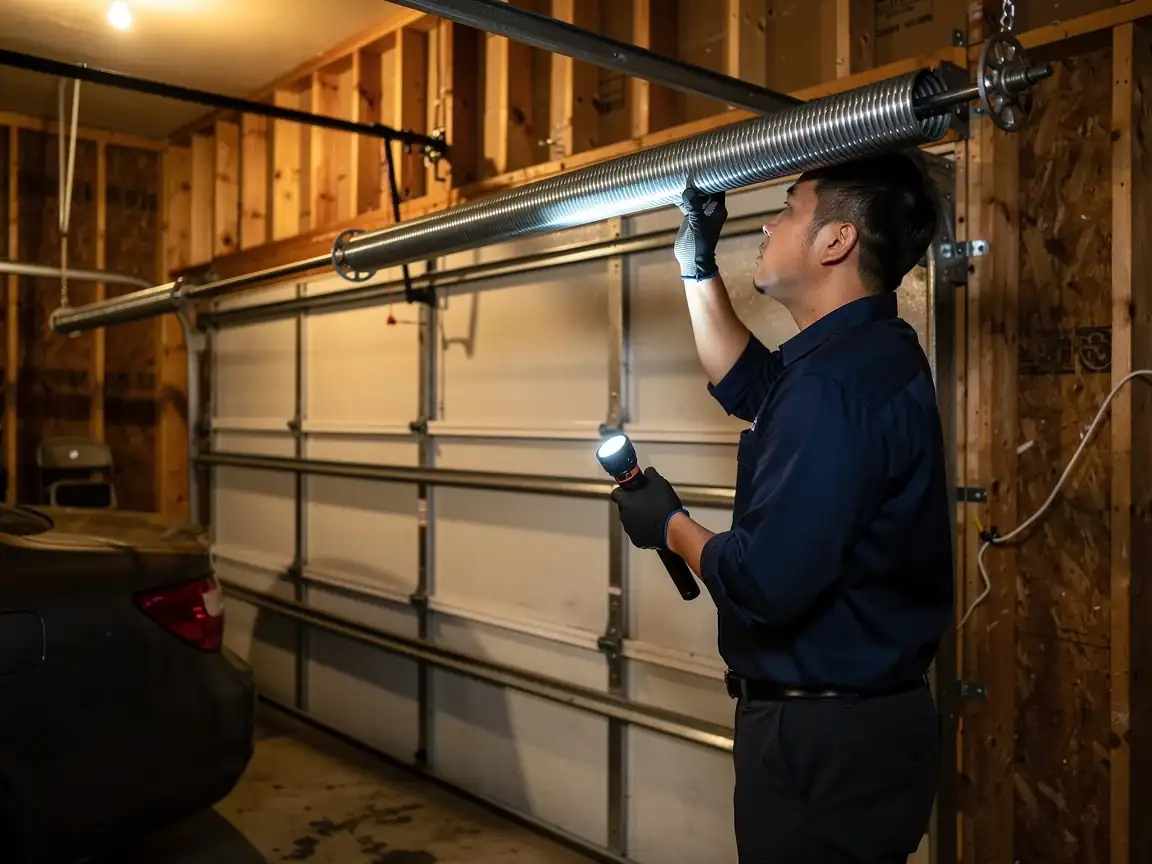
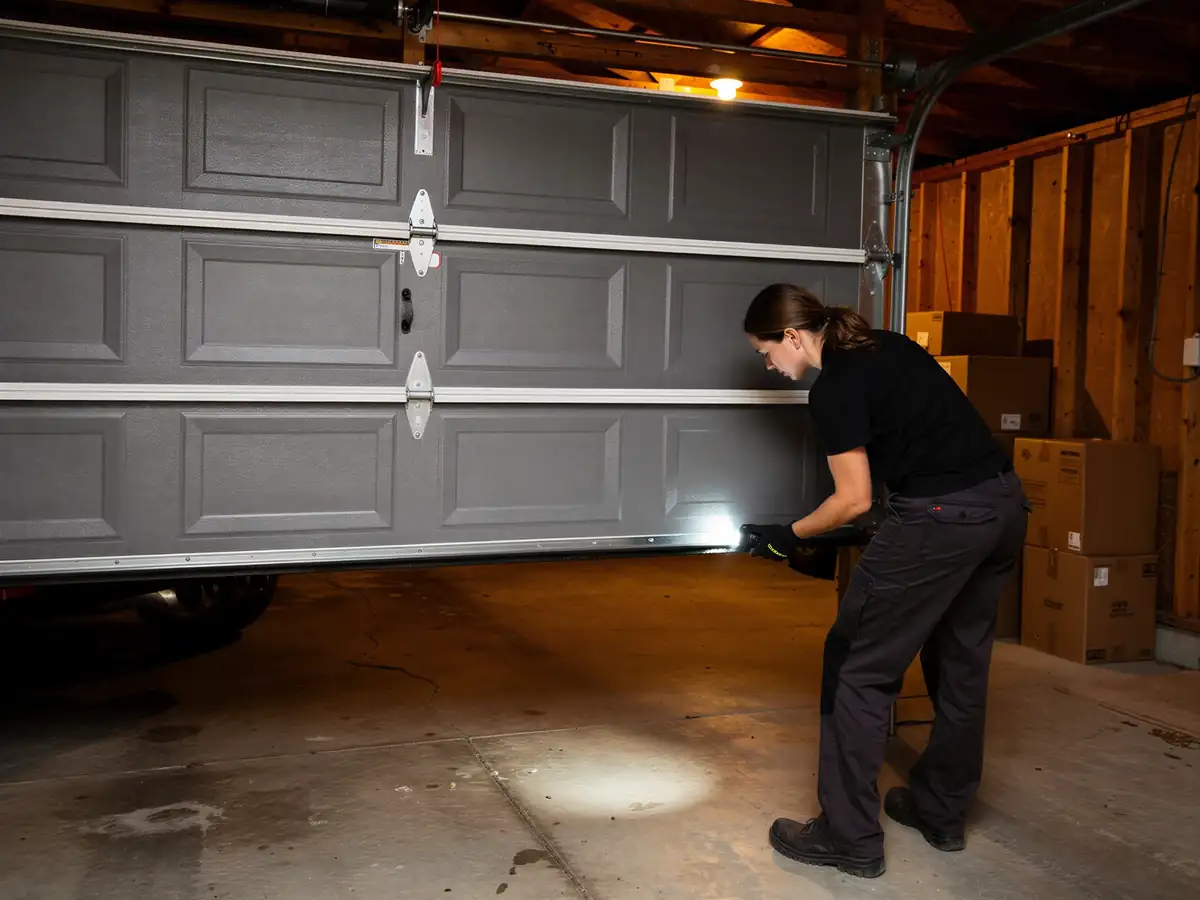
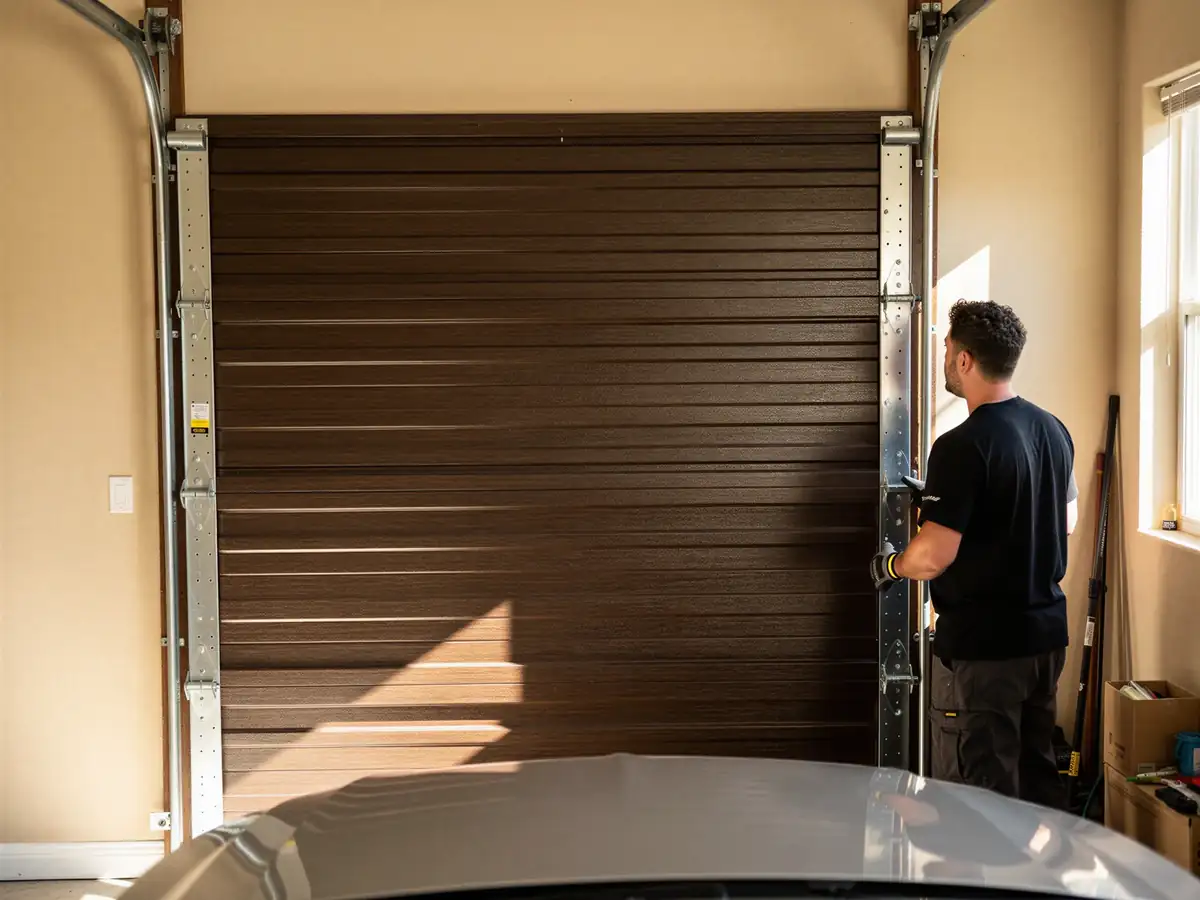
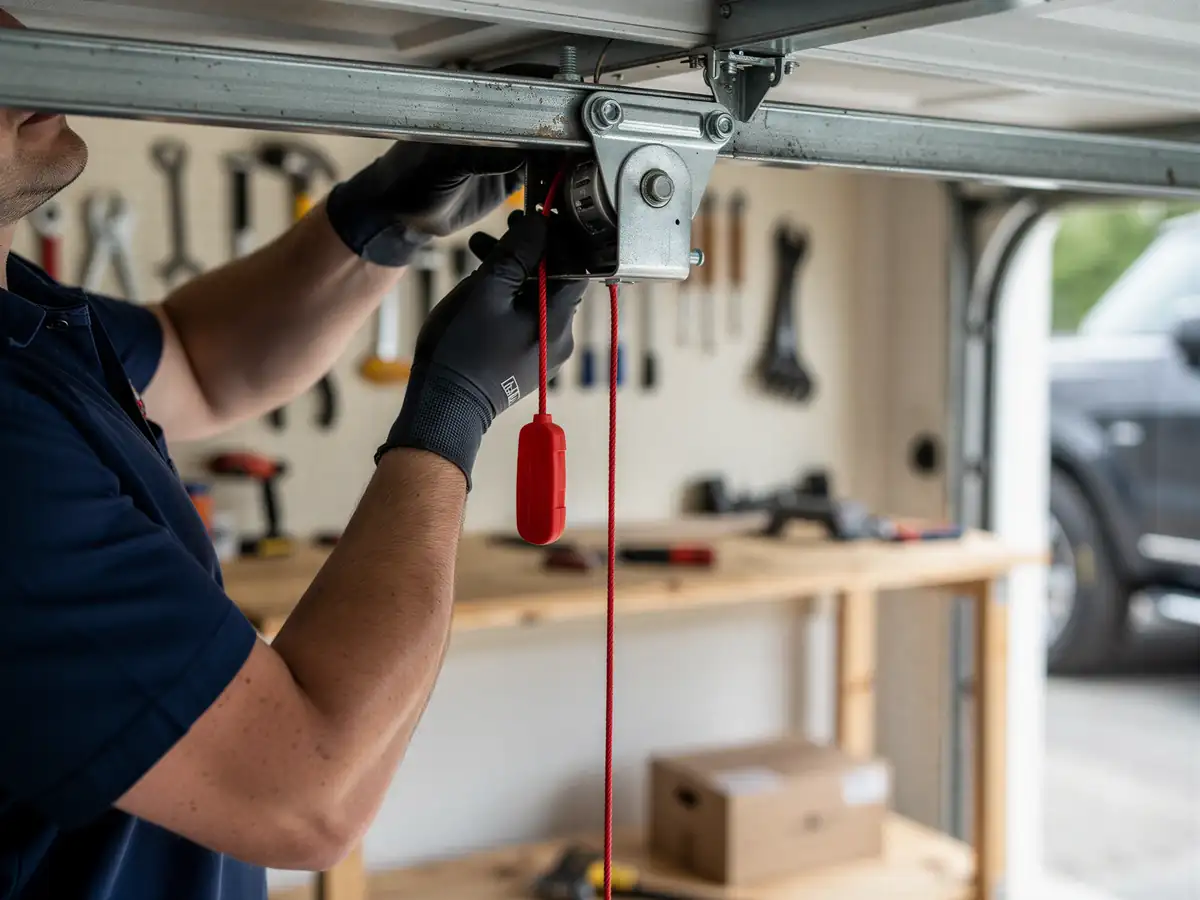
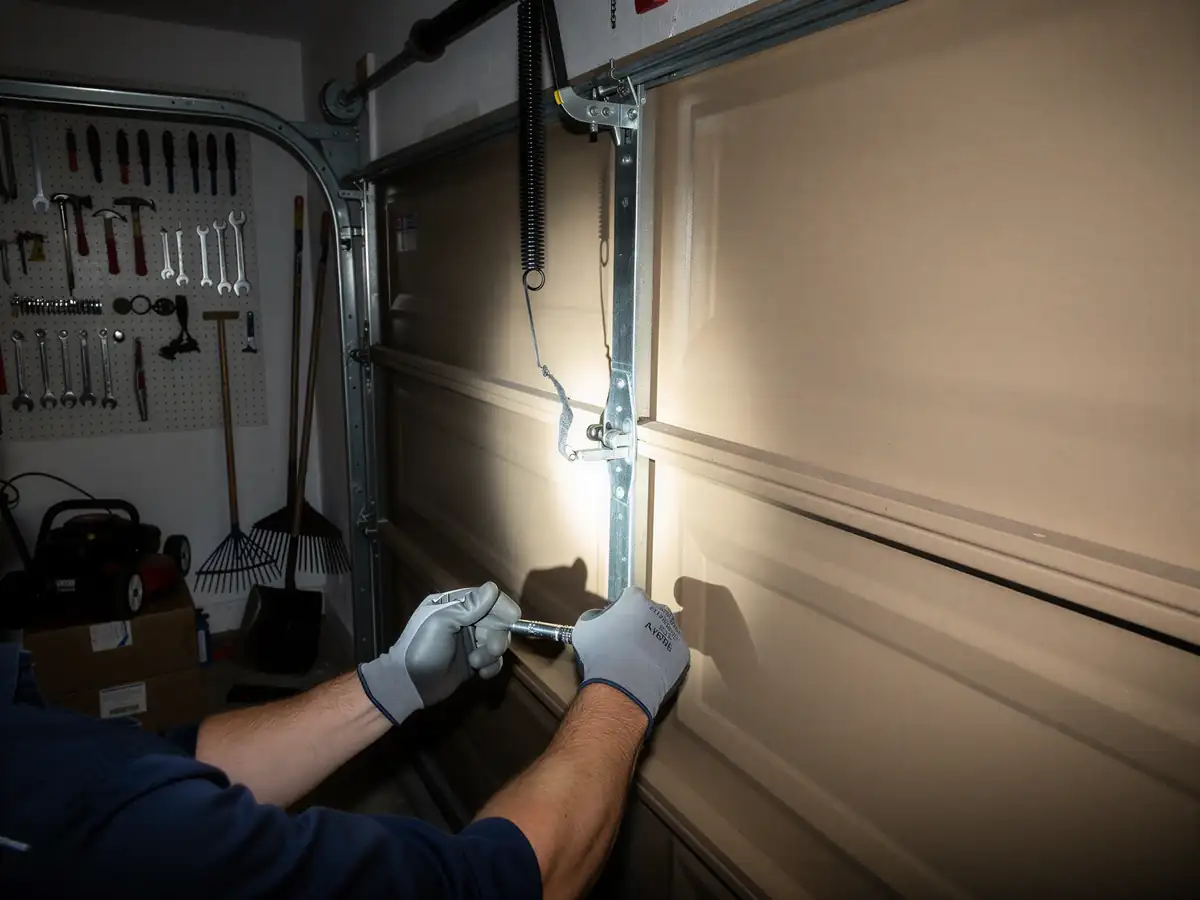
We don't carry a stock answer for every call because the fix depends on what's actually failed, and on a door this age that's rarely just one thing. A snapped extension spring on a single-car door is a straightforward swap once we're on site, torsion conversion is on the table if the owner wants fewer future failures, and track alignment gets checked every time because narrow single-car tracks shift more than people expect over 65-plus years.
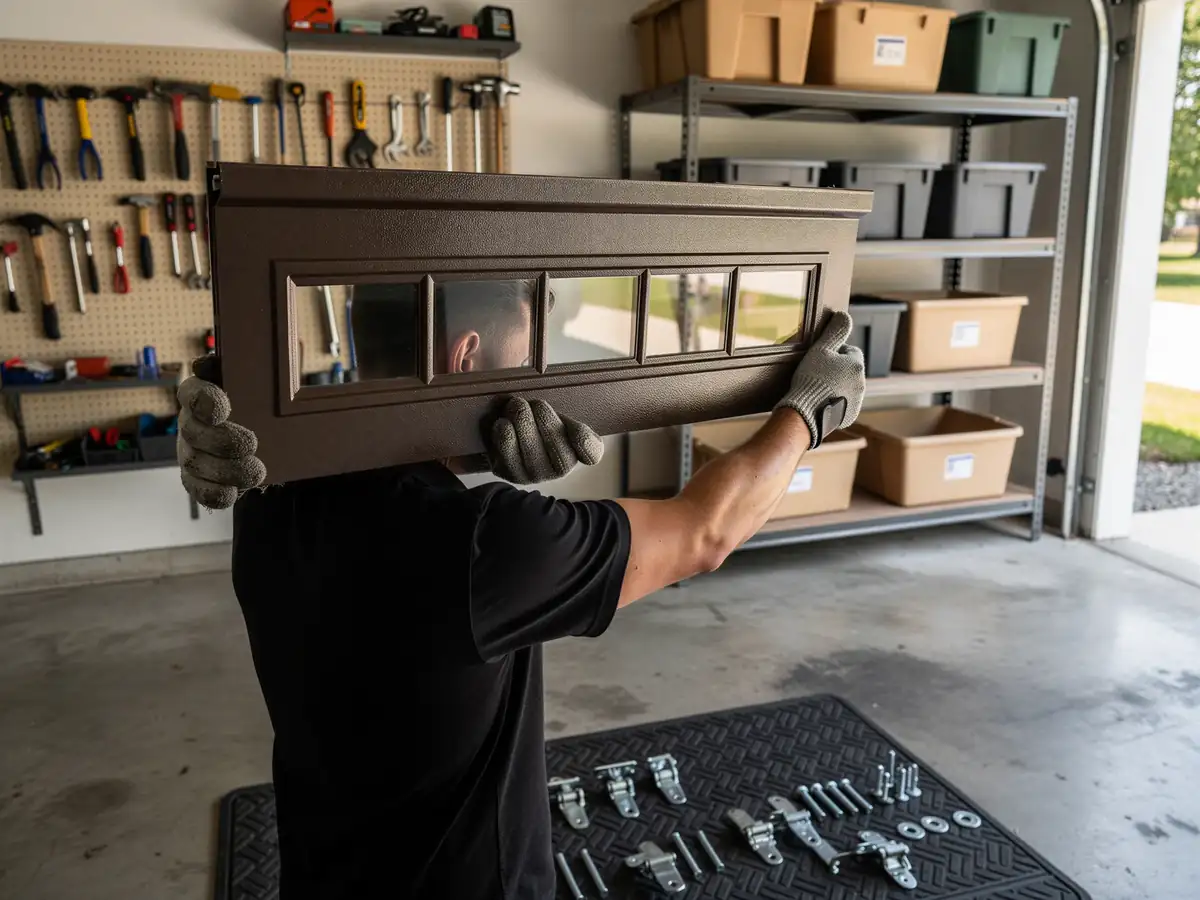
What we won't do is sell a full door replacement when the fix is a spring and a roller set. Given this area's median household income of $65,882, we price the repair as a repair, not as an excuse to upsell a new installation. If the panel itself is rusted through or the frame's out of square, we'll say so plainly - that's a replacement conversation, not a repair one, and we'd rather tell you that up front than patch something that fails again in a season.
Parts for original 1958-era hardware aren't something we keep on the truck in every size. If your door takes an odd-width spring or an obsolete roller, that part may need to be sourced before we finish the job, and we'll tell you that on the first visit, not after.
How Long It Takes
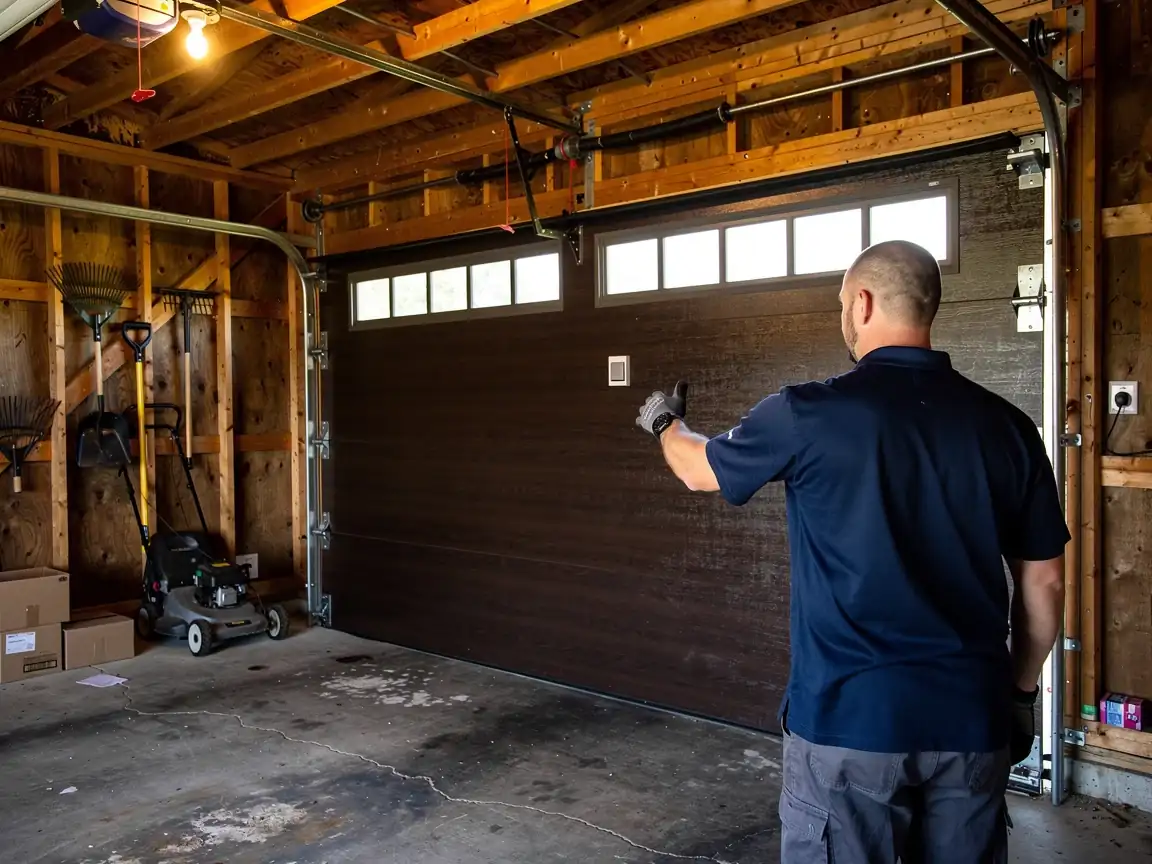
Most single-spring or roller jobs on this kind of single-car door finish in one visit once we've got the right parts in hand
The variable is almost always the part, not the labor - original-width extension springs and older track hardware aren't something every supplier stocks, so if your door is running non-standard hardware from its original build, expect us to confirm parts availability before we commit to a same-visit fix.
We're coming from Waterford, about 20 miles out
So the trip itself is built into how we schedule the day rather than something that adds delay once we're on site. The work on a small single-car door is usually quicker than on the larger two-car doors common in newer construction - less door, less track, fewer springs to deal with.
- 20 miles
Doing It Yourself
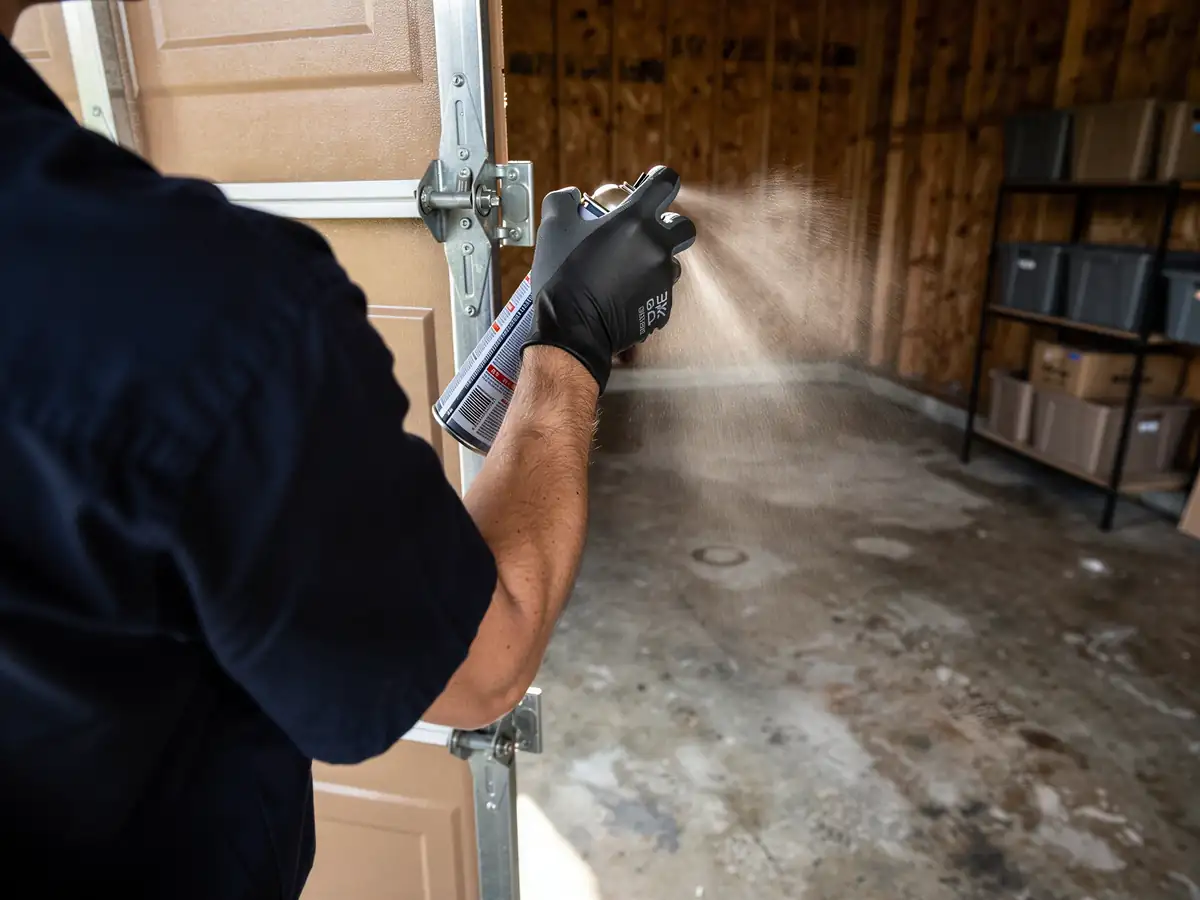
An extension spring under tension on an 8-foot door is still a spring under tension, and the fact that the door is smaller than a two-car door doesn't make the spring any less capable of taking a finger off or snapping a track loose if you disconnect it wrong. Lubricating hinges, tightening loose bolts, and clearing track debris are reasonable owner jobs on a door this age.
What isn't reasonable to DIY: spring replacement, cable work, or anything involving the torsion or extension system under load. On original 1958 hardware specifically, we'd also flag that some of these parts weren't built to modern safety standards in the first place - no auto-reverse mechanism on the opener, for instance, if the opener itself is original. That's not a DIY fix, that's a conversation about whether the opener needs updating regardless of what's wrong today.
How It Shows Up
Cold hits this area hard enough that the climate here counts as severe, and steel contracts in that kind of cold the same way it does everywhere else in a severe-cold zone - it just shows up faster on a 1958 door that's never been upgraded. You'll notice it as a door that worked fine in October and suddenly binds, groans, or won't fully close once temperatures drop and stay down.
On these single-car garages, the other tell is a door that's gotten noticeably heavier to lift by hand than it used to be - that's usually the extension spring losing tension before it fails outright, not the opener weakening. If you're hearing a grinding sound specifically where the track narrows near the header, that's roller wear on original hardware, and it's worth a call before the roller seizes the track completely.