Where This Job Goes Sideways
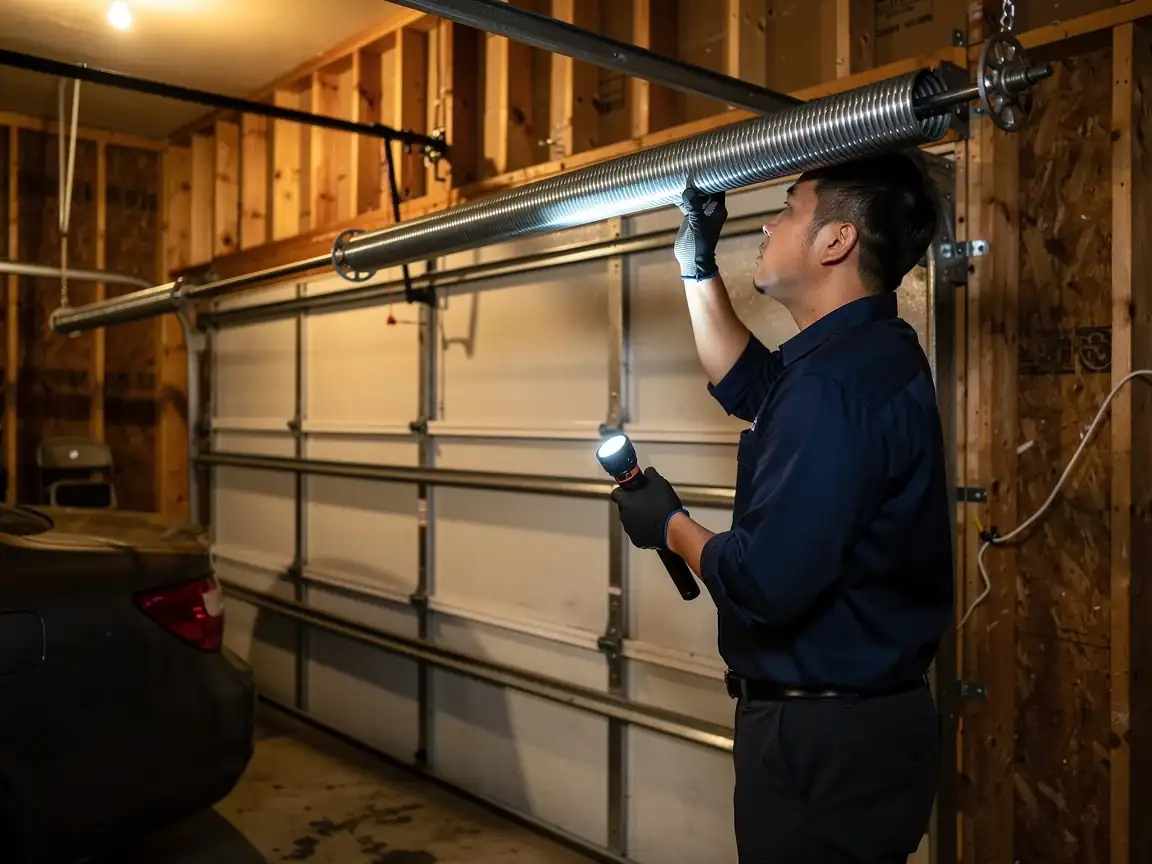
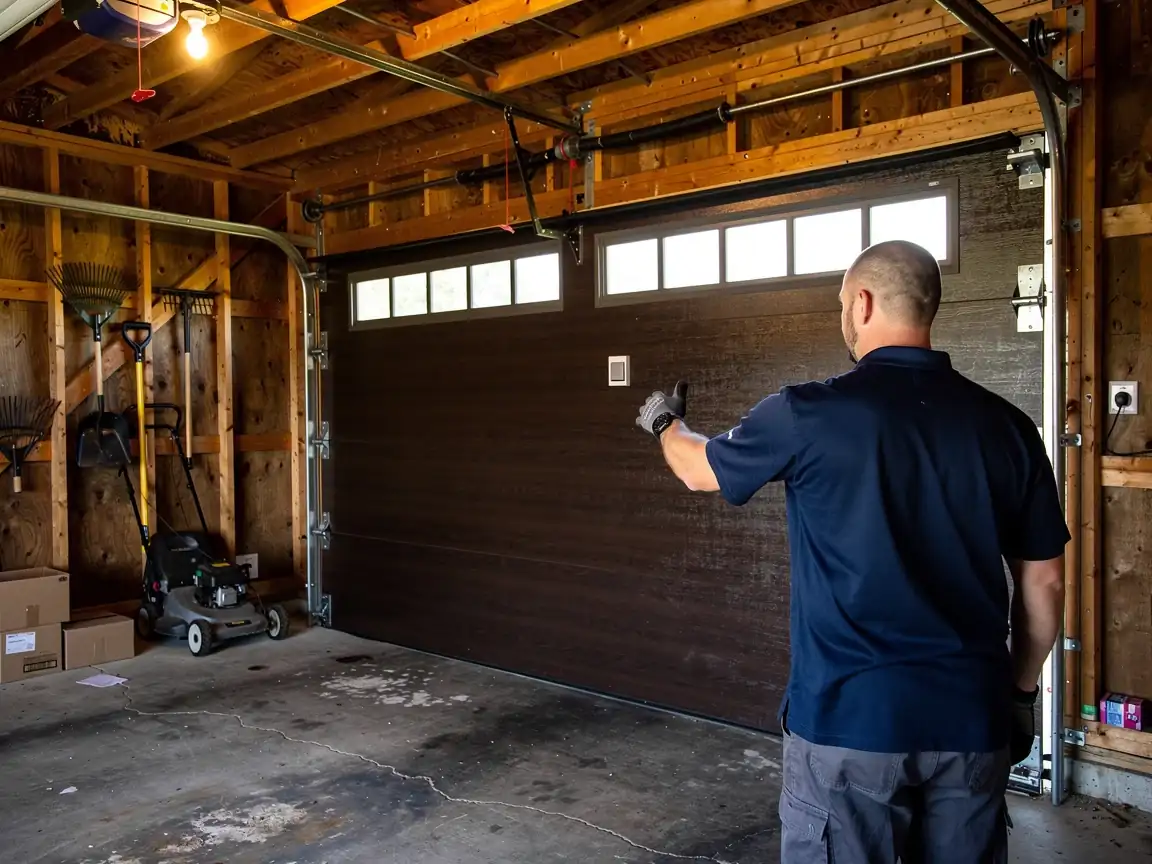
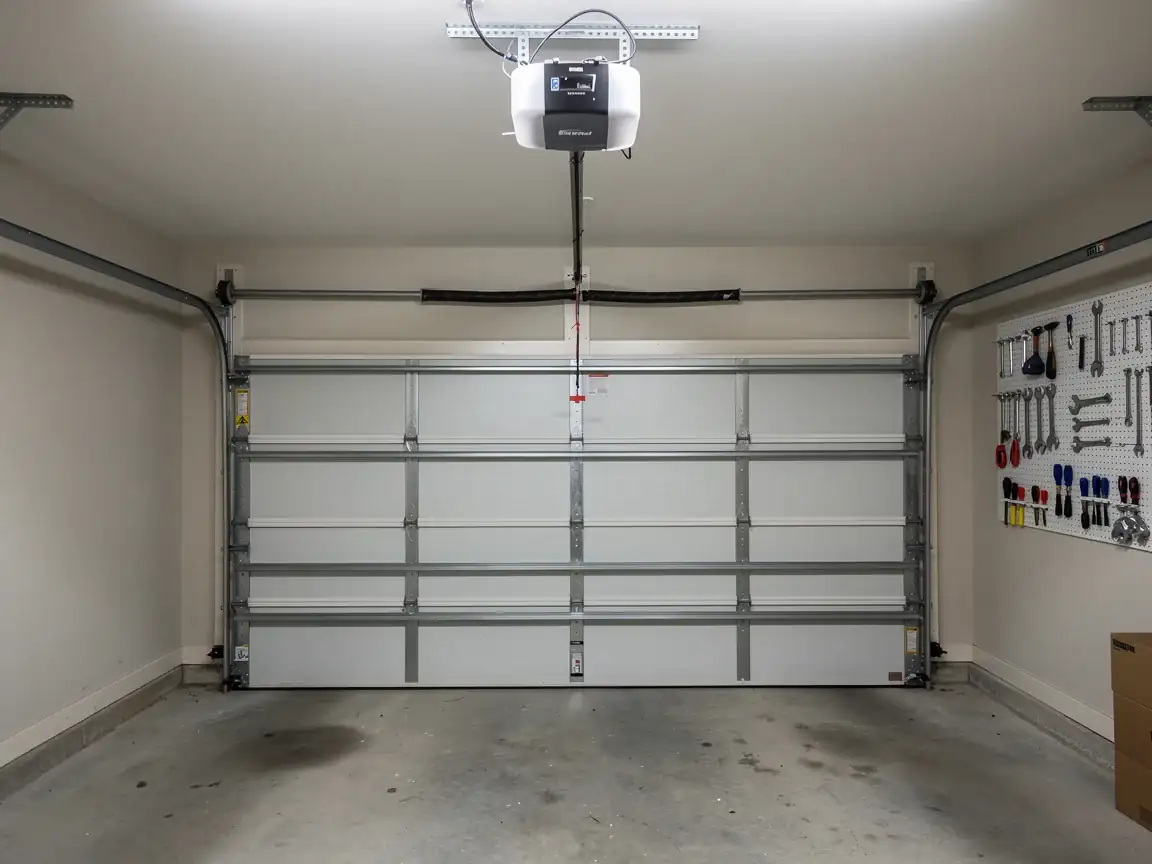
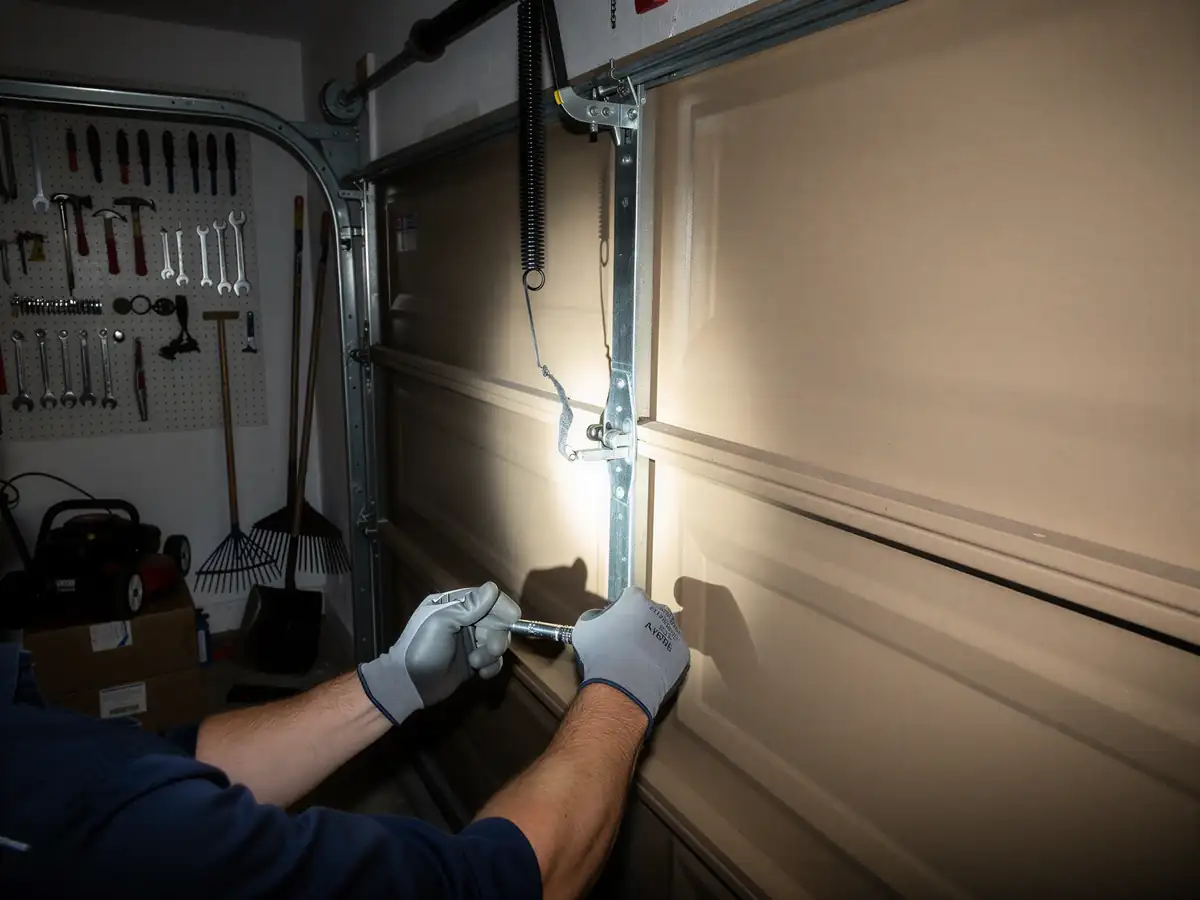
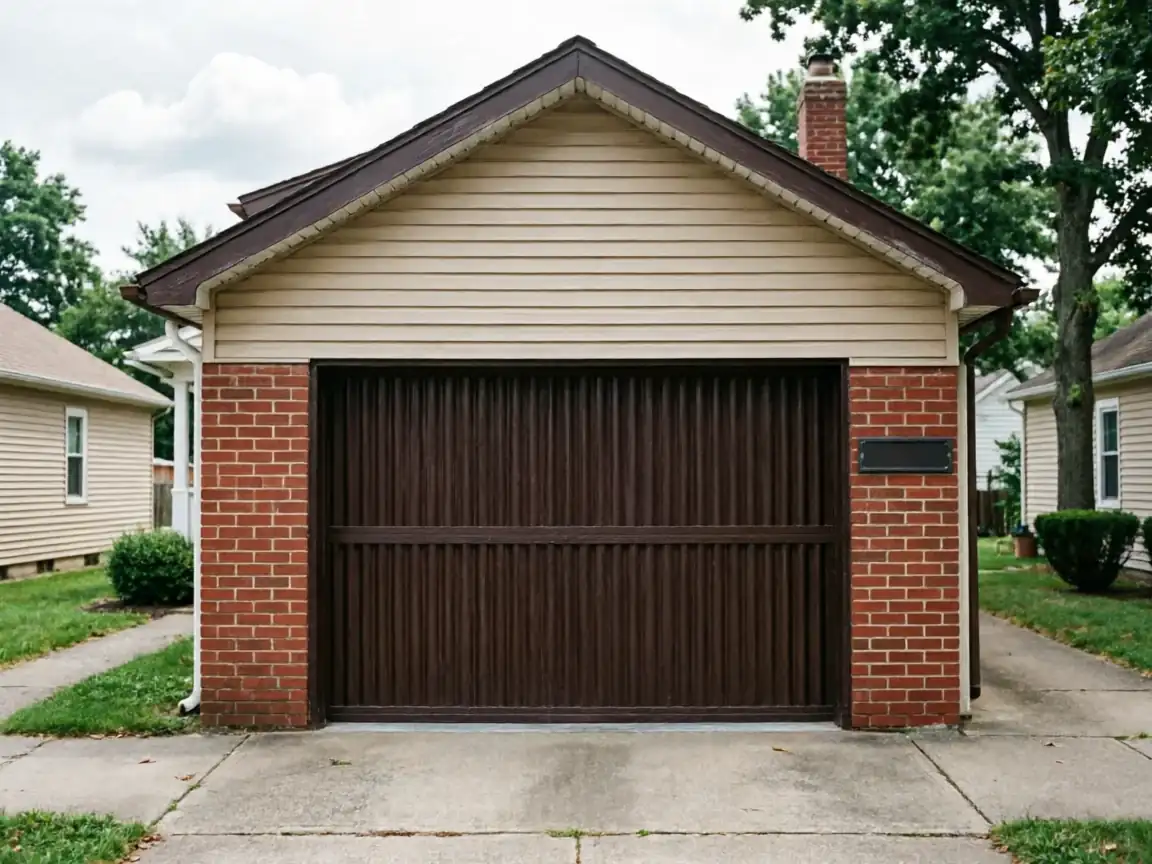
Huntington Woods carries a median build year of 1951, a full generation earlier than the 1973 median across the rest of this service area, where most stock dates to the 1960s and 70s. That gap matters on a garage door call. A door installed when this neighborhood went up almost certainly ran on extension springs stretched along the horizontal track, not the torsion bar that became the industry standard decades later. Extension-spring setups fail differently - the spring stretches and snaps rather than unwinding, and the safety cable that's supposed to catch a broken spring is often missing entirely on houses that haven't been touched since the original install. The other failure point is the track itself. Early postwar garages were framed tighter and lower than what came after, so a straight swap for a modern door sometimes means reworking the header or the track radius, not just bolting on new hardware. We see it less in the newer pockets of the service area and more here, where the building stock skews old. It's worth knowing before a repair call turns into a framing conversation.
How It Shows Up
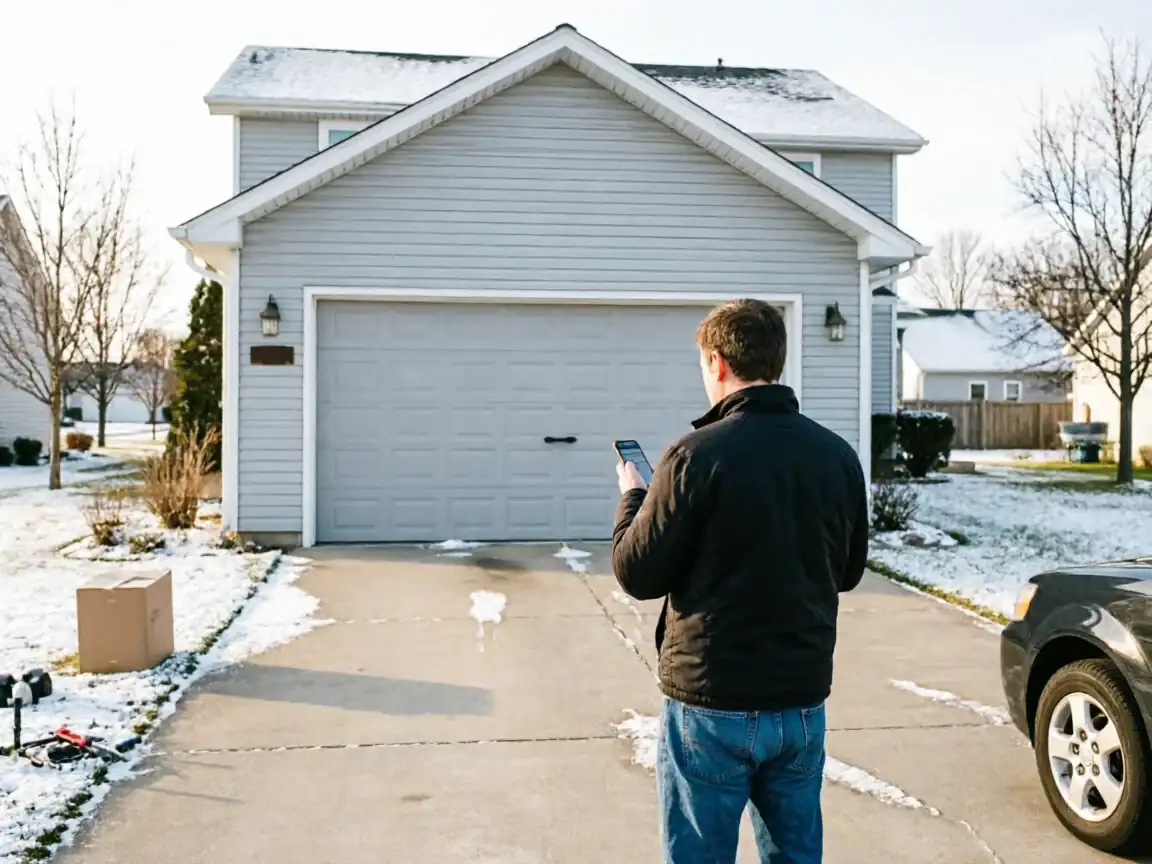
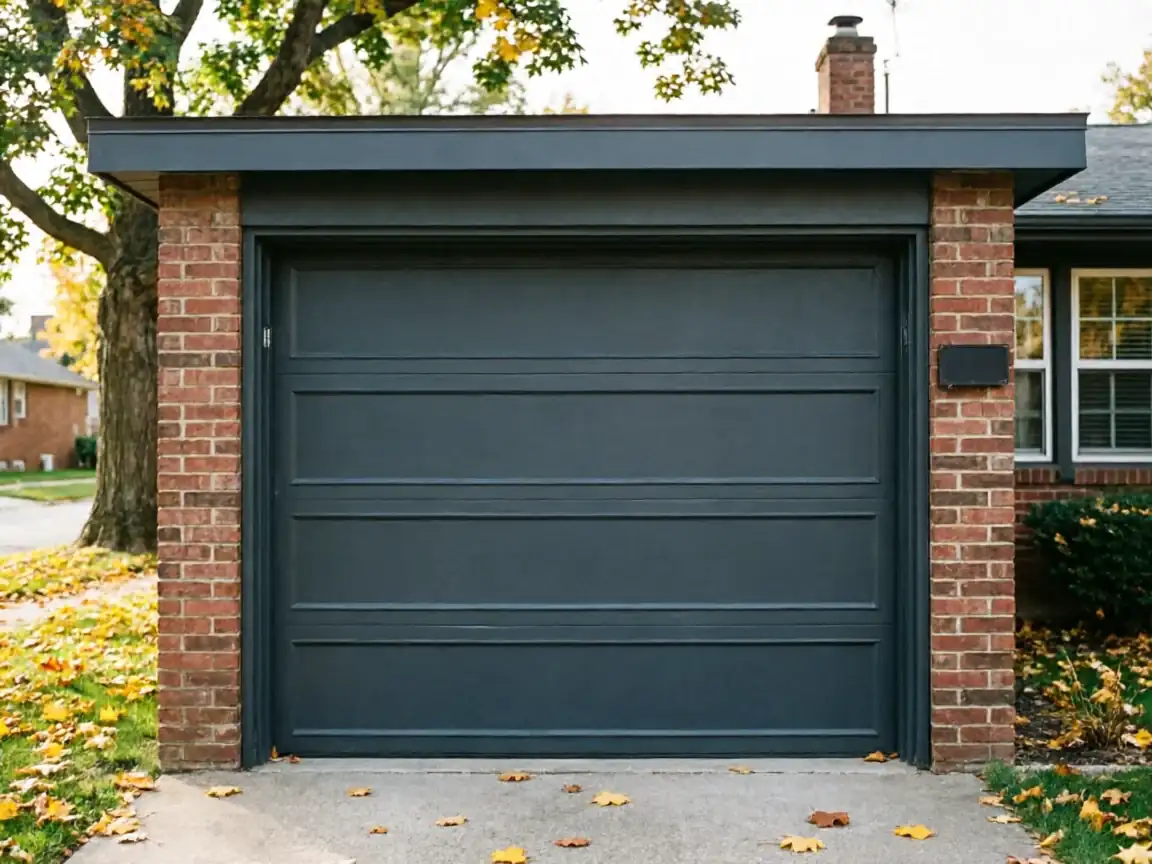
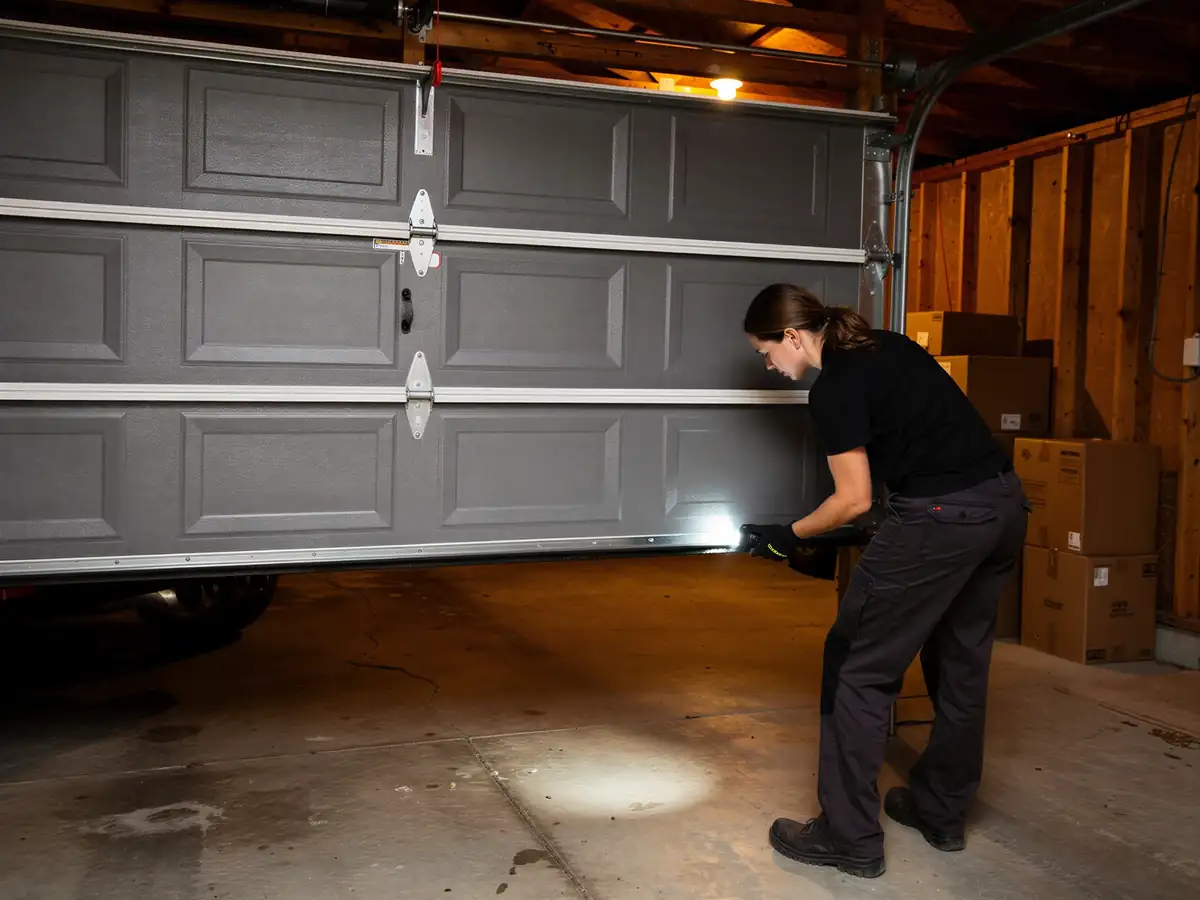
On a house this age, the complaint is usually one of two things: a door that won't budge because an extension spring let go, or a door that drops hard on the way down because the original pulley-and-cable setup has worn past its margin. Neither is an opener problem, though homeowners often call it that first. With a median household income of $188,229 here - nearly double the $102,333 median for the wider service area - we also see more houses where someone already replaced the original factory door with a heavier insulated panel, sometimes decades ago, and it's that second-generation door showing wear now rather than the 1951 original. Either way, the symptom is the same from the driveway: a door that binds, drags, or won't seat flush at the bottom. The difference is what's actually behind the panel, and that's not something you can tell from the street.
What You Pay
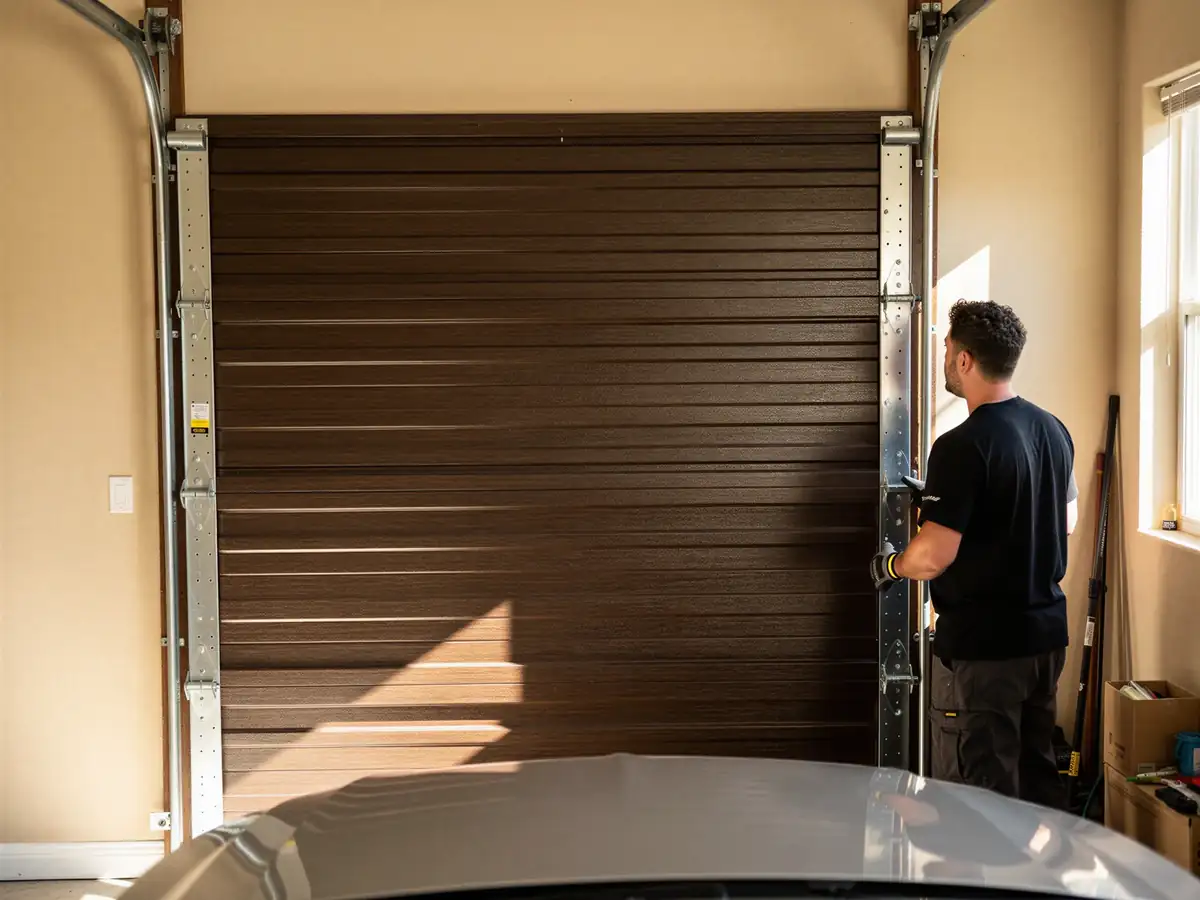
We don't post a flat number for Huntington Woods because what a job costs depends on whether you're dealing with a 1951 extension-spring system, a later torsion retrofit, or a full door replacement - and those are three different jobs with three different parts lists. What we can tell you is that this stop sits 19 miles out from Waterford, which is one of the farther points on the route, so we schedule it rather than treat it as a drop-in. Given the income profile here, we also see more requests for insulated steel replacements over patch repairs, since the cost difference between fixing old hardware and replacing the door outright is smaller relative to the budget than it is elsewhere in the service area.