Parts We Carry
Brighton sits apart from a lot of what we cover out of Waterford. Across the wider service area the typical house went up around 1973, which means a lot of original steel rollers on steel track, no nylon anywhere. Brighton's median build year runs closer to 1984, a decade newer, which usually means the door came with nylon rollers from the factory, or a prior owner already swapped the steel ones out once.
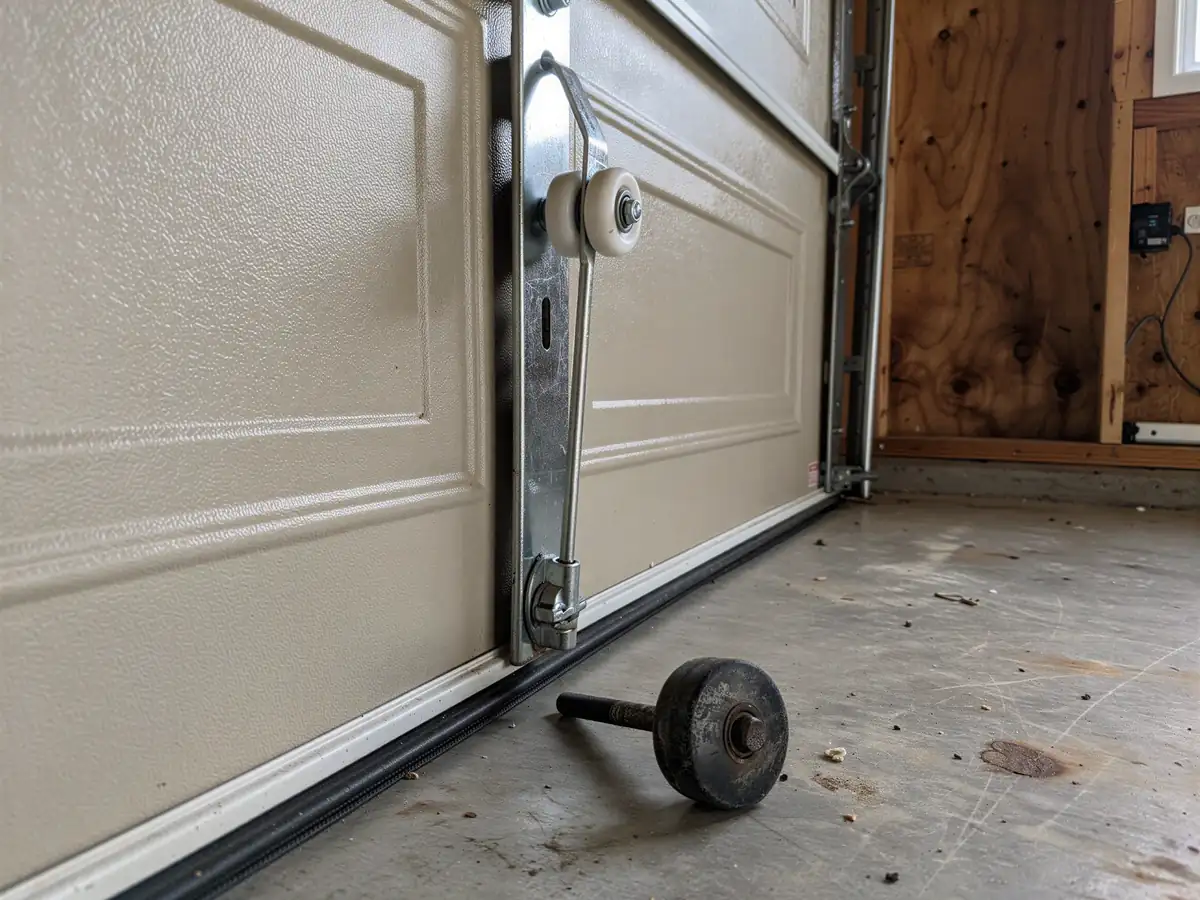
That matters for what we bring on the truck. On a 1984-era door we're usually pulling 10-ball nylon rollers with sealed bearings, not the open steel rollers you'd find on an older frame. Nylon rollers run quieter and don't need the track lubed as often, but the stems wear at the hinge end and the bearings seize rather than just squealing - so the failure looks different too. We carry both styles because Brighton isn't uniform block to block, but a 1984-built house is the number we plan around.
We don't stock every proprietary roller a builder might have specified in the early '80s. If your door came with an odd-gauge stem or a roller sized for a track we don't recognize on sight, that's a part we order rather than carry, and we'll tell you that on the first visit instead of guessing.
How Long It Takes
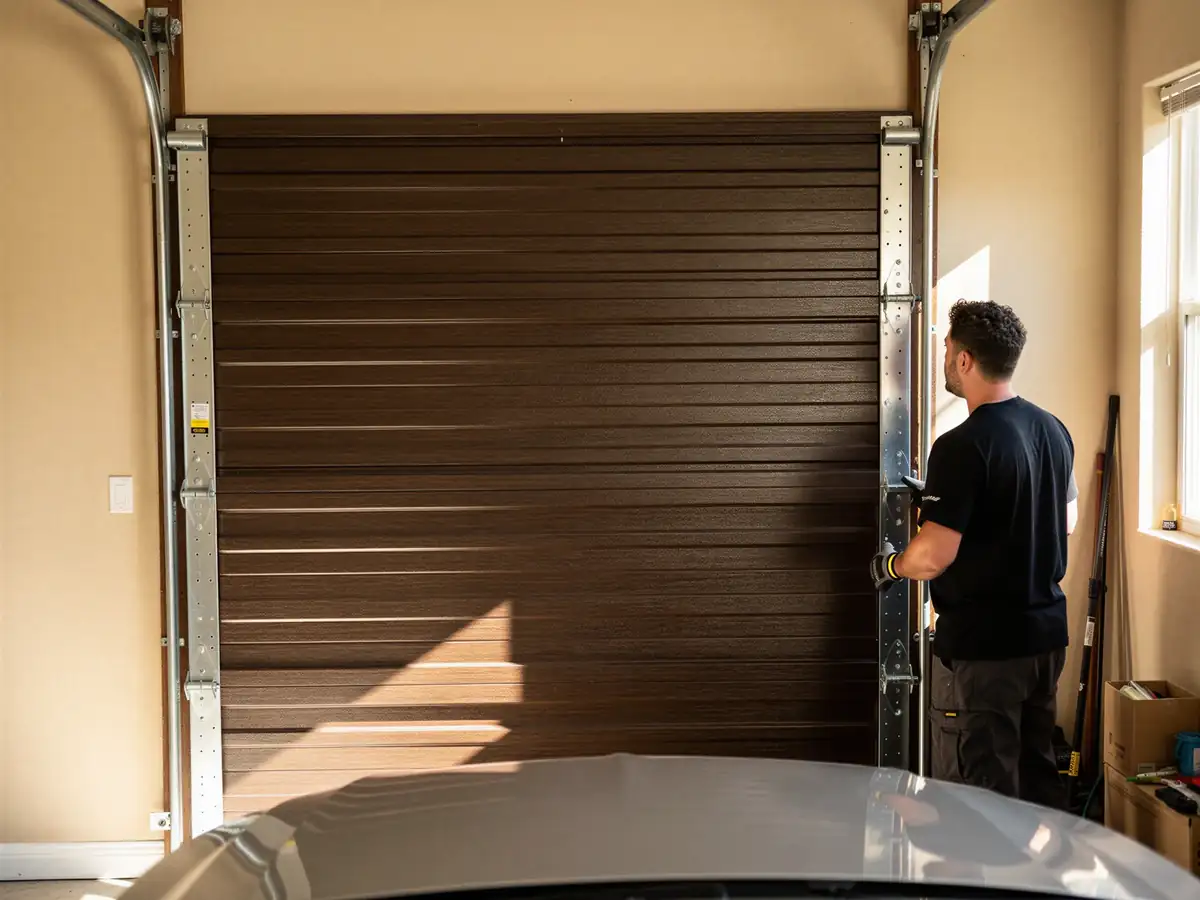
A standard ten-roller swap on a double door, steel or nylon, runs under an hour once we're on site - the labor itself isn't the variable. What stretches it is finding brackets bent from years of a roller binding in the track, or a cable that's frayed from riding against a roller that's been locked up for longer than anyone noticed. On the newer stock common around Brighton we see fewer rusted brackets than on the area's 1949-1993 housing generally, since the galvanizing held up better on later builds, but we still open up every bracket before calling the job done.
How It Shows Up
The complaint is almost always the same word
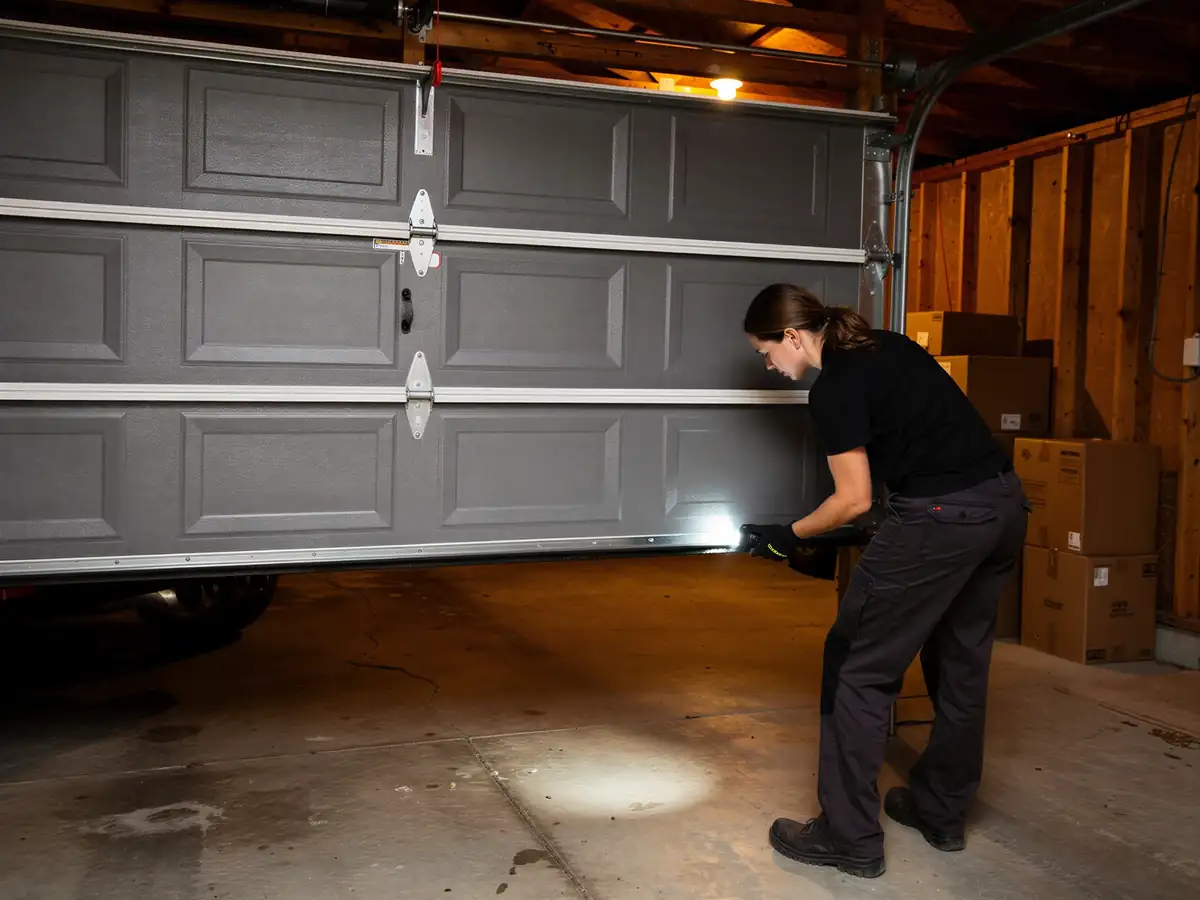
Grinding, or a rhythmic thump as the door travels. On a nylon-roller door - which is what you likely have if your house falls near that 1984 median - the thump usually means a bearing has seized and the roller is now just a wheel dragging flat spots into itself rather than turning. You'll hear it get louder exactly at the spot where the roller contacts the bend from vertical to horizontal track, because that's where the load is heaviest.
With Brighton's median household income running well above the broader area's $102,333
The $126,576 figure is the area's, not a Waterford number - we more often get called out before the door is fully stuck, while it's still just loud. That's the easier repair. Left alone, a seized roller eventually pulls enough off-angle force that it stresses the hinge, and then you're replacing hinges along with rollers instead of just rollers.
Booking a Visit
We run this job out of Waterford, about 18 miles down. There's no branch in Brighton and we're not going to pretend otherwise - we schedule the drive into the appointment window rather than promising a same-hour window we can't back up from that distance. Tell us what the door is doing - grinding, thumping, sticking at a certain spot in the track - and whether you know roughly when the house was built. With roughly 6,855 households in Brighton, we don't have blanket intel on every build year, so that detail from you narrows down which roller style we load before we leave the shop. See our general repair page for other door problems, or the roller job as we run it out of Waterford itself.
Where This Job Goes Sideways
Rollers rarely fail alone. If the track itself has pulled away from the jamb, or the bottom bracket has cracked from a roller binding for months, a roller swap won't fix the actual problem - we'll flag that before starting, not after billing you for rollers that don't solve the noise. And if a door is old enough that the roller stems are a non-standard gauge nobody makes anymore, replacement of the whole roller-and-track assembly sometimes costs less than hunting down a discontinued part. We'd rather tell you that up front than keep ordering parts that don't fit.